BySragvi Senthil Kumar
Mon , Nov 23 , 2026
Read Time: 5 Min
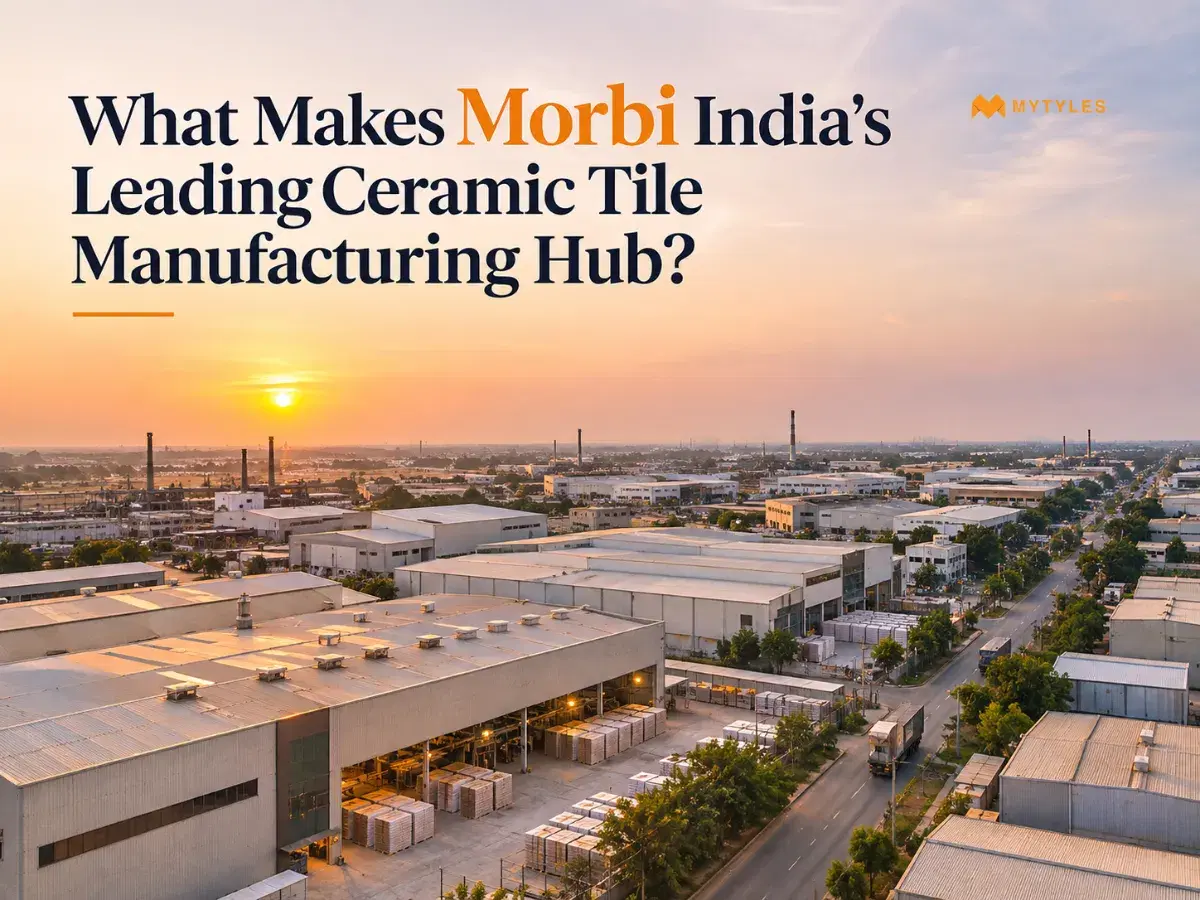
Morbi has become a familiar name in conversations about tiles and ceramics in India. Its connection with the industry is so established today that the city and ceramic manufacturing are often spoken about almost together.
That reputation, however, was built over time. The story of Morbi ceramic tiles is not tied to one moment or one breakthrough but to a long period of change that gradually gave the city its distinctive place in India’s ceramic landscape.
So, how did Morbi come to hold such a distinct place in India’s ceramic story?
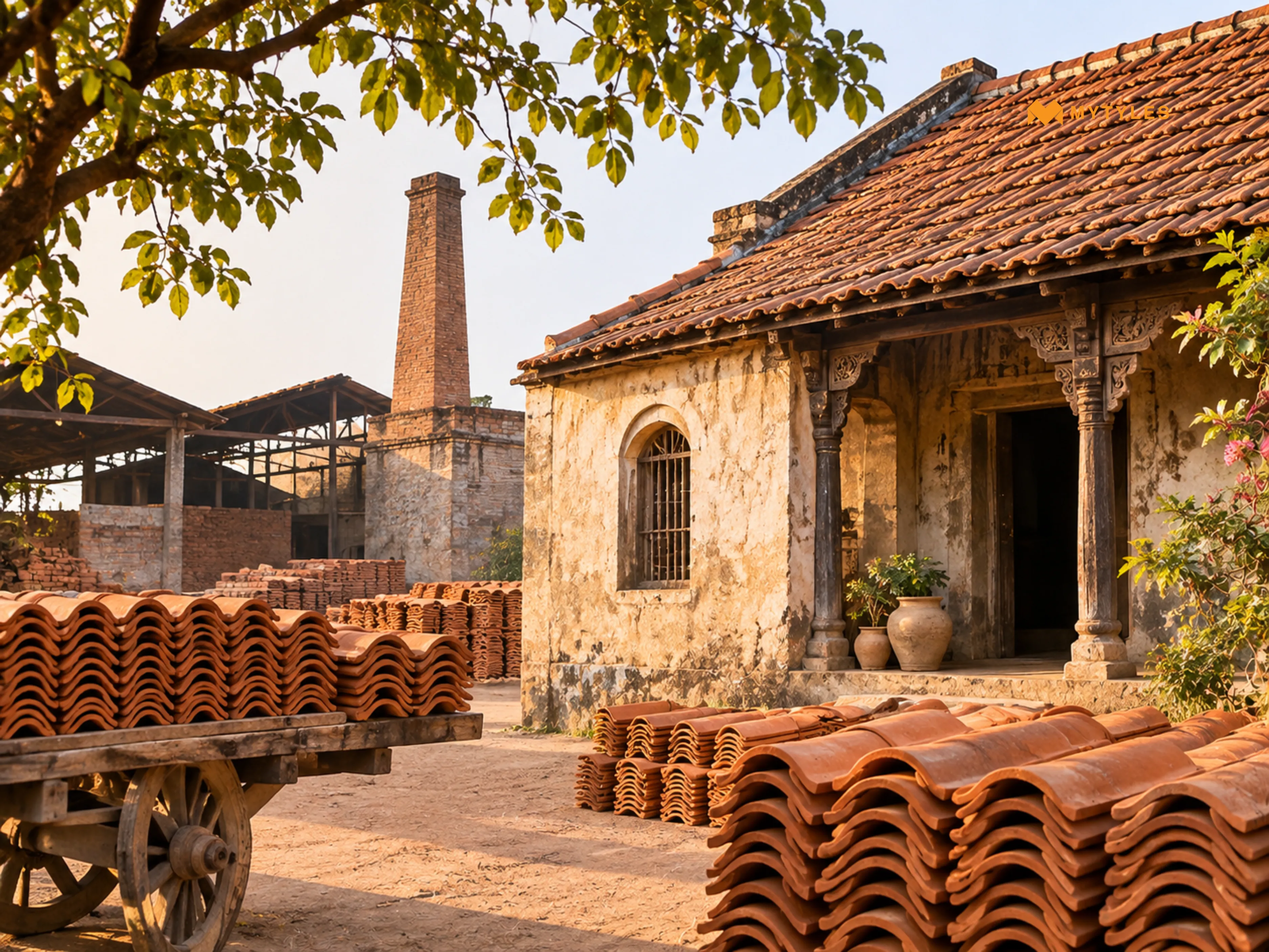
Morbi’s ceramic story began with clay products long before the region became a major tile centre. Over the twentieth century, these early
traditions gradually developed into the base of the Morbi ceramic industry.
Before modern tile production, Morbi was known for traditional clay Naliya roof tiles. In 1926, Parshuram Potteries was founded in Morbi by Parshuram Kanpule, who had migrated from Maharashtra. The company became an early organised roofing-tile manufacturer in the town.
Roof tiles remained important for decades before production gradually expanded into other ceramic products as demand and manufacturing methods changed.
The 1979 Machchhu dam failure caused widespread destruction in Morbi and was followed by a major rebuilding phase. Financial assistance and industrial incentives supported new business activity during this period, but Morbi’s ceramic growth also developed through wider changes in investment, technology, and manufacturing. Over the following years, the region moved further into wall and floor tiles. By the mid-1980s, modern ceramic tile plants were appearing, while some entrepreneurs brought in machinery and manufacturing know-how from Italy and Spain.
In the 1990s, India’s economic liberalisation coincided with the growth of small and medium, often family-run ceramic businesses in Morbi. As more tile manufacturing units in Morbi appeared, suppliers, machinery dealers, repair services, packaging businesses, and transport operators grew around them. Some supplier representatives were already based locally for maintenance work, helping factories access technical support without waiting for technicians to travel in. By the end of the decade, this network was helping shape the Morbi industrial cluster.
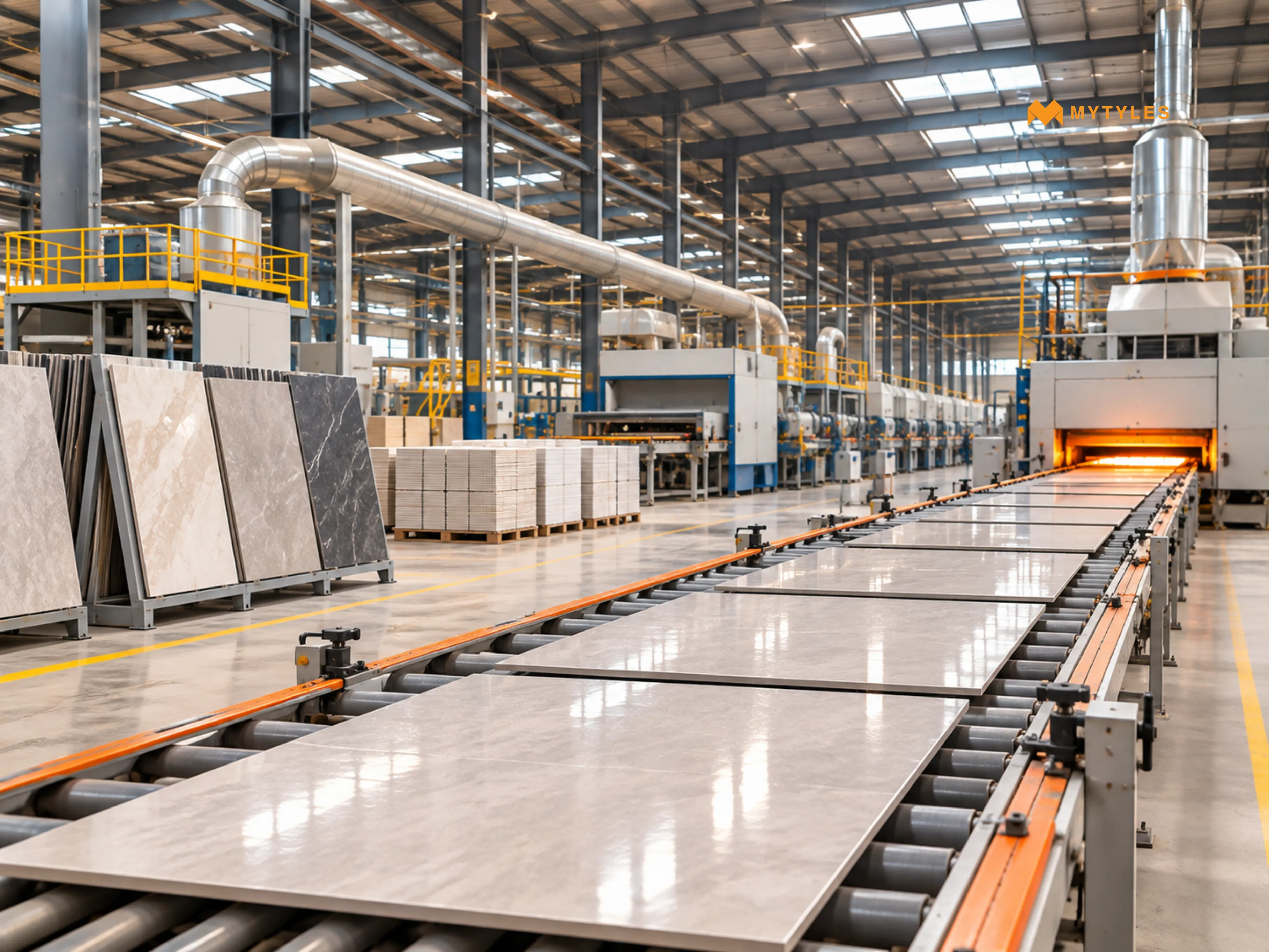
If the 1990s created the cluster, the 2000s changed its scale. New machinery, changes in fuel supply, and digital printing reshaped how Morbi ceramic factories operated and what they could produce.
From the early 2000s, manufacturers increasingly adopted Chinese roller kilns, hydraulic presses, and polishing lines. Because the equipment was more affordable, more factories could expand and use machinery across more stages of the ceramic manufacturing process. During this period, larger vitrified and polished formats also became more established, with 600x600 mm tiles marking an important step beyond the smaller formats common earlier.
Piped natural gas reached Morbi around the mid-2000s, giving factories a steadier fuel option for more controlled kiln firing and continuous production. When gas prices rose, however, many units returned to coal gasifiers. Their environmental impact later drew regulatory action, and in 2019, the National Green Tribunal ordered units using coal gasifiers to shut them down unless they shifted to an allowed alternative. PNG remained important, although it was not the industry’s only fuel.
In the early 2010s, digital inkjet printing began spreading through the Morbi tile industry. It allowed manufacturers to create a wider range of detailed surface graphics than conventional printing methods. For Morbi ceramic tiles, this meant more scope for marble, stone, wood, and other surface looks. Digital printing soon became an important part of tile manufacturing technology in the region.
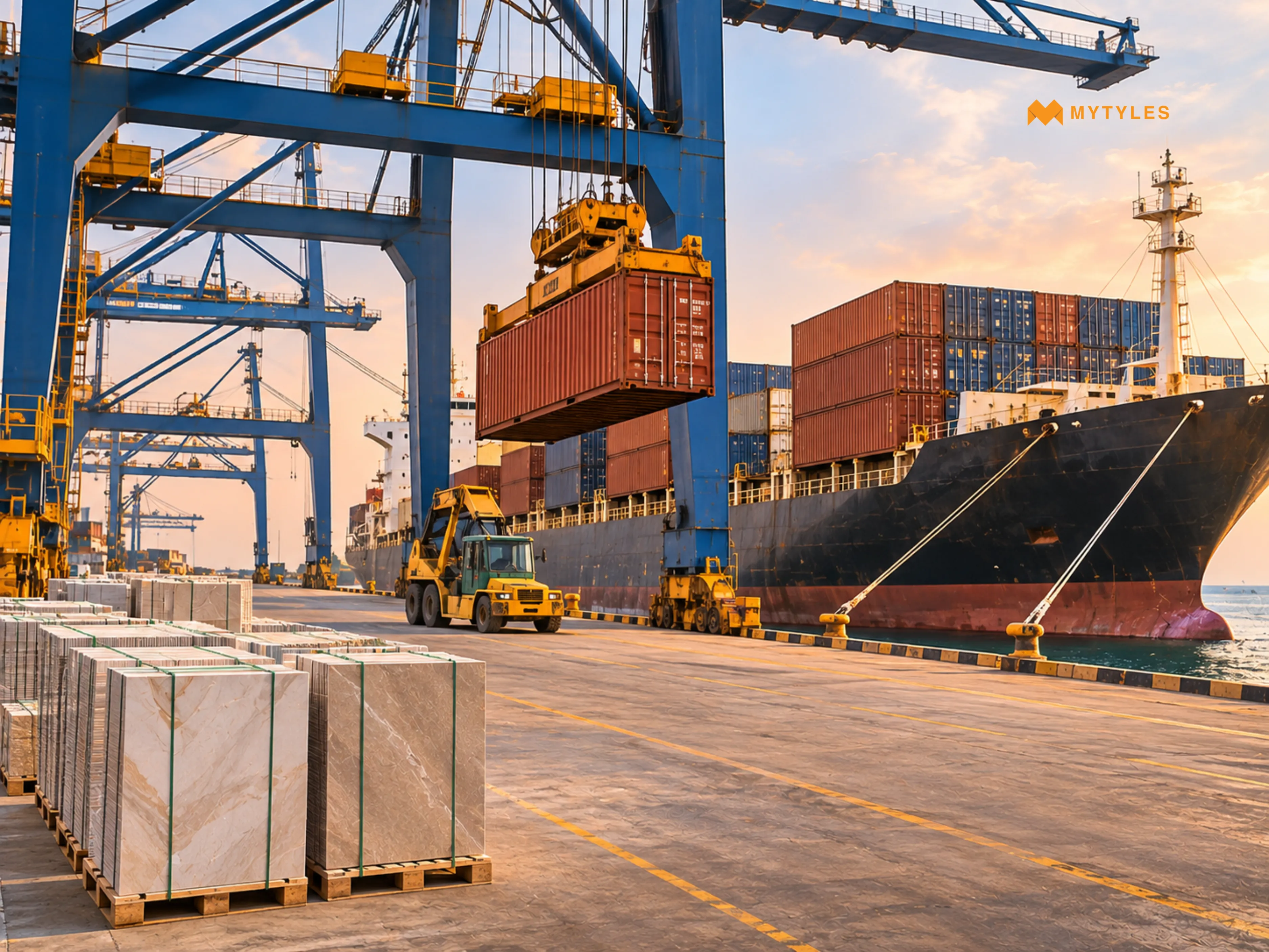
Morbi’s move into overseas markets developed alongside its manufacturing growth. Access to Gujarat’s western ports made container shipping practical, while exporters, distributors, wholesalers, and trade fairs helped Morbi tiles reach buyers further from home. Major export markets include the United States, France, Germany, Oman, and Sri Lanka. Over time, Morbi tile exports became an important part of ceramic tile exports from India.
Stage of Morbi’s Export Growth | How It Developed |
|---|---|
Access to Major Ports | Morbi is relatively close to Kandla and Mundra, two important ports on Gujarat’s coast. This gives ceramic exporters access to established container-shipping routes, although freight costs depend on wider shipping conditions rather than proximity alone. |
Early Overseas Markets | Export links developed across markets in the Middle East and Africa, along with countries such as Sri Lanka and Oman. These markets formed part of Morbi’s earlier international trade network. |
Expansion into Europe and the US | As exports grew, Morbi ceramic tiles also reached markets such as the US, UK, Germany, and France, widening the industry’s presence beyond its earlier regional markets. |
A Wider Global Trade Network | Regular container shipments, distributors, wholesalers, merchant exporters and international trade fairs helped connect Morbi manufacturers with buyers across more than 100 countries. |
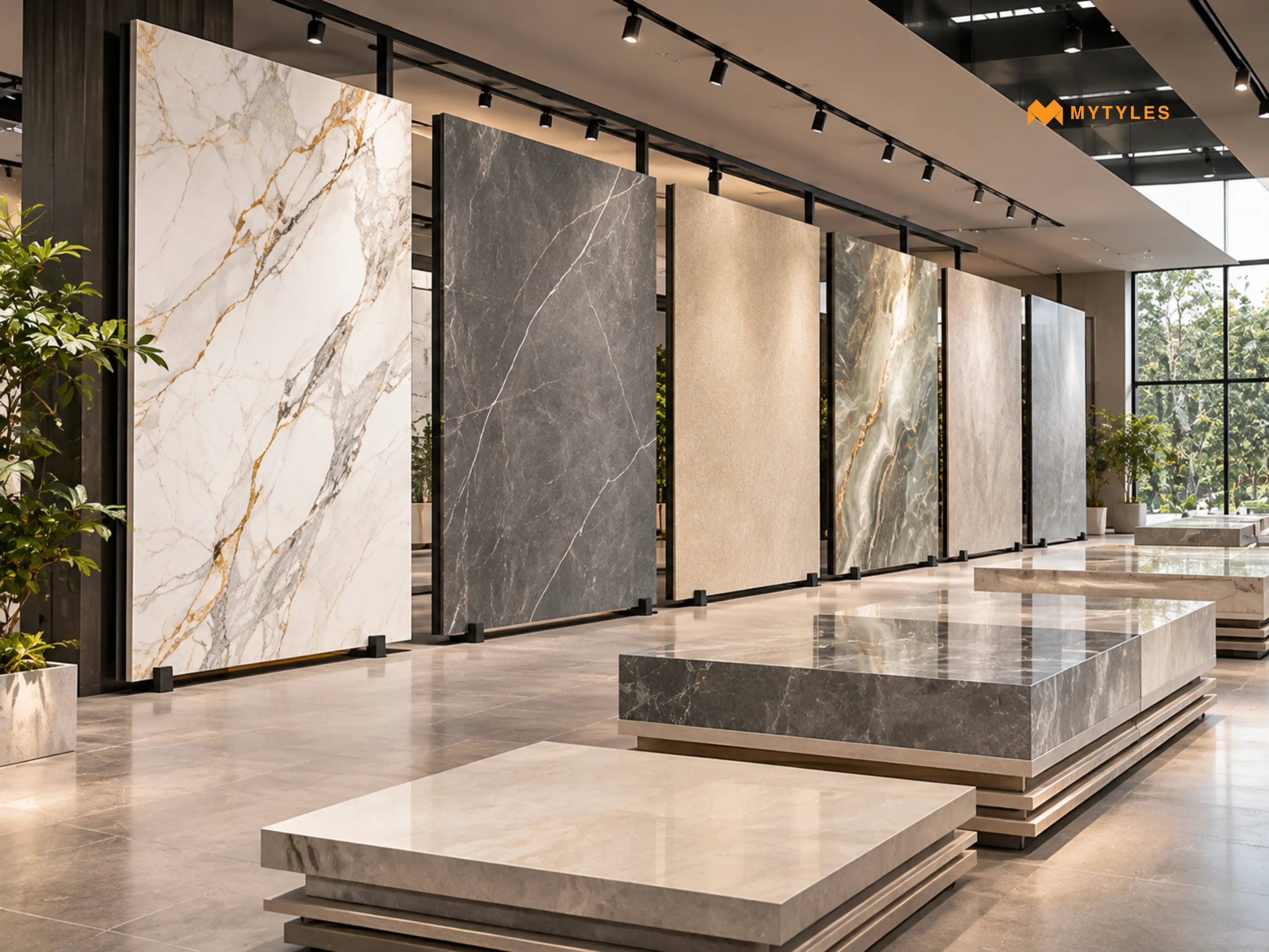
Morbi has kept changing with the tile market rather than depending only on the products and export routes that drove its earlier growth. Larger formats, specialised ceramic products, and shifts in overseas trade have all become part of that change.
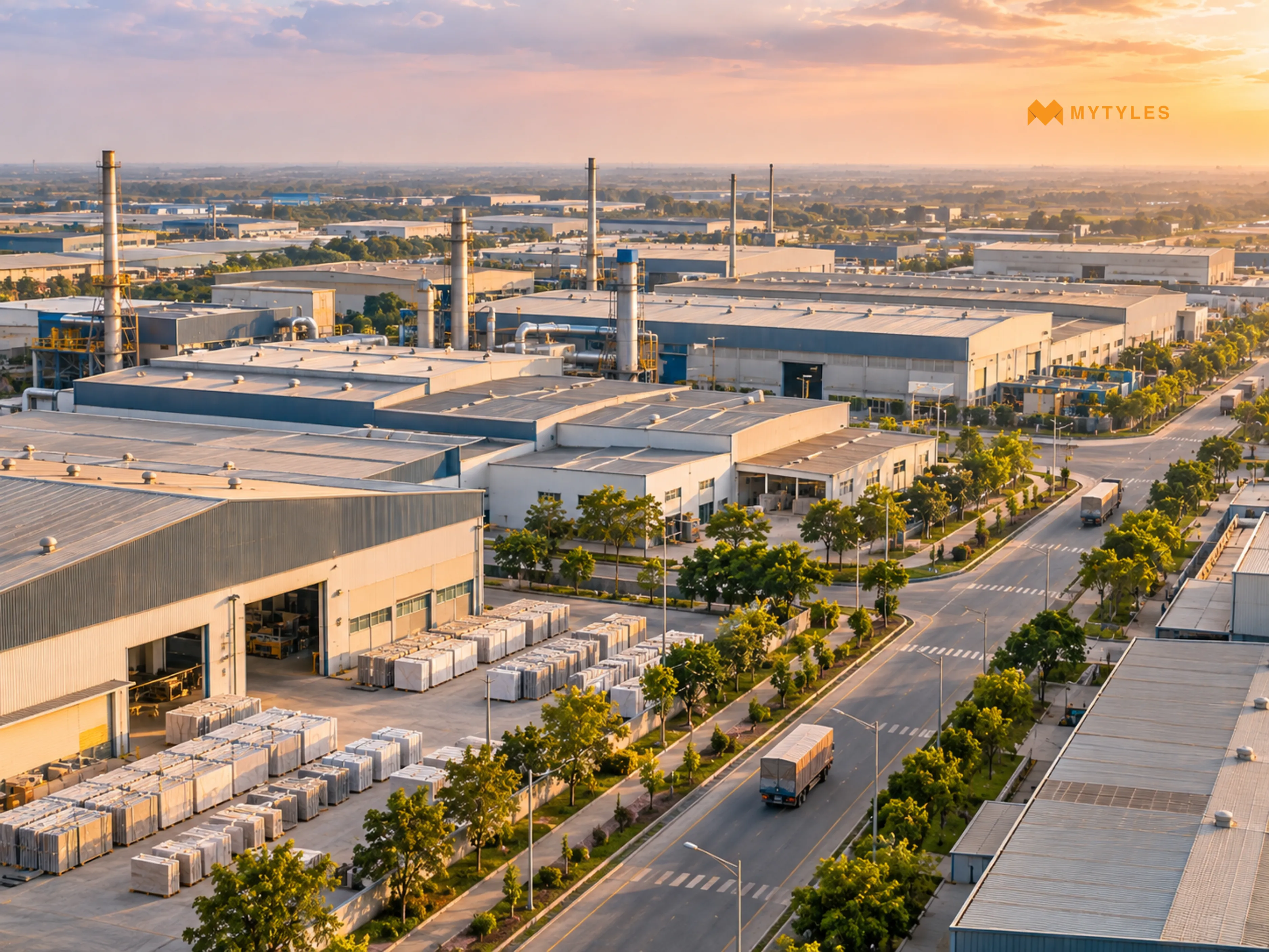
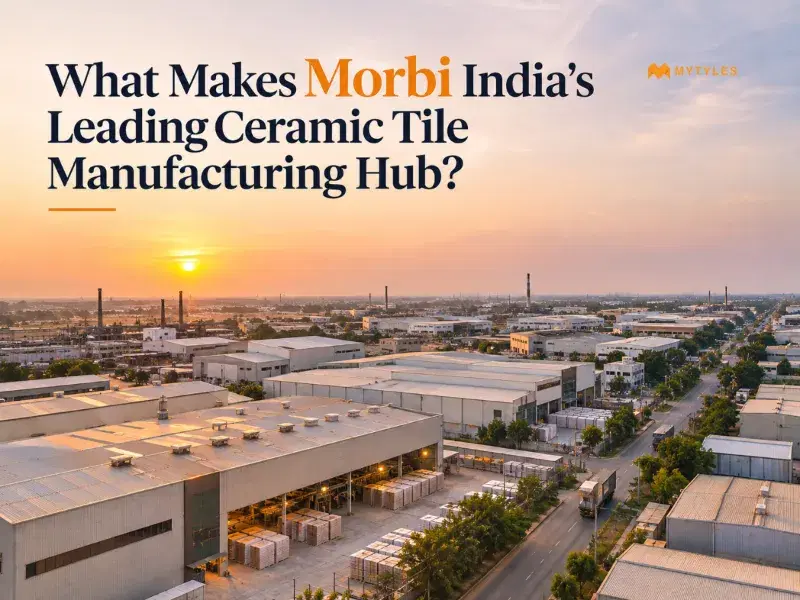
Morbi’s scale gives it a significant place in ceramic tile production in India. Recent estimates put the cluster at roughly 1,000 to 1,200 ceramic units, depending on how units are counted. For ceramic tiles specifically, estimates place Morbi’s share of India’s production at around 70% to 90%. Looking at ceramic products more broadly, including tiles and other ceramic goods, recent government estimates put Morbi’s share of India’s production at over 90%. Morbi has also been estimated to account for more than 13% of global ceramic production.
Exports form another major part of this picture. Morbi is estimated to contribute around 80% to 90% of India’s total ceramic exports, covering ceramic tiles and other ceramic products. Morbi tile exports and other ceramic products were worth approximately ₹15,000 crore in FY 2024–25.
The industry also supports a much wider local economy. Recent government figures put direct and indirect employment at around 9 lakh people. Beyond factory jobs, ceramic production creates work across transport, raw-material mining, packaging, frits, glazes, and machinery servicing.
When buyers source from Morbi, trust usually comes down to a few practical things: how the tile is checked, how closely larger orders can be matched, and how reliably production and sourcing can be managed.
Not every tile follows the same checks, but pressed ceramic tiles covered by the relevant BIS standard are assessed on factors such as dimensions, water absorption, breaking strength, and abrasion resistance where required.
ISO 9001 relates to quality-management systems, while ISO 14001 covers environmental management. CE marking matters for applicable products sold into the European market. These are not universal certifications for every Morbi tile manufacturer, so they still need to be checked with the individual supplier or product.
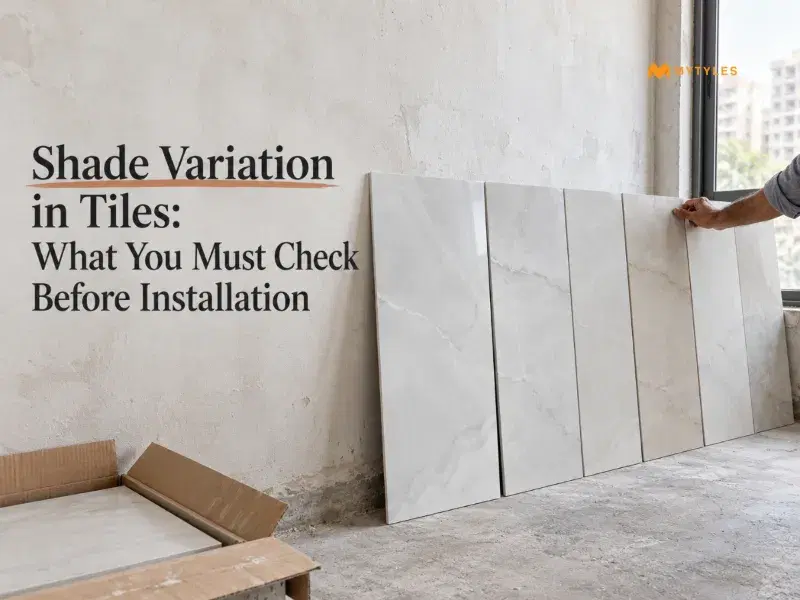
Large orders bring another concern: keeping tiles close in shade and size. Shade codes and batch numbers help identify tiles from the same production group, while dimensional checks and sorting help manage variation. Even then, small differences can still appear. If tiles come in separate deliveries, compare the batch or shade details before mixing them in the same installation.
Morbi is also used for OEM, joint-venture, and contract manufacturing. In practice, this means businesses can work with factories in the region to produce tiles for their own ranges or specifications without owning the production unit themselves.
The Morbi-Wankaner and Jetpar Road industrial belt brings factories, suppliers, samples, testing, packaging, and logistics into the same wider area. That makes it easier to coordinate different parts of the sourcing process within the Morbi industrial cluster.
Morbi’s journey shows how one manufacturing centre can leave a lasting mark on Indian ceramics. Its growth reflects decades of change in production, products, trade, and sourcing. That wider tile landscape is also what buyers navigate today, and at MyTyles, the focus is on making different tile options easier to understand and compare for their spaces.
No. “Morbi Gujarat tiles” is a location-based way of referring to tiles made in Morbi, Gujarat, not a ceramic tile classification defined by standards such as ISO 13006. Products from the Morbi tile manufacturing hub can differ in body type, finish, thickness, water absorption, and intended use, so the individual product specification still needs to be checked.
Not automatically. Tiles with the same nominal size or a similar colour can still differ in actual dimensions, thickness, shade, finish, or other characteristics within permitted manufacturing tolerances. If products from different ceramic tile manufacturers in Morbi are being combined, compare samples, technical data, and installation requirements before deciding whether they can be used in the same layout.
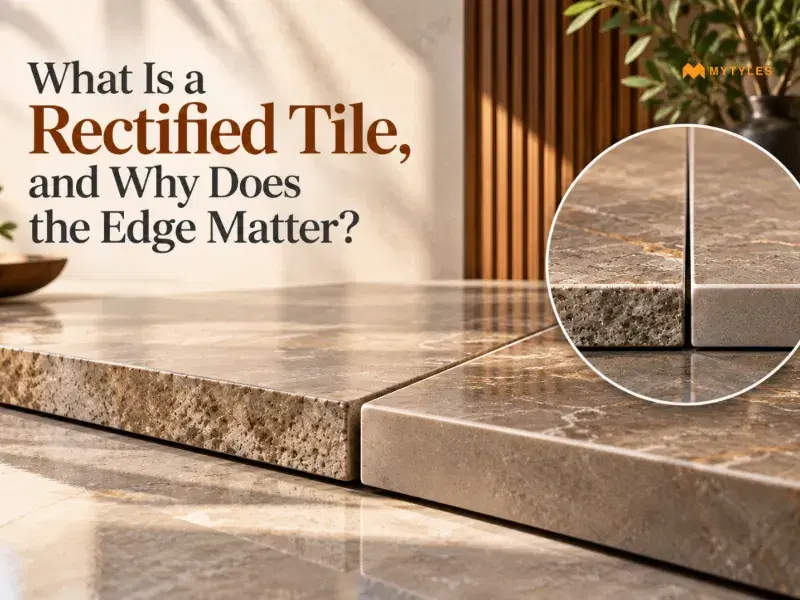
A rectified tile has its edges mechanically finished after firing to achieve more precise facial dimensions. Rectification improves dimensional precision, but it does not mean the tile is stronger or can be installed without grout. Grout-joint width still needs to account for actual tile variation, the installation pattern, and the conditions of the installation.
Nominal size is the size used to describe a tile. Work size is the size specified for manufacture, while actual size is what the finished tile measures. Ceramic tile standards allow stated dimensional tolerances, so a measured size can differ slightly from the nominal description without that difference automatically meaning the tile is defective.
Do not rely on the product name alone. When comparing vitrified tile manufacturers or porcelain tile manufacturing ranges, check the declared water-absorption group, dimensions, finish, intended use, and applicable standard. Under ISO 13006, porcelain tile has water absorption of 0.5% or less, but that property alone does not determine whether a tile suits a particular application.
Common ceramic tile body materials include clay or kaolin, feldspar, quartz, calcite, and other minerals or additives selected for the product being made. Their proportions vary between wall, floor, vitrified, and other ceramic bodies, so there is no single raw-material recipe that represents every product made across the Gujarat ceramic industry.
No. Water absorption and slip performance describe different properties. Water absorption measures how much water the ceramic body takes in under a specified test, while slip performance depends on the finished walking surface and conditions of use. A tile with low water absorption should therefore not automatically be treated as suitable for a wet floor.
Aditi Bardhan
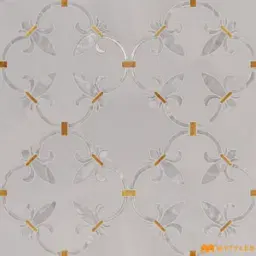
₹198.00 / Sq.Ft
₹126.00 / Sq.Ft
₹88.00 / Sq.Ft
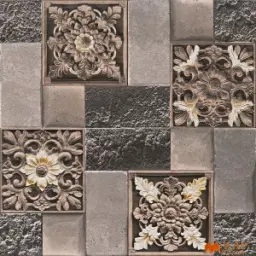
₹88.00 / Sq.Ft
₹161.00 / Sq.Ft
₹105.00 / Sq.Ft
₹105.00 / Sq.Ft
₹154.00 / Sq.Ft
₹85.00 / Sq.Ft
₹98.00 / Sq.Ft
₹98.00 / Sq.Ft
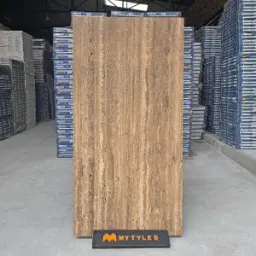
₹98.00 / Sq.Ft
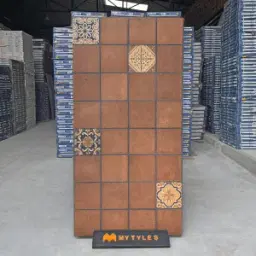
₹125.00 / Sq.Ft
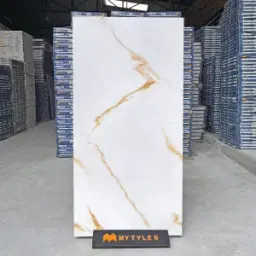
₹98.00 / Sq.Ft
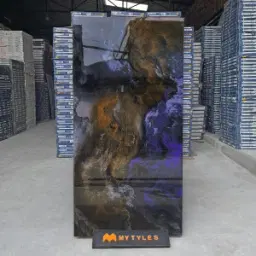
₹105.00 / Sq.Ft
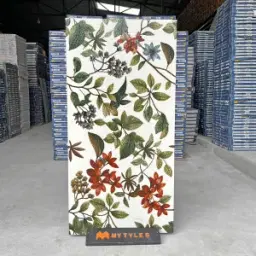
₹125.00 / Sq.Ft
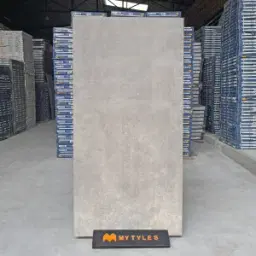
₹95.00 / Sq.Ft
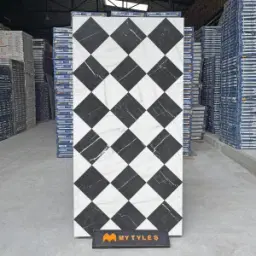
₹140.00 / Sq.Ft
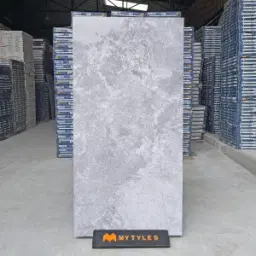
₹120.00 / Sq.Ft
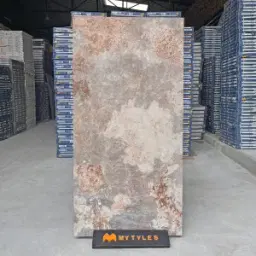
₹120.00 / Sq.Ft
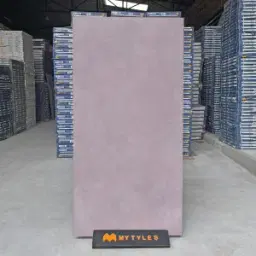
₹110.00 / Sq.Ft
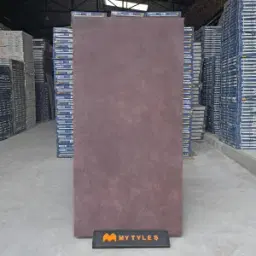
₹110.00 / Sq.Ft
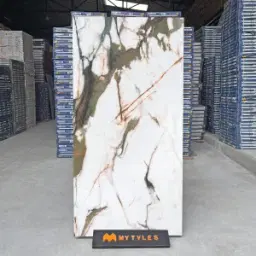
₹120.00 / Sq.Ft
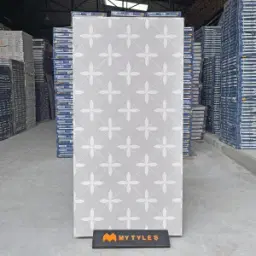
₹140.00 / Sq.Ft
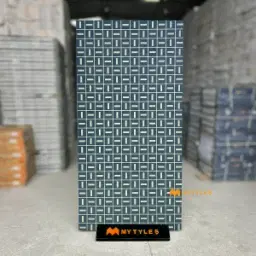
₹160.00 / Sq.Ft
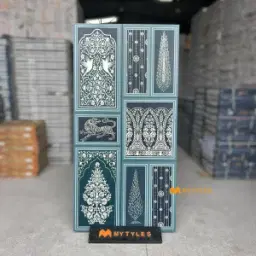
₹160.00 / Sq.Ft
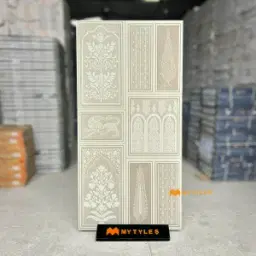
₹160.00 / Sq.Ft
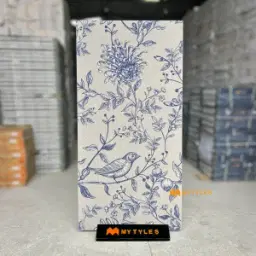
₹160.00 / Sq.Ft
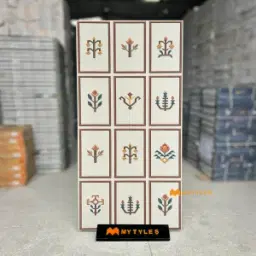
₹160.00 / Sq.Ft
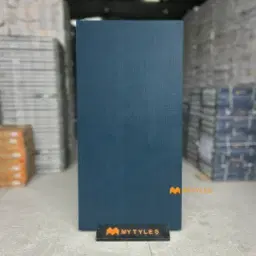
₹160.00 / Sq.Ft
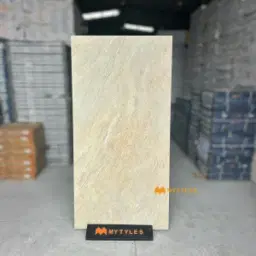
₹160.00 / Sq.Ft
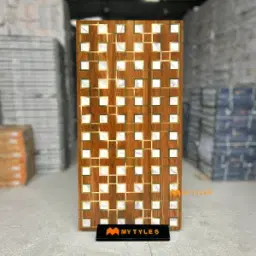
₹125.00 / Sq.Ft
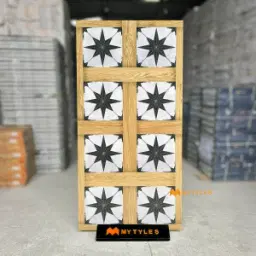
₹125.00 / Sq.Ft
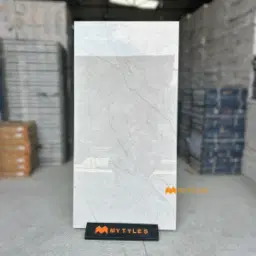
₹120.00 / Sq.Ft