Inspiration Gallery
Blog
Tile Calculator
08065423741



.svg)


6 Tile Quality Checks That Most Buyers Ignore
ByNandana Priya

Tue , Nov 03 , 2026

Read Time: 5 Min


 Copied!

The tile buying journey doesn't end right after picking the most beautiful tile for your space. Most tile buyers usually walk past some of the tile quality checks that might cost them their time and money later on.
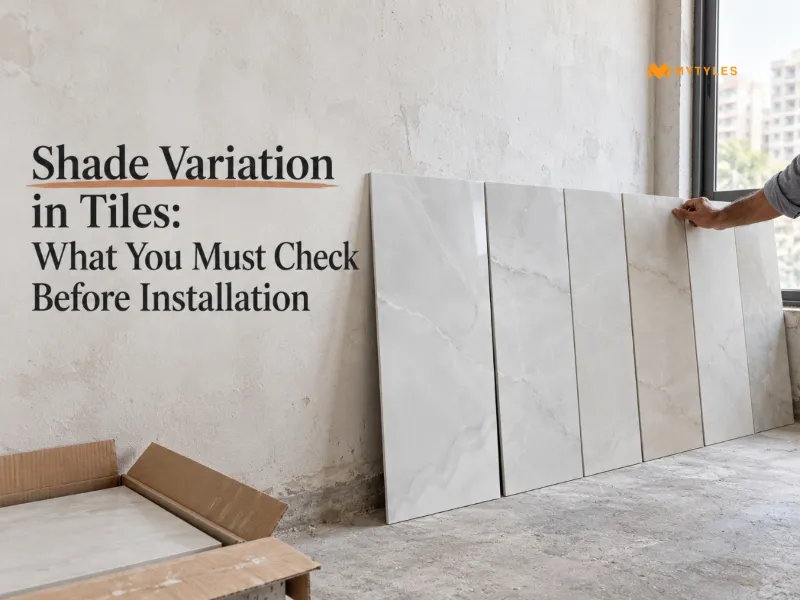
Tiles have natural small differences in shade, size, thickness, surface texture, pattern, or finish. But variations beyond that must be identified and replaced before it's too late. This helps avoid cracked tiles, lifted corners, and shade variations after the tile is installed.
These 6 tile checks just take a few extra minutes and save you from regret later. Read the blog to find out how to check tile quality before the tiles are laid.
1. Batch Number And Shade Check
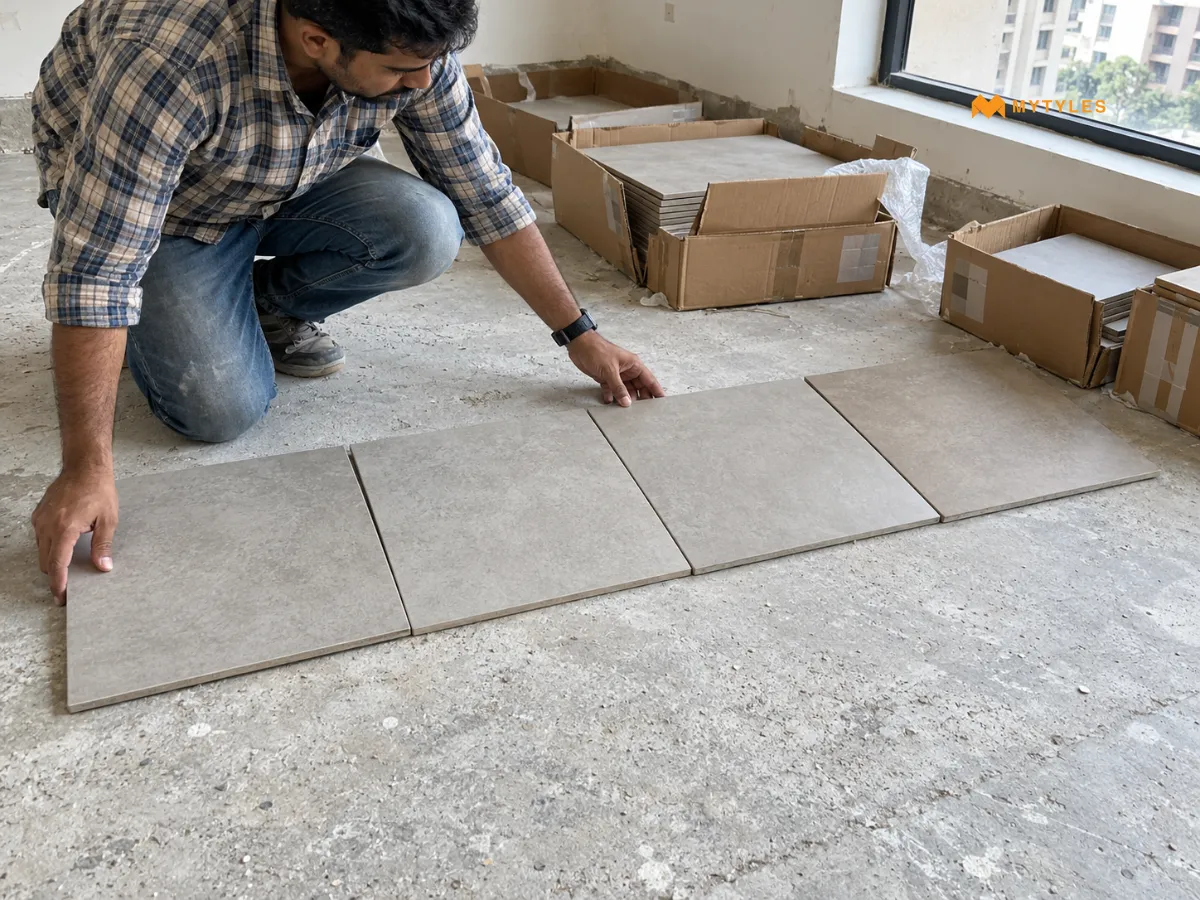
When the tile boxes reach your doorstep, take a moment to check the batch numbers of each box. Cross-check if all the boxes are from the same batch.
Why is this step important? Every tile production cycle shows slightly different changes. The color, texture, and tone can shift between batches, creating 'tile shade variation'. These changes are often almost invisible on individual tiles but become very obvious when viewed across a full floor.
After checking the batch numbers, take a few tiles from different batches. Place them side by side in the space where you are going to use them. Look for any difference in color in natural light. Even one mismatched box can ruin the consistency of an entire room.
What To Do If There's A Problem:
- Contact the tile showroom before tile installation for replacement.
- Always order extra tiles. This is important because it might take time to get tiles from the same batch again.
- If possible, use tiles from the same batch together in one room or section.
Note: Tiles with rustic, wooden, natural stone, and handmade designs have variation in shade as part of their design. This is normal and often adds character to the final look. Natural stone-look and handmade-look tiles, in particular, are often designed with visible variation to recreate the uneven tones. However, the batch number should be checked to avoid any confusion later.
2. Edge And Surface Defect Check
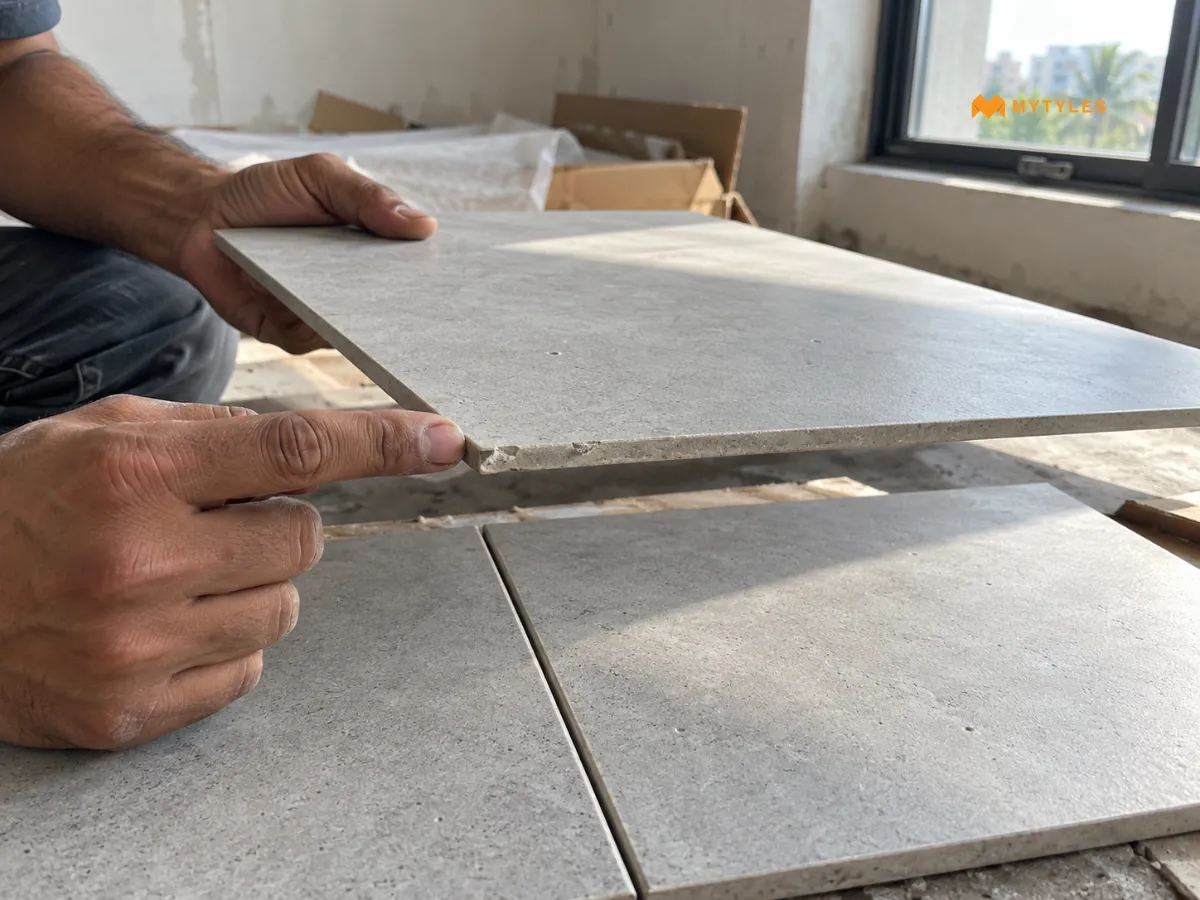
Some tile surface defects can be seen before grouting, but they often become more noticeable once the grout lines are filled. By that time, the gaps tighten, and every imperfection becomes permanent.
Run your finger slowly along all four edges of the tile. Feel for chips, rough patches, or uneven corners. Also, check the tile face under bright light at an angle. Look for pinholes, glaze cracks, or uneven surface coating.
They are small defects now, but on a finished wall or floor, they catch dirt, hold stains, and age badly. Poor edge quality can also lead to uneven joints, wider gaps, rough alignment, and a less clean finish. A quick tile quality test can prevent this from happening.
How To Fix It:
- Place a couple of tiles side by side and see if the edges match up properly.
- Keep slightly imperfect tiles for corner cuts or less visible spaces if they are still usable.
- Inform the seller before fixing if many tiles have visible defects.
3. Dry Lay Before You Fix
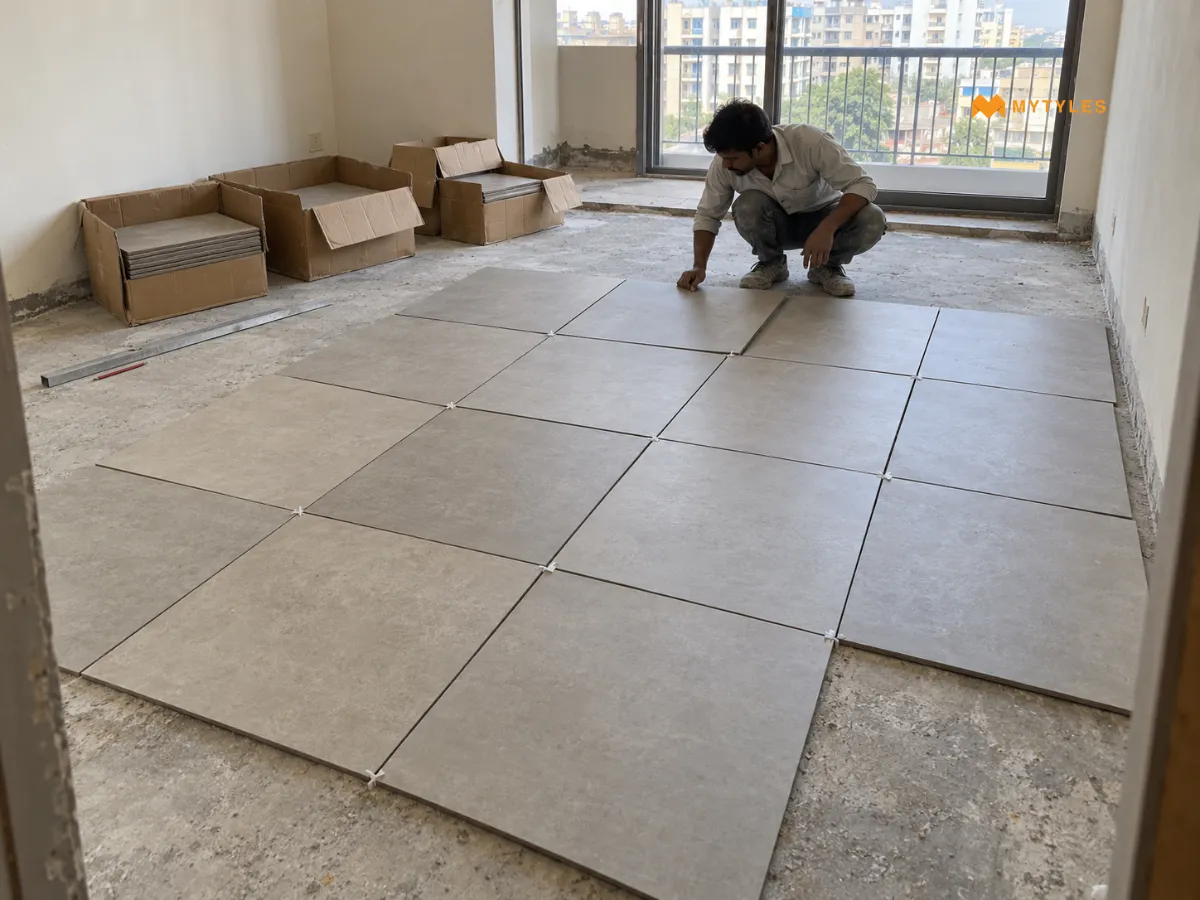
It is always better to check the tiles before installation, as the dry lay will give a quick look at how the tile looks in that particular space.
Before any adhesive goes down, take your tiles out of the boxes and check them before installation by laying them loosely across the floor. No fixing, no grouting. Just tiles placed in position, in natural light.
This check is avoided by many, but it is one of the most practical ways to check your tiles for size differences between pieces that were not visible in the box. Tile shade variation across boxes from the same batch can also be spotted by dry laying. This also helps you find tiles that are not flat before it is too late to return.
Suggested Solution:
- Size variation tiles can be used for edge cuts or corners where full tiles are not needed
- Tile shade variation that shows up during dry lay should be reported to the seller before any fixing begins
- Tiles that are not flat should be set aside and replaced before grouting locks them in place
- Rearrange tiles from different boxes to spread any slight variation evenly across the floor
4. Thickness And Dimensional Accuracy Check
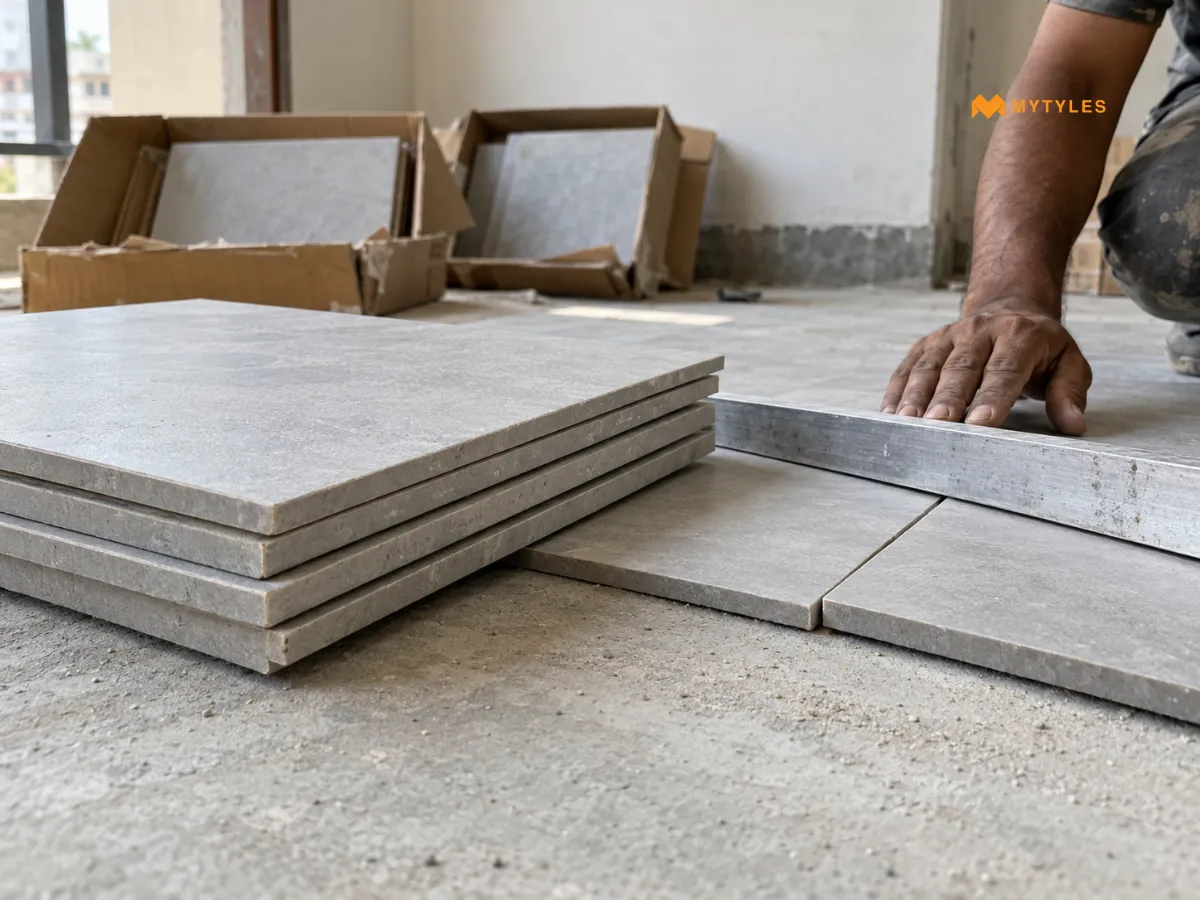
Tiles might vary slightly in thickness. Even a small thickness difference is enough to create lippage. This is the small but visible height between two tiles after laying. This check matters even more for large-format tiles. This is especially important because tile thickness variation across a wide floor becomes very obvious from a distance.
Tile dimensional accuracy shows up clearly when a few pieces from different boxes sit together on a flat surface. Check whether the edges line up properly and whether all tiles look similar in size and thickness. Stacking a few pieces on top of each other also helps spot any that look bigger, smaller, or uneven.
A quick size check before laying gives the finished floor a cleaner and more balanced look. Size differences that go unnoticed before fixing become very visible once the tiles are down.
What You Can Do:
- Tiles with a noticeable thickness difference should be set aside and not mixed with the rest
- Report dimensional inconsistencies to the seller before installation begins
- If lippage appears during dry lay, swap out the uneven tiles before any adhesive goes down
5. Water Absorption Check
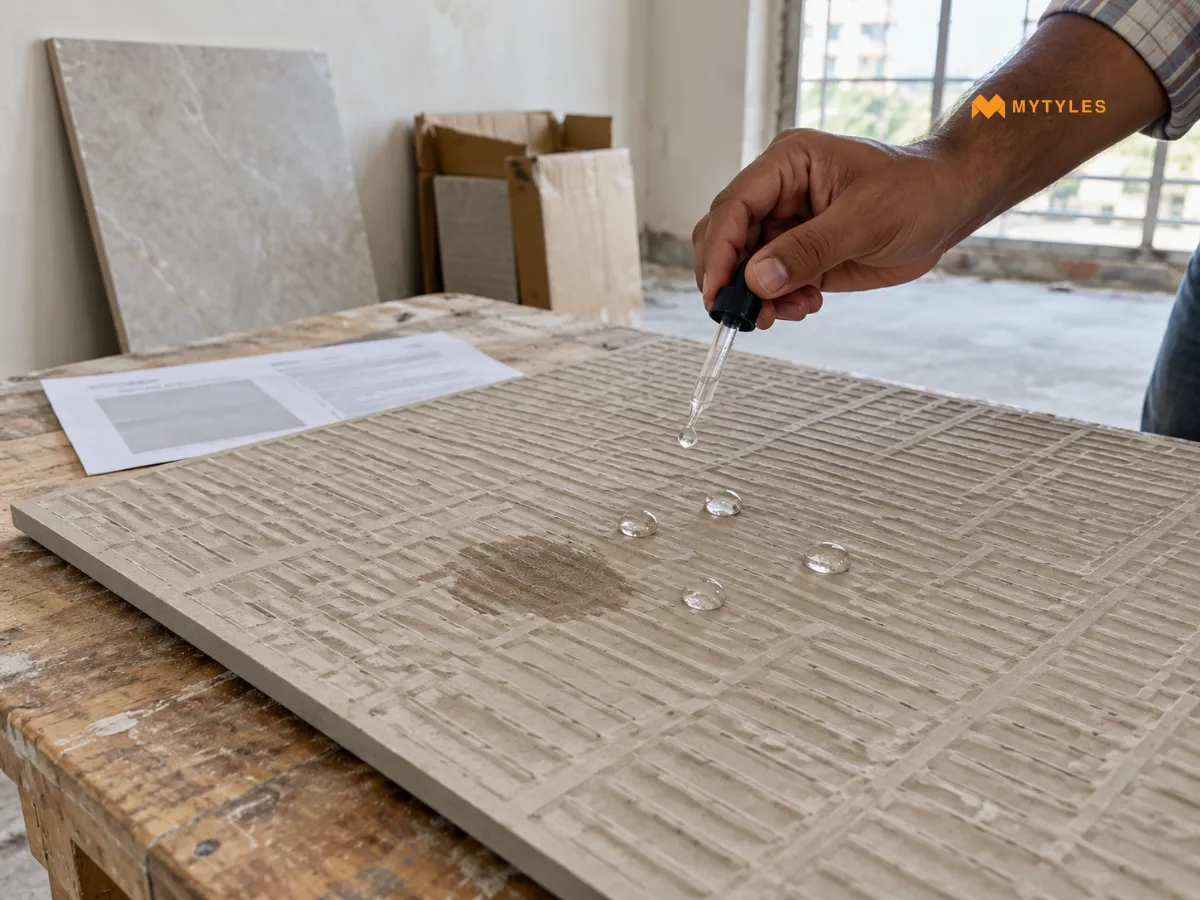
A tile's water absorption rating tells you a lot about how it will perform in bathrooms, kitchens, balconies, and other water-heavy spaces. Checking the specification sheet or the tile box for the water absorption rate gives a dependable starting point.
A tile meant for wet areas should carry an absorption rate below 0.5%, and this figure should be confirmed before the purchase is finalised. A simple drop test can work as a quick secondary water absorption test, but it should never replace the specification sheet.
To try it, add a few drops of water on the back side of the tile. Check the time to see how long the water stays on the surface. The tile is porous if the drops disappear fast. This shows the tile can become weak over time and is not the best choice for areas that see water daily.
Suggested next steps:
- If water disappears within seconds on the back of the tile, avoid using it in bathrooms, kitchens, or balconies
- For wet areas, swap to a tile with an absorption rate below 0.5% before installation begins
6. Slip Resistance Check
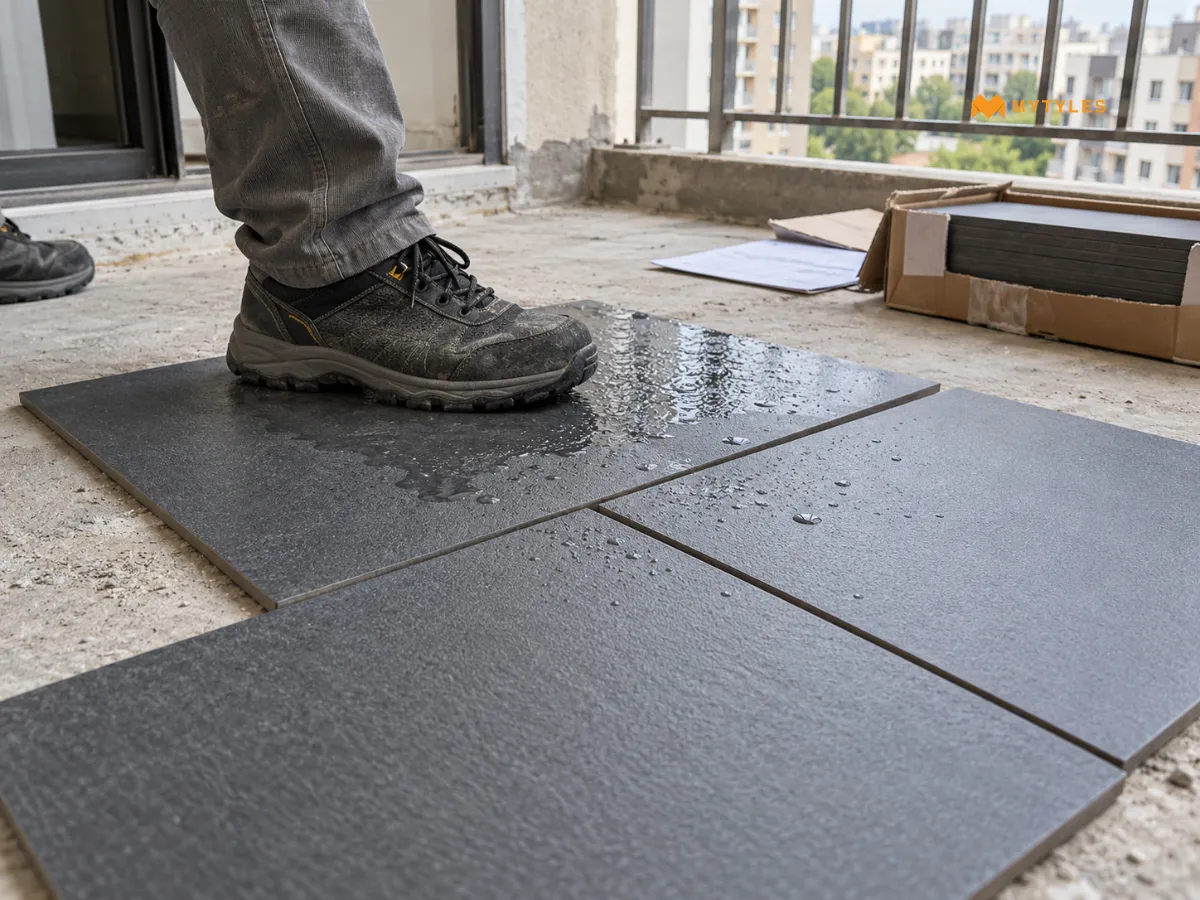
In quality checks for floor tiles, grip also matters the most. Safety should never be compromised, especially when the tiles are used on floors. The R rating is the tile slip resistance check that tells you how much grip a tile offers underfoot.
As a general guide:
- R9 works for dry indoor areas.
- Bathrooms, kitchen floors, and balconies need at least R10 or R11.
- Outdoor spaces that stay consistently wet need R12 or above.
Note: If the R rating on the box does not match the space it is meant for, do not install it and check with the seller for a suitable replacement.
Quick Checklist Before You Install Tiles
Make the whole tiling journey smoother by taking out a few minutes for the tile defects check. Here is a quick checklist:
- Match batch numbers and shade codes across every box to avoid tile shade variation
- Check all four edges for chips and surface defects
- Dry-lay tiles before installation in natural light
- Press two tiles face-to-face and check for tile-thickness variation
- Do a quick water absorption and tile slip resistance test
Check Tiles Before Small Issues Become Permanent
The right tiles are meant to work well on your floor and walls over time. Ignoring a few tile quality checks can lead to costlier fixes later. For the tile to look beautiful and practical in your space, do these 6 tile quality checks. These need no special equipment and no technical knowledge. Just attention and a few extra minutes.
Visit the MyTyles experience centre or browse through the website and find tiles that generally look good and tend to perform well in daily use.

What Are The Most Important Tile Quality Checks Before Buying?

The most important tile quality checks include reviewing flatness, edge finish, surface quality, shade consistency, and durability. Buyers should also check whether the tile is suitable for the room, wall, floor, or outdoor area where it will be installed. These simple checks help reduce installation issues, prevent avoidable wastage, and support better performance after the tiles are laid.
How Can You Check Tile Quality Without Professional Tools?
If you want to know how to check tile quality, start by looking closely at the tile surface, corners, edges, and finish. Place a few tiles together to see whether their shape and size look even. You can also compare pieces from different boxes, check them in bright light, and look for visible flaws before making the final purchase.
Why Is Tile Flatness Important Before Installation?
A tile flatness test helps you understand whether the tile sits evenly on a surface. If a tile is not flat, it can create raised edges after installation, which may affect the final look and walking comfort. Checking this before the work begins helps the installer create a smoother layout with fewer visible surface-level differences.
What Is A Tile Warpage Test?
A tile warpage test is done to check whether a tile has any bending or curve across its surface. Even a slight curve can affect how neatly the tile sits beside nearby pieces. This check is important before installation because it helps avoid uneven joints, visible lippage, and an untidy finish once the surface is completed.
How Do You Check For Shade Variation In Tiles?
Tile shade variation can be checked by placing several tiles together under natural or bright lighting. This helps you notice changes in tone, pattern, and color depth before installation starts. Once the variation is understood, the installer can mix the tiles across the surface in a balanced way so the finished area looks more natural and consistent.
What Does Tile Water Absorption Tell You About Quality?
A tile water absorption test shows how much moisture a tile can take into its body. Tiles with lower absorption are usually better suited for areas that may face moisture, stains, or outdoor exposure. This detail helps buyers choose tiles that match the practical needs of kitchens, balconies, utility areas, and other spaces used regularly.
Why Should You Inspect Tiles From Multiple Boxes Before Purchase?
A proper tile inspection before buying helps you understand whether the full batch looks consistent. One tile alone may not show the actual shade, finish, pattern movement, or surface feel. Checking pieces from different boxes gives a clearer idea of how the completed wall or floor may look once all tiles are installed together.

ABOUT THE AUTHOR
Nandana Priya
With a strong interest in design, creativity, and emerging tile trends, I enjoy turning ideas from the world of tiles and interiors into engaging, meaningful reads. My writing focuses on creating well-researched content that helps readers understand design choices with more clarity and confidence. I bring together research, design awareness, and digital marketing insights to craft content that is relevant, easy to follow, and thoughtfully written for todays homeowners and design-conscious readers.