Inspiration Gallery
Blog
Tile Calculator
08065423741



.svg)


How to Pair Moroccan Tiles With Plain Tiles in Indian Homes
ByAditi Bardhan

Tue , Sep 22 , 2026

Read Time: 5 Min


 Copied!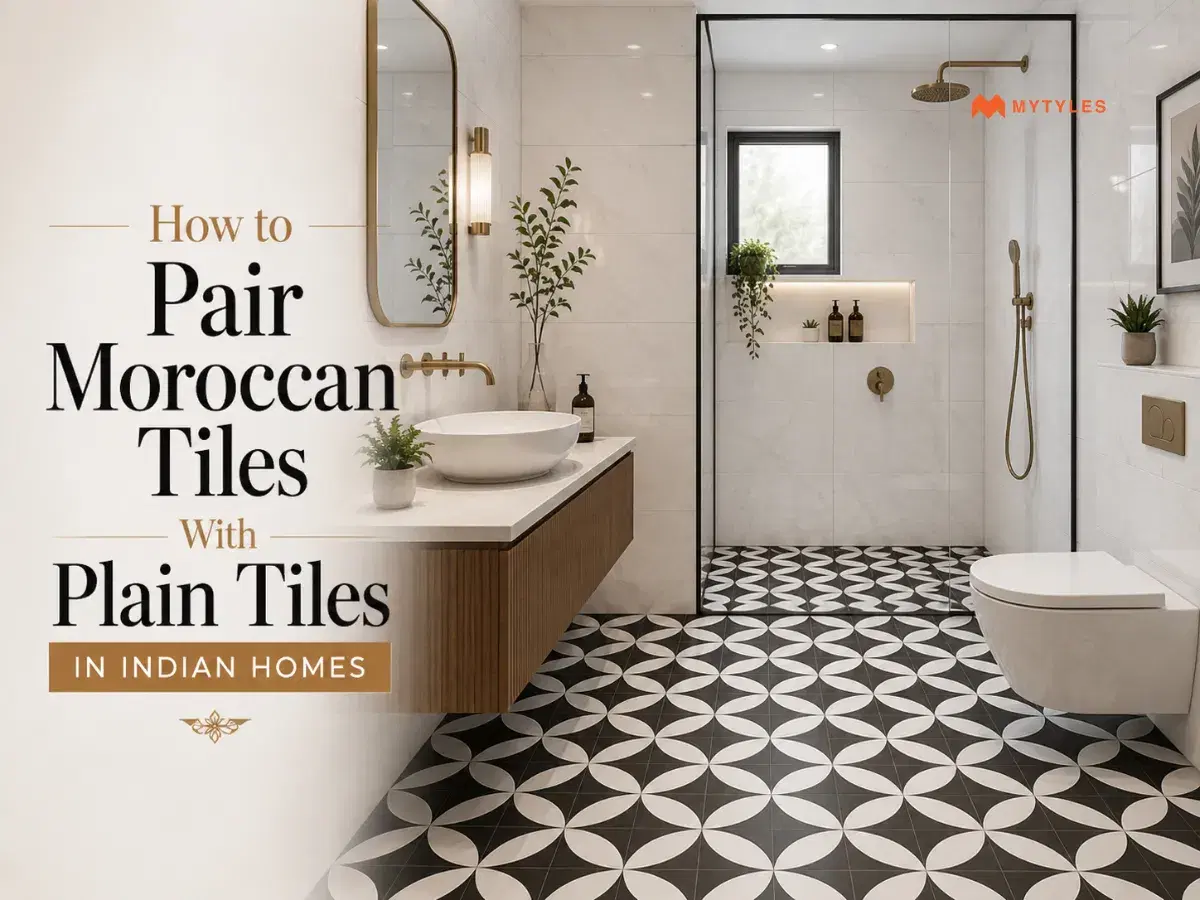
Moroccan tiles can bring more pattern and colour into a room, but how much you use depends on the design, pattern scale and the rest of the interior. A full wall or floor can work well in some spaces, while in others, pairing Moroccan tiles with plain tiles may give the pattern more breathing room. This approach can work in kitchens, bathrooms, balconies, entrances and living rooms.
A practical way to pair the two is to let one tile carry most of the pattern and keep the other more restrained. When deciding how to pair Moroccan tiles with plain tiles, look at the colours, pattern size and how much of each surface will remain visible once the room is furnished.
The Simple Rule for Pairing Moroccan Tiles With Plain Tiles
The easiest way to understand how to pair Moroccan tiles with plain tiles is this: choose one hero tile and one quiet tile. The Moroccan tile should carry the pattern. The plain tile should carry the balance.
A simple method is to pick one colour already present in the Moroccan tile and repeat it through the plain tile. For example, if the pattern has blue and white, a plain white tile will usually work better than adding a third strong colour.
Use these checks before finalising:
- Keep Moroccan tiles on one wall, one floor patch or one backsplash area.
- Use plain tiles around them so the pattern does not feel too heavy.
- Match warm patterns with cream, beige or terracotta.
- Match cool patterns with white, grey, blue or soft green.
- Check the grout before installation because grout can change the whole look.
- Avoid using strong patterns on both floor and wall in the same small room.
Good Moroccan tile combinations look planned, not loud.
9 Moroccan Tile and Plain Tile Combinations to Try
The best pairing depends on room size, lighting, floor colour and how the space is used every day. These Moroccan tile design ideas are practical for Indian homes where cleaning, moisture, dust and daily use matter.
Blue Moroccan Tiles With Plain White Tiles
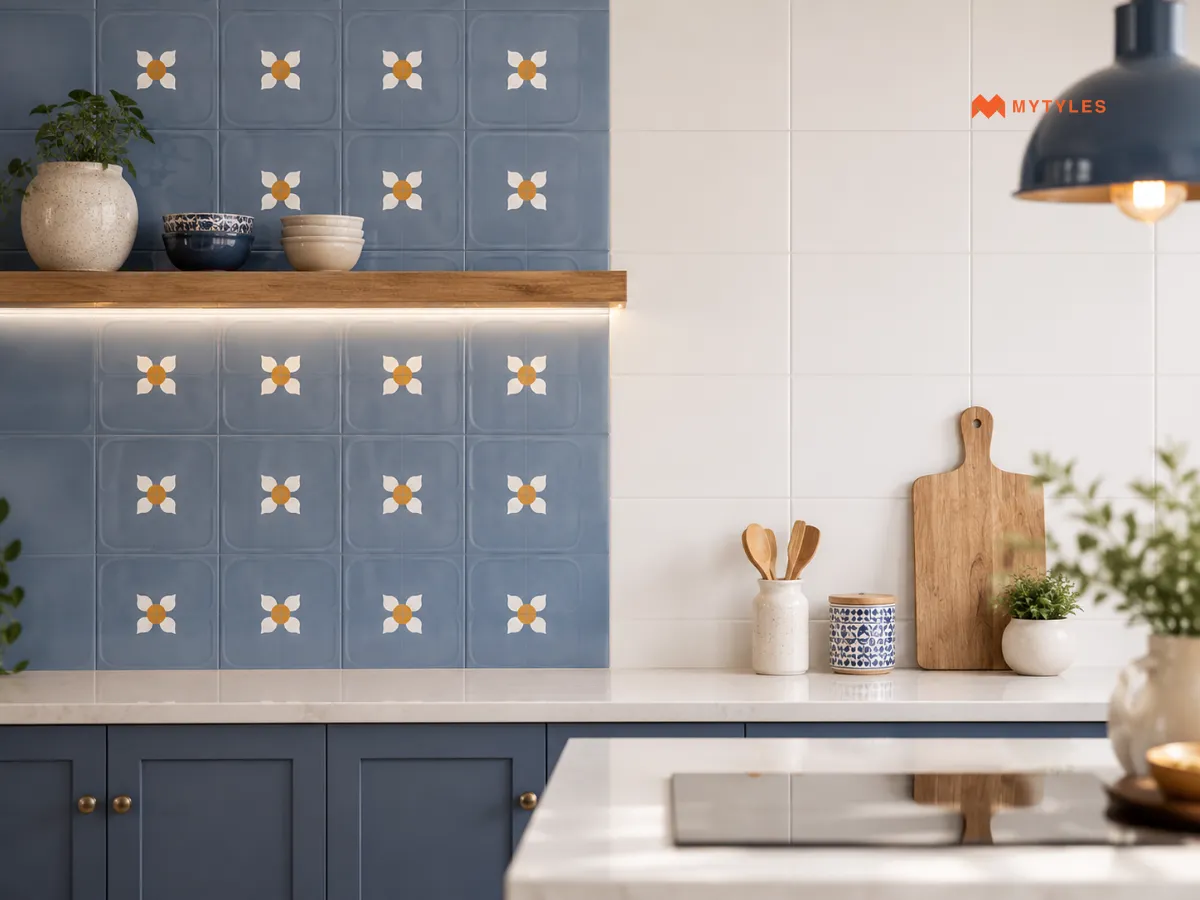
Blue Moroccan tiles look clean and bright when paired with plain white tiles. This combination works well in bathrooms, kitchens, powder rooms and balconies that need a fresh look. Use the patterned tile on a backsplash, basin wall or one small floor panel. Keep the rest of the surface white so the blue does not feel too strong. For Moroccan pattern tiles with navy, sky blue or teal details, plain wall tiles in white can keep the room light. This is one of the easier Moroccan wall tile combinations for compact homes.
Green Moroccan Tiles With Warm Beige Tiles
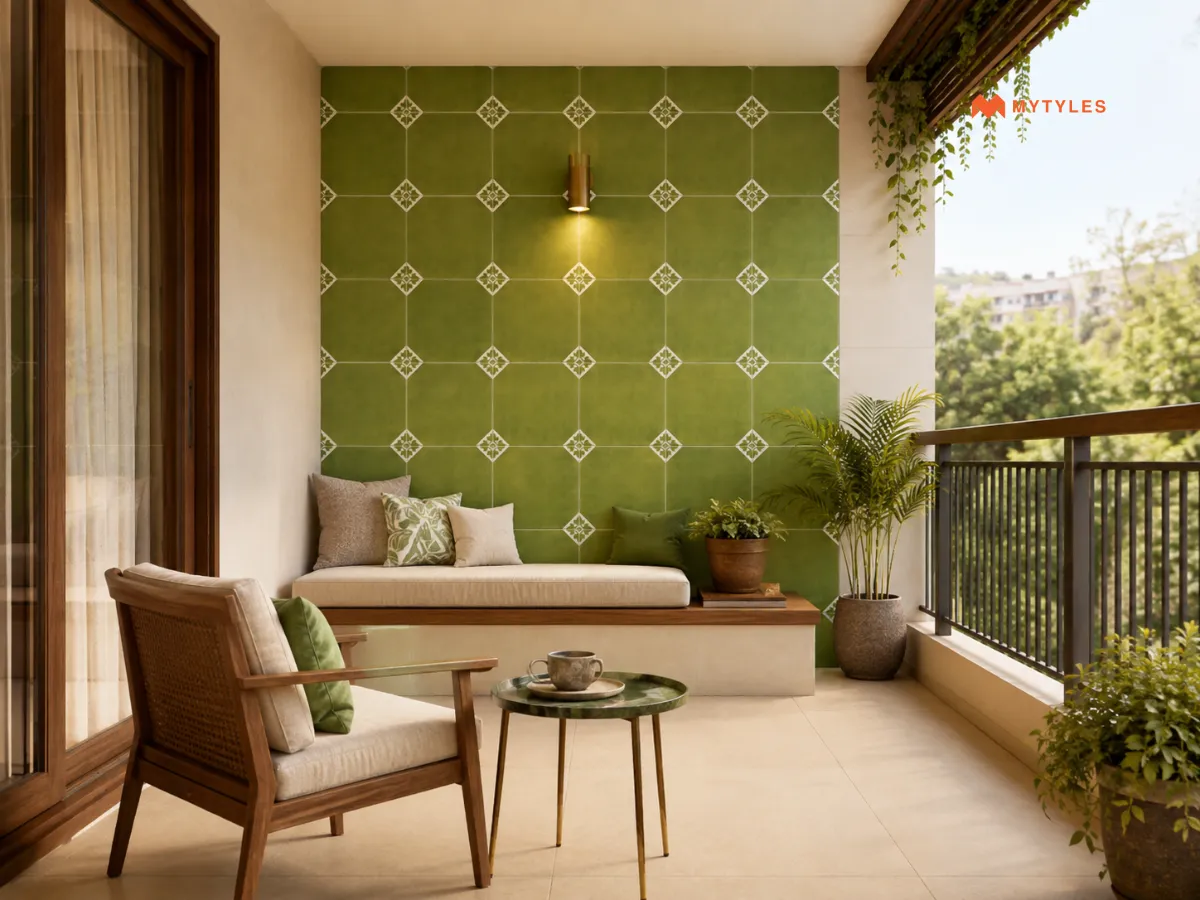
Green Moroccan tiles work well when the room needs a softer colour. Sage, olive and muted green Moroccan tile colour combinations look better with beige than with bright white in many Indian homes. This pairing suits kitchens, balconies and bathrooms with wooden accents, brass fittings or warm lights. Beige keeps the surface calm, while green adds detail.
Terracotta Moroccan Tiles With Cream Tiles
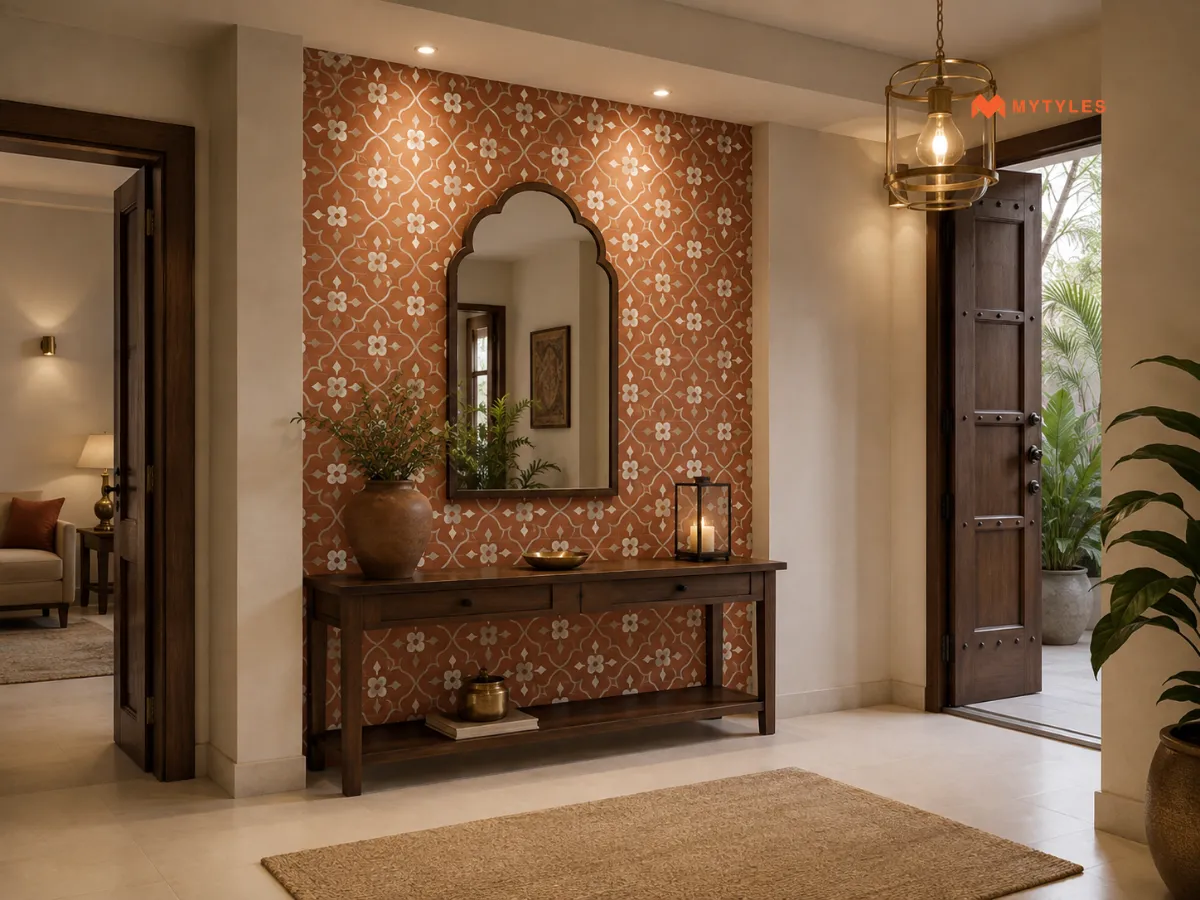
Terracotta Moroccan tiles bring an earthy Indian feel. Cream tiles help soften that warmth so the room does not look too heavy. Use this pairing in balconies, sit-outs, pooja-side corners, entrance floors and rustic kitchens. Terracotta works well with plants, wooden seating, clay pots and warm exterior walls. If you like colourful Moroccan tiles, balance them with cream surfaces instead of adding more colours. This combination works especially well with plain floor tiles in semi-open areas where dust and light both affect the final look.
Black-and-White Moroccan Tiles With Soft Grey Tiles
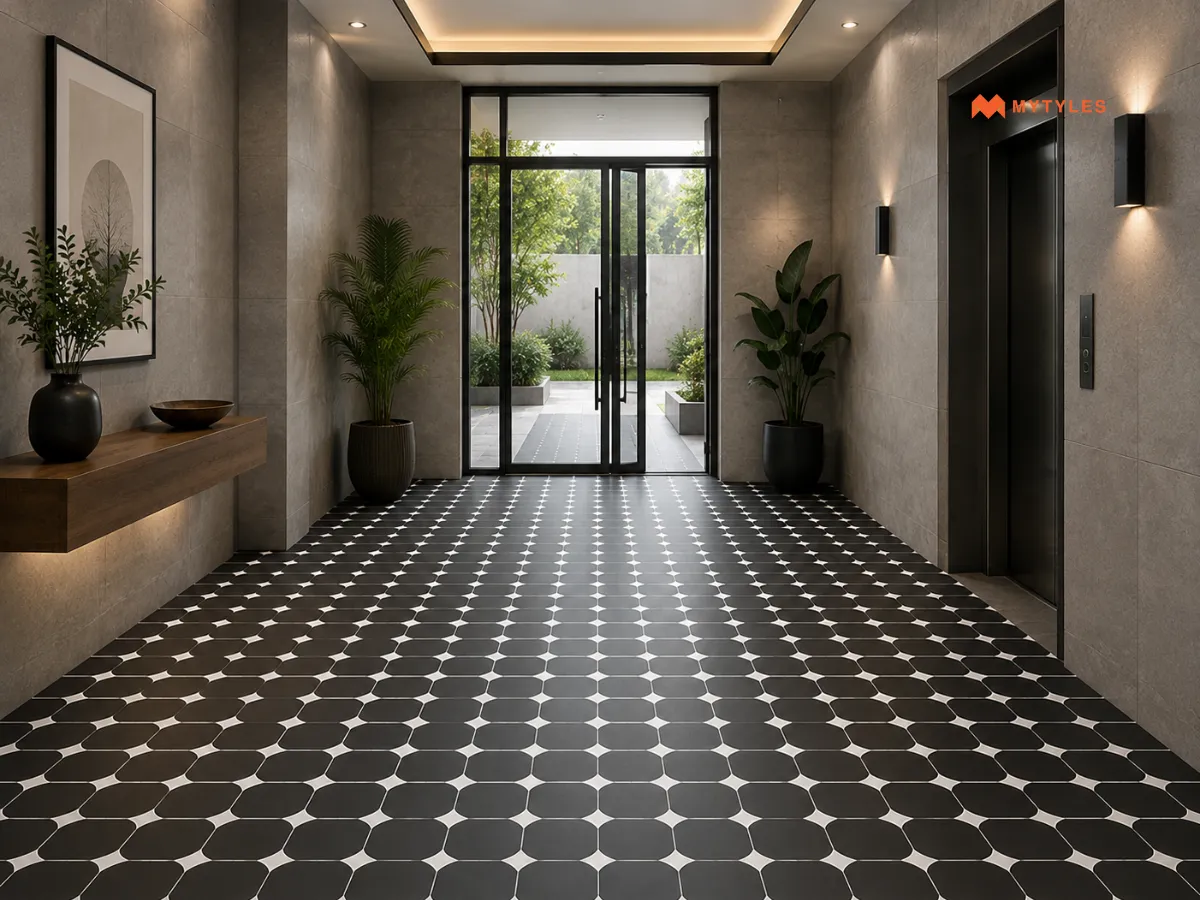
Black-and-white Moroccan tiles look sharp, but they can feel strong if used across a large area. Soft grey tiles can create a softer transition. Use this idea for bathroom floors, kitchen backsplashes or entrance patches. It suits homes with black fittings, white cabinets, grey walls or simple furniture. Many Moroccan designs use geometric tile patterns, so keep the nearby surface calm. Pairing neutral tiles with patterned tiles can make the design look clearer without making the whole space feel busy.
Moroccan Backsplash Tiles With Plain Kitchen Walls
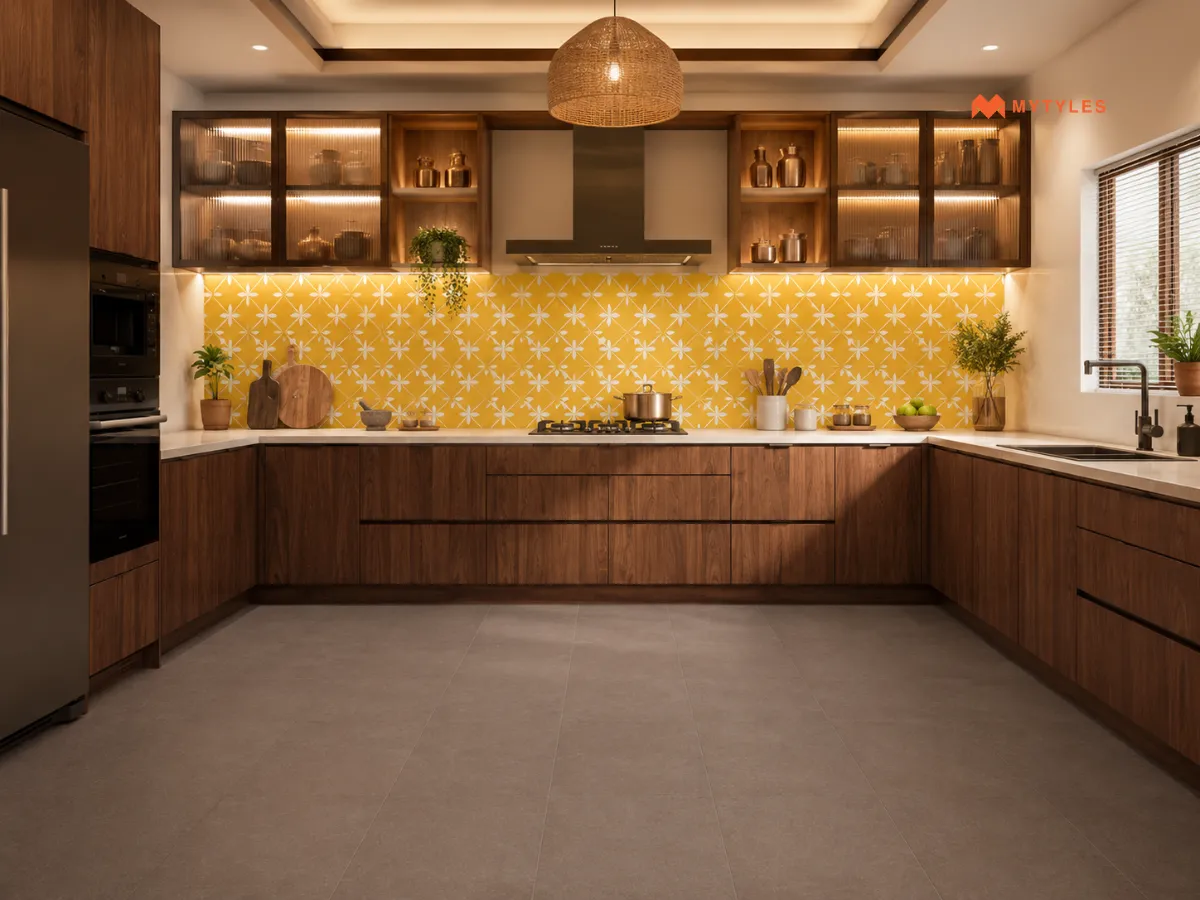
A kitchen backsplash is one of the best places to use Moroccan tiles. The area is small enough for pattern but visible enough to make the kitchen look more designed. Use Moroccan backsplash tiles behind the hob, sink or open shelf area. Keep the side walls simple with plain tiles or painted surfaces. This works well for Moroccan kitchen wall tiles because the pattern can sit between the countertop and cabinets. For Moroccan tiles for kitchen areas, choose a surface that can be wiped easily, especially near oil and cooking stains.
Moroccan Shower Tiles With Plain Bathroom Walls
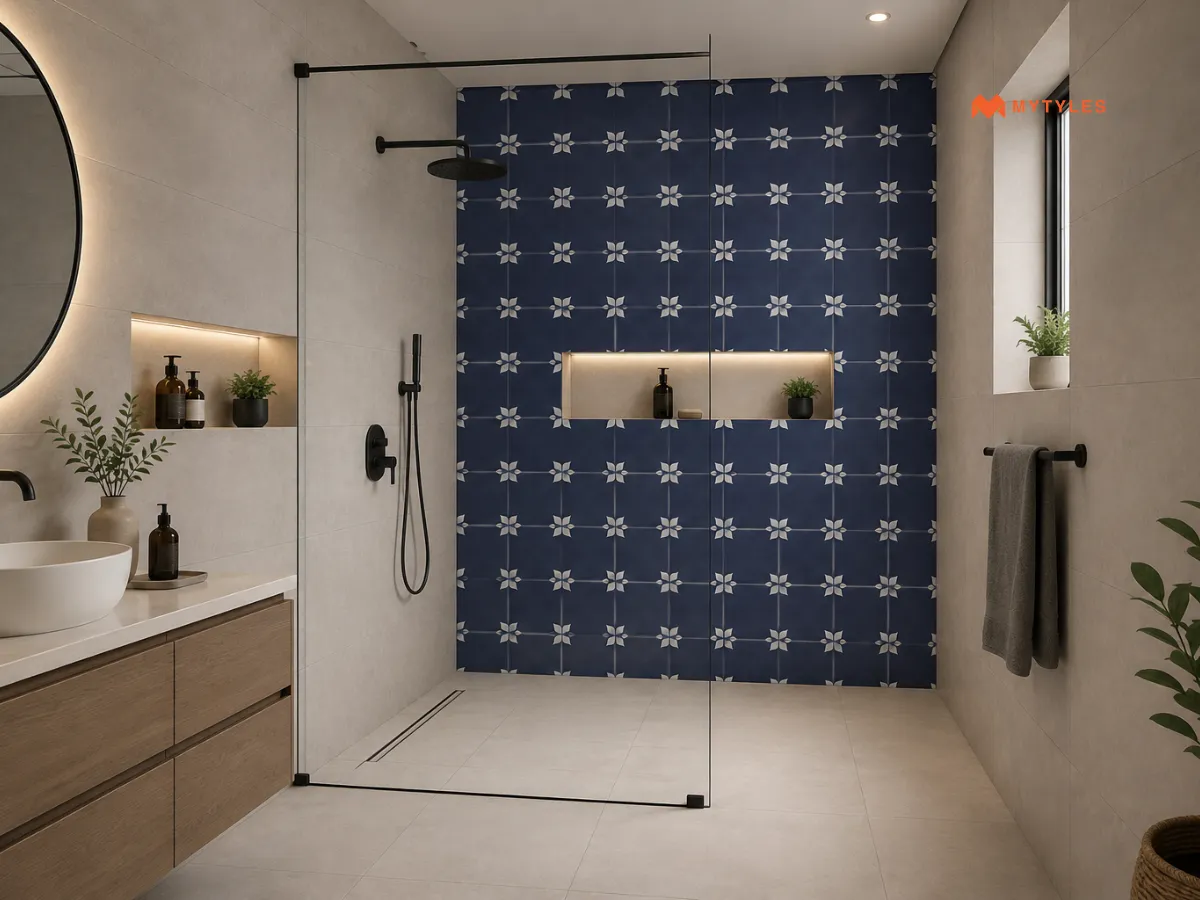
Moroccan tiles can look beautiful in a shower area, but they should be used carefully. A small shower wall, niche or strip can be enough. Use Moroccan bathroom wall tiles on one shower wall and keep the other walls plain. White, grey, beige or soft green tiles can support the pattern nicely. For Moroccan tiles for bathroom spaces, check the finish and wet-area suitability before buying. When the floor has a pattern, the shower wall should remain plain. If the shower wall has a pattern, keep the floor simple.
Moroccan Floor Insets With Simple Surrounding Tiles
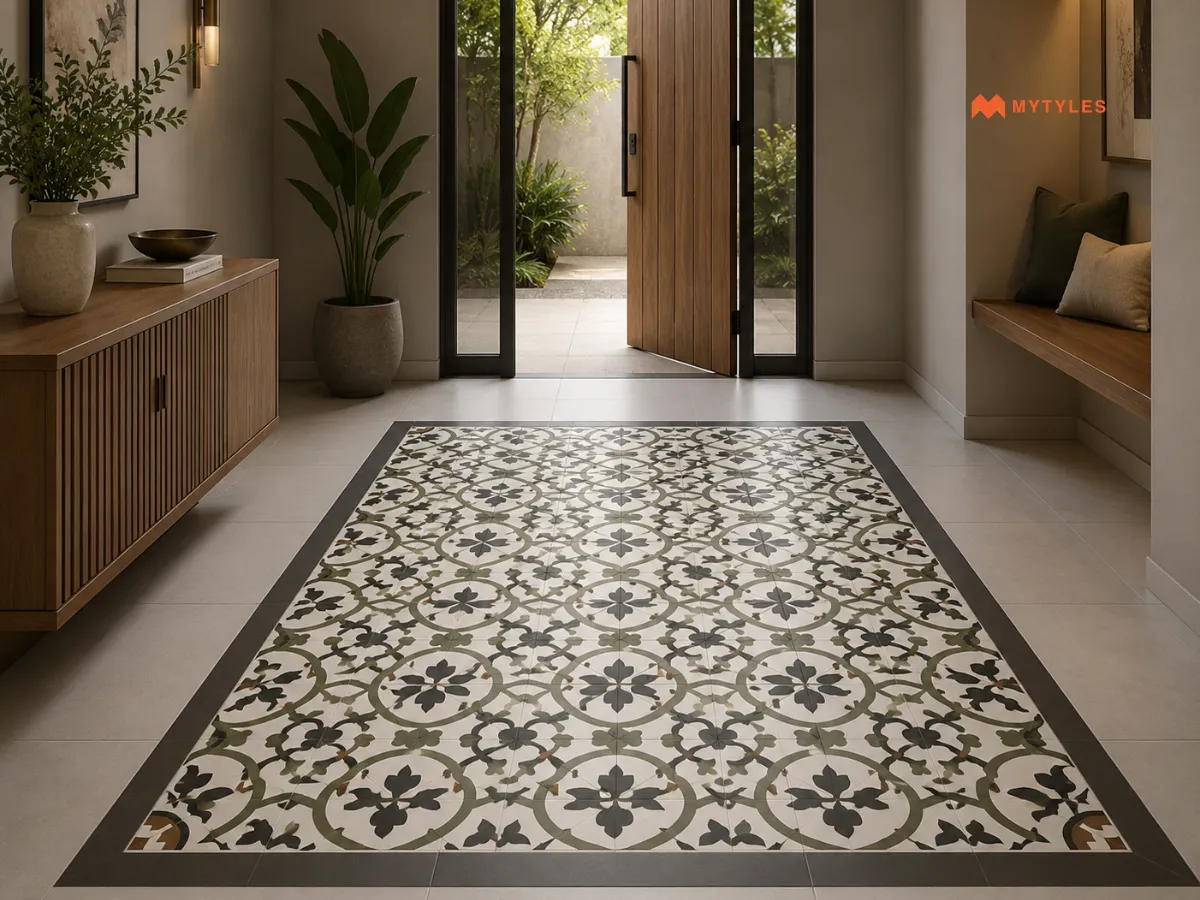
A floor inset is a smart way to use Moroccan tiles without covering the whole floor. It can look like a small rug made with tiles. This works well in foyers, dining corners, balconies and powder rooms. Use the Moroccan tile in the centre and surround it with plain tiles. For Moroccan floor tile combinations, keep the border clean and measured properly. Using patterned tiles with plain tiles on floors needs careful layout planning, especially near doors, drains and furniture legs.
Moroccan Feature Tiles With Neutral Living Room Walls
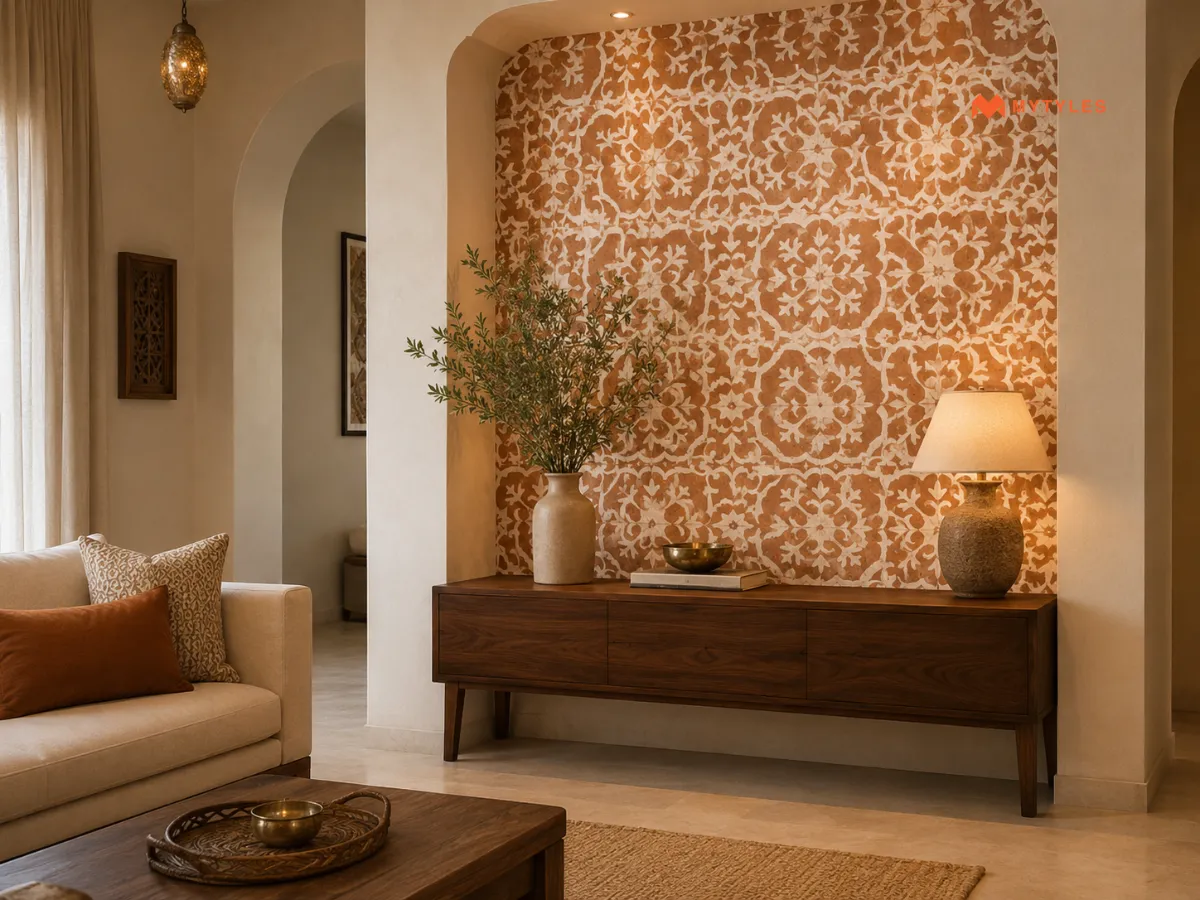
Moroccan tiles can work in living rooms too, but they should not compete with the sofa, curtains, TV unit or floor. Use them as a small wall panel, niche backdrop or console wall. Feature wall tiles with Moroccan patterns look better when the rest of the room is neutral. Beige, ivory, grey or white walls give the pattern space to stand out. Use accent tiles for walls only in one selected area. This helps with Moroccan tile interior design in homes that need detail without too much colour. It also suits Moroccan-inspired interiors with warm lights and simple furniture.
Moroccan Tiles With Plain Tiles for Balconies and Entrances
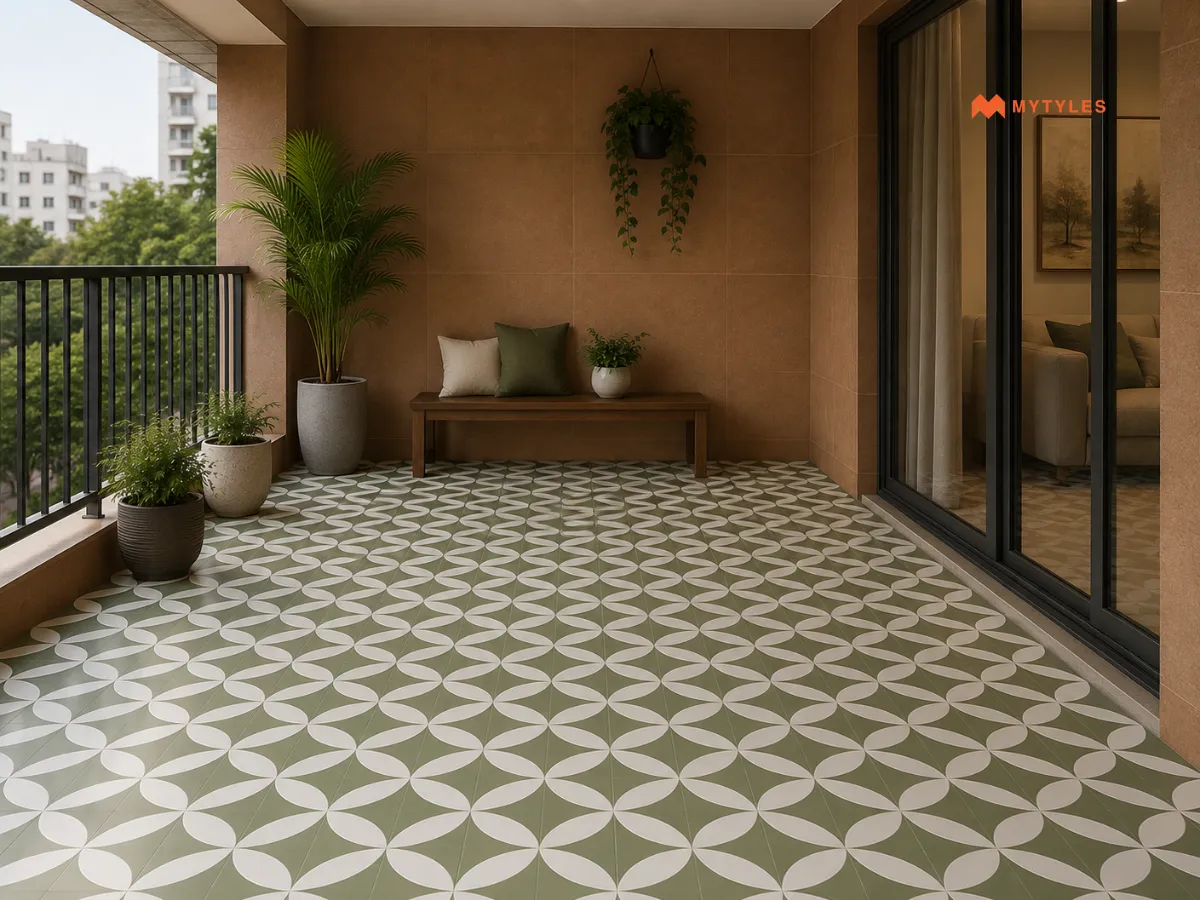
Balconies and entrances can handle Moroccan tiles well because these areas are smaller and can take a little more character. The pattern can make the floor or wall feel more planned. For Moroccan tiles for Indian homes, use plain tiles around the pattern so cleaning stays manageable. On balconies, check outdoor suitability, relevant slip-resistance information and surface texture before using any tile. This pairing can work with cream, beige, grey or terracotta plain tiles. For entrances, keep the surrounding floor simple so the pattern does not clash with the main living room tiles.
Common Mistakes When Mixing Moroccan and Plain Tiles
Moroccan tiles are strong by nature. Most mistakes happen when the pattern is used without giving enough space around it.
Avoid these common issues:
- Using Moroccan tiles on the floor and wall together in a small bathroom.
- Pairing busy tiles with another strong patterned surface.
- Choosing a plain tile colour that is not present anywhere in the pattern.
- Using a strong grout shade without testing it first.
- Covering a full kitchen wall when only the backsplash needs pattern.
- Picking rough tiles near heavy cooking areas where oil can settle.
- Ignoring tile cuts around corners, sockets, niches and drains.
- Using too many colours in one compact space.
- Choosing a dark patterned floor for a room with weak lighting.
Simple tile colour matching ideas can prevent most of these mistakes. Pick one shade from the Moroccan tile, repeat it in the plain tile and keep the rest of the room quiet.
Also test the grout colour for Moroccan tiles before installation. White grout can soften the pattern. Grey grout can show the shape clearly. Dark grout can make the design look sharper, but it may feel heavy in a small room.
Balance Patterned Moroccan Tiles with Clean Plain Tiles
Moroccan tiles can work well with plain tiles when the colours, pattern scale and overall room layout are planned together. The right balance will depend on how much pattern you want to see in the finished space. You can compare Moroccan tiles with plain tile options online at MyTyles or visit the MyTyles Experience Centre to see selected combinations in person before making your choice.

What Plain Tiles Go Best With Moroccan Tiles?

Plain white, beige, cream, grey and soft green tiles usually work well with Moroccan tiles. The safest choice is to pick one shade already present in the Moroccan pattern and use that for the plain tile. This keeps the room connected and stops the pattern from looking random or too loud.
Which Colours Match Moroccan Tiles?
Blue, green, terracotta, black, white, beige and grey are common colours that match Moroccan tiles. The right choice depends on the main tile pattern and the room light. Warm Moroccan tiles pair better with cream or beige, while blue or black-and-white patterns usually sit better with white or grey.
Can Moroccan Tiles and Plain Tiles Be Used Together in a Bathroom?
Yes, plain and Moroccan tile combinations can be used together in a bathroom. Use Moroccan tiles on one shower wall, basin wall, niche or floor patch. Keep the rest of the bathroom plain. For wet zones, check tile finish, slip suitability for floors and grout quality before installation.
How Do You Pair Moroccan Tiles in a Kitchen?
Use Moroccan tiles on the backsplash and keep the other kitchen walls simple. Match the plain tile with the cabinet colour, countertop and one shade in the Moroccan pattern. Avoid rough textures near the cooking area because oil and masala stains can settle into grooves and become harder to clean.
Should Moroccan Tiles Be Used on the Floor or Wall?
Moroccan tiles can be used on both floors and walls, but not always together in the same small room. For floors, use them as an inset, border or selected patch. For walls, use them as a backsplash or feature area. Keep surrounding tiles plain for better balance.
How Much Moroccan Tile Is Too Much?
Moroccan tile feels too much when every surface has a pattern. In most rooms, one patterned area is enough. Use it behind the stove, inside a shower, around a niche, on an entrance floor or as a feature wall. Plain tiles should cover the larger surrounding surface.
What Grout Colour Should You Use With Moroccan Tiles?
The grout colour should match the look you want. Light grout makes Moroccan tile combinations look softer. Grey grout shows the pattern more clearly. Dark grout gives strong contrast, but it can look heavy in small spaces. Test the grout sample with the tile before final installation.

ABOUT THE AUTHOR
Aditi Bardhan
Aditi Bardhan is a professional content writer with over five years of experience creating SEO-focused, research-backed content across diverse industries. She specialises in the tile and surface materials space, writing for homeowners, architects, interior designers, and trade professionals. Her work combines technical research, design awareness, and a strong understanding of customer needs, helping readers make clearer and more confident choices. Through her content, Aditi simplifies complex material concepts, highlights practical design benefits, and helps brands build trust and authority in the tile and construction industry.
Latest Blogs By MyTyles