Inspiration Gallery
Blog
Tile Calculator
08065423741



.svg)


Shade Variation In Tiles: What You Must Check Before Installation
ByNandana Priya

Mon , Nov 02 , 2026

Read Time: 5 Min


 Copied!
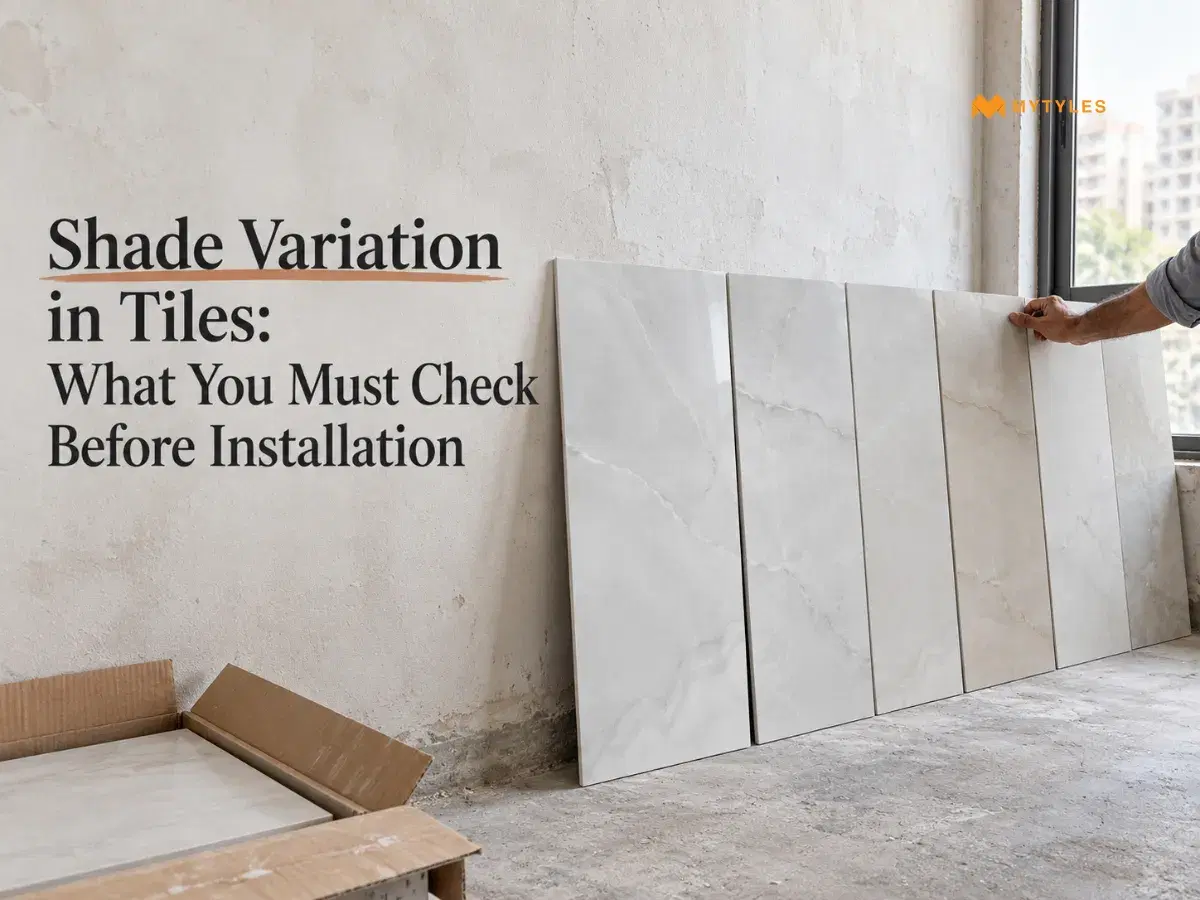
After weeks of picking the right tile color, material, and finish, you expect the finished floor and wall to look exactly the way you planned it. Then you walk in and find that one section looks like it came from a completely different batch. The color is slightly off, the tone does not match, and it is visible the moment light falls across the surface.
Shade variation in tiles is the slight change in shade, pattern, or tone from tile to tile. It is not always a defect. Tile color variation is a part of the manufacturing process. Two boxes of the same tile from the same brand can look slightly different if they were fired in separate batches.
A little planning and checking before installation can help you avoid this scenario. This guide breaks down how much tile shade variation is normal, why it happens, and exactly what to check before installation.
What Is Shade Variation?
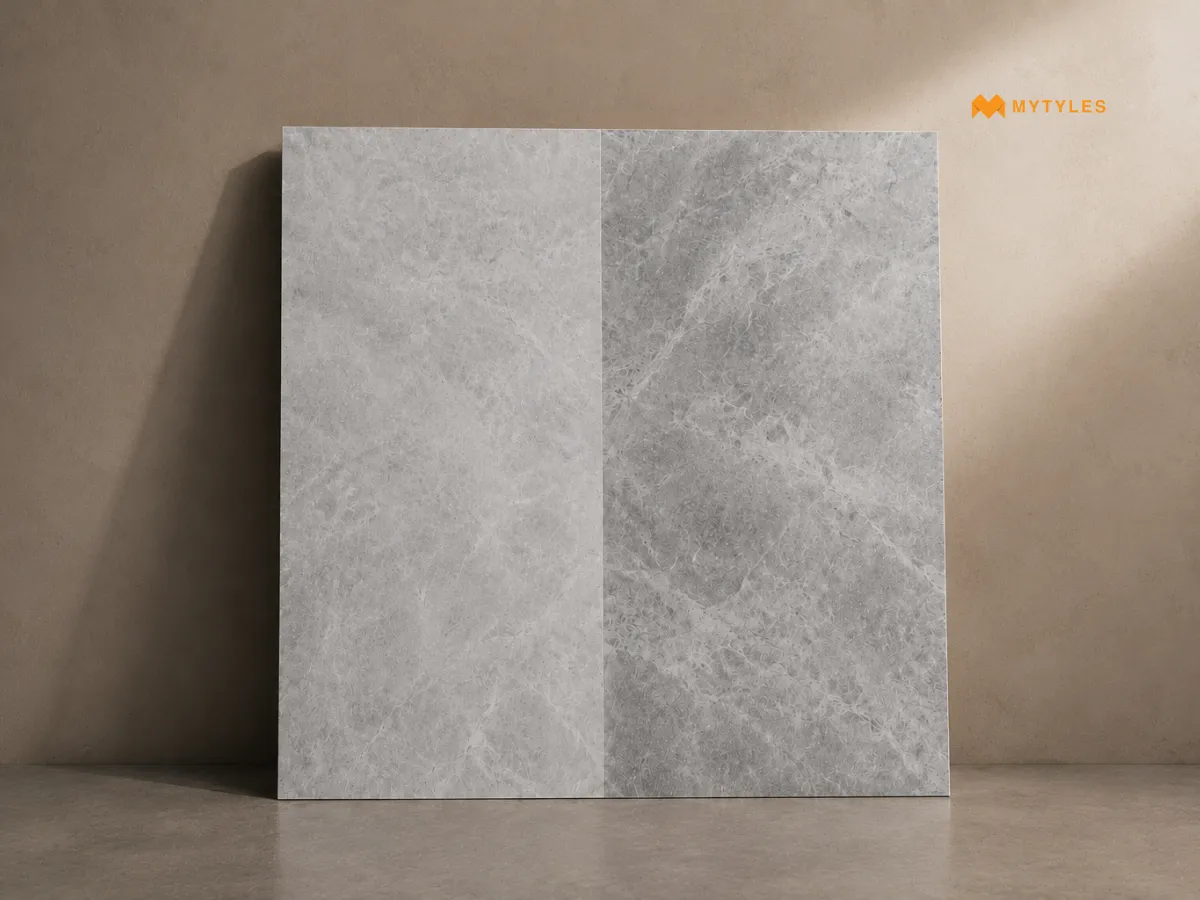
Shade variation is when tiles from the same box or range come out looking slightly different in color from one another. This can occur even within the same product range. Two tiles from the same design range can look noticeably different side by side, depending on the grade of variation the product carries.
The tile shade mismatch arises when tiles from different batches, shade codes, or lot numbers are installed on the surface without checking. In some tiles, it is barely visible, and in some, it is a part of the design. For instance, in rustic, wood- or marble-look styles, the tiles are purposely made with variation to give a natural look.
Why Does Shade Variation Happen
Understanding the shade variation in tiles helps you make better buying decisions and set the right expectations before installation begins. These three factors discussed below drive most tile shade variation.
- Natural Materials: Clays, minerals, and pigments are natural materials; this composition may vary a little from one batch to another, and these small differences show up in the finished tile.
- Kiln Conditions: Tiles placed in different locations inside the kiln don’t get the same heat. It affects the way the glaze sets and the way the color turns out in the end.
- Batch-to-Batch Production: Different production runs for tiles of the same design may vary slightly in appearance from one to another. Slight variations in color, from batch to batch, are common and are known as 'tile batch variation'.
How To Check The Tile Box Label Before Installation
Before installation, check the label printed on every tile box. This helps to avoid tile shade mismatch, color difference, and problems caused by using tiles from different batches.
- Batch Number: Your tile’s batch number identifies its production batch. Tiles from the same batch mostly have the same color and finish.
- Shade Code: The shade code of the tile indicates the color or tone group of the tile. Even if the product name is the same, a different shade code can lead to a visible difference after laying, especially in the plain tiles.
- Tile Lot Number: A tile lot number is used to trace the tile’s production or packaging, including when that batch was manufactured. Great for finding your tile stock, reporting shade issues, ordering replacements, or finding matching tiles from the same group later.
Types Of Shade Variation: V1 To V4
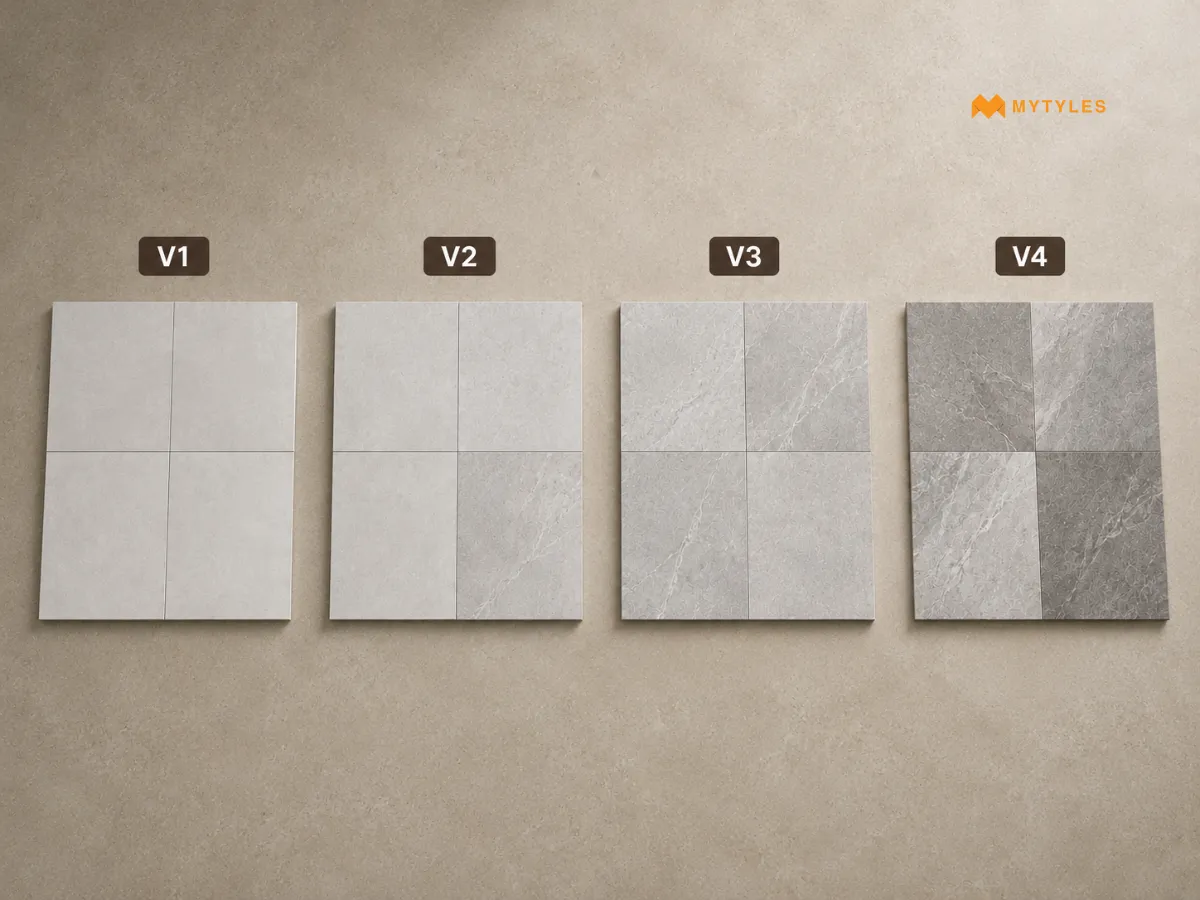
Different tile collections refer to the tile shade difference as V1, V2, V3, or V4. These ratings help buyers to understand the amount of color difference to expect between tiles.
Variation Number | Variation Level | Description |
| V1 | Uniform | The tile color looks very consistent. The color, tone, and pattern are almost identical from tile to tile. If you want the same tile color throughout and do not want to see shade differences, V1 tiles are usually easier to work with. |
| V2 | Slight Variation | Small tonal differences between tiles are present, but they are generally not very visible. The slight shade difference is soft and usually does not disturb the overall look. Most standard residential floor and wall tiles fall under V2. |
| V3 | Moderate Variation | V3 tiles have a clear difference in shade from tile to tile. The pattern, movement, or tone may vary across each piece. This kind of variation is common in tiles designed to look like wood, stone, or concrete. |
| V4 | Substantial Variation | Each tile is distinctly different from the next, and no two tiles may look exactly the same. These tile shade differences are often used when the design is meant to look bold, handmade, rustic, or natural. |
Is Shade Variation Normal Or A Tile Defect
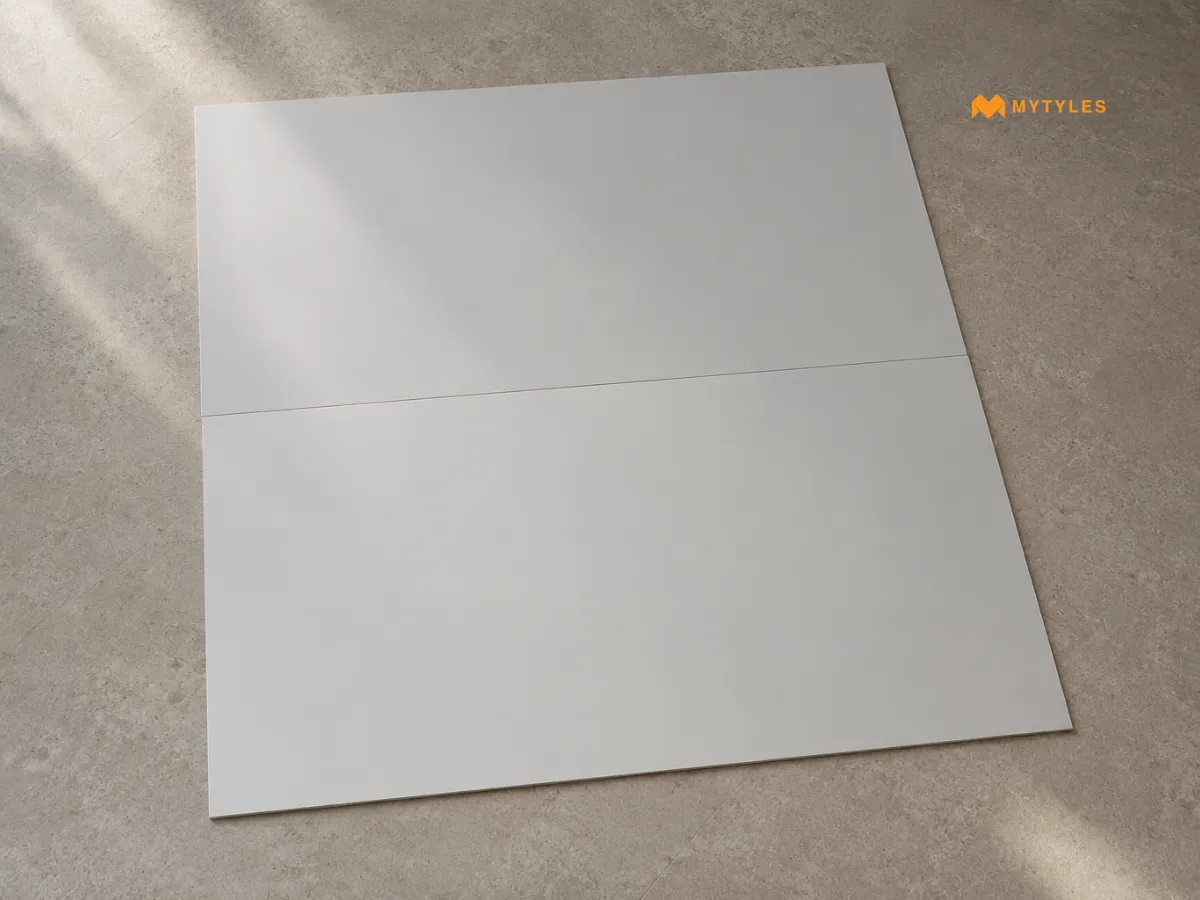
A common question is, 'Is tile shade variation normal?' In many cases, yes. Tile shade variation is normal when it is part of the product design or when the difference is within the accepted shade range. Natural-looking tiles are often created with movement and variation on purpose.
A tile shade difference from mixed batches is not a manufacturing defect. Two batches may look close when held together, but across a large floor, the tonal shift becomes obvious. If you notice different-shaded tiles before fixing, stop and check the labels on all boxes. Look at the tile batch number, shade code, lot number, and production details.
Which Tiles Usually Have More Shade Variation
Some tile designs naturally show more variation than others. Marble-look tile will have a lot of shade variation because the vein patterns and tones change throughout for a natural look. Wood-look tile has grain movement, plank variation, and color depth that will impart variations. Cement, terrazzo, and rustic tiles may have noticeable variation as well.
The larger the tile, the more apparent the shade variation will be, as it will cover a larger area. If one large tile may look darker or lighter than the next, the difference will be more apparent. This is why large tiles need to be carefully inspected. Simple, solid-color tiles tend to have less variation, but even then, tile shade code and tile lot number checks should not be skipped.
What To Do If You Notice A Shade Difference Before Fixing
If you spot a shade difference before installation, stop the work. Line the tiles up next to each other. Then locate the batch number, lot number, or shade code and verify the labels on the boxes.
- Talk over any mismatch with the installer or seller before you start tiling. In some cases, the tiles can be arranged better by mixing them across the room.
- If the variation is too obvious to mix, see if you can use one lot for a room and use the other lot in a separate room.
- In other cases, the different batch may need to be replaced. The key is to make this decision before the tiles are fixed.
- If the tile shade variation is part of the design, ask the installer to spread the tiles evenly so the final look feels natural and not patchy.
Final Checklist Before Installing Tiles
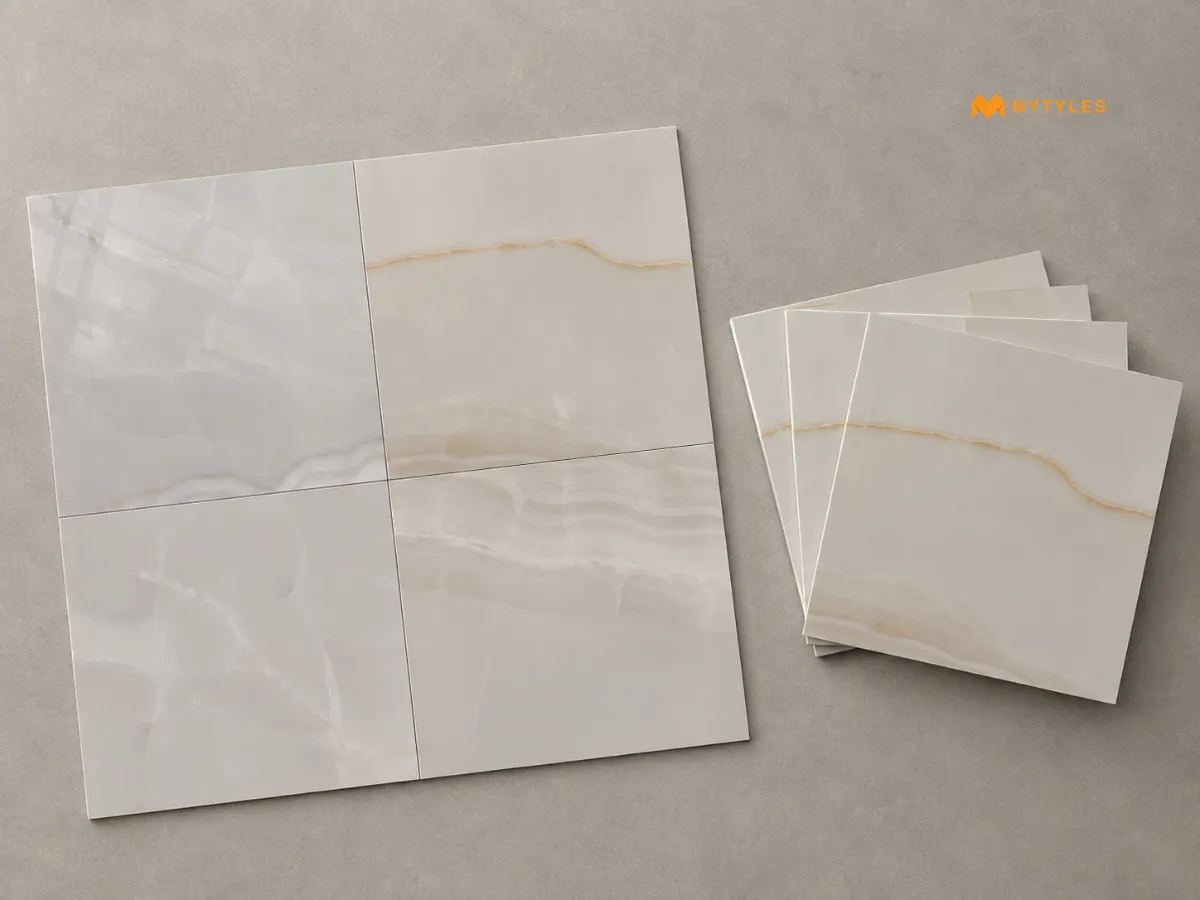
Before laying tiles, do a proper quality check before installation. This checklist will save you time, money, and tile shade mismatches.
- The tile batch number and shade code should be verified across all boxes.
- Tiles from multiple boxes should be compared under natural light in the actual room.
- Before any adhesive goes down, dry lay the tiles before installation.
- Multiple boxes should be opened and checked before the installation.
- Order extra tiles from the same batch to cover installation wastage and future repairs.
A Small Check Can Prevent A Big Mismatch
Signs of shade variation in tiles are always there before installation. Check the tile box label and shade code, dry lay the tiles, mix tiles from multiple boxes, and buy extras from the same lot. Once the adhesive sets, your options are limited, and the cost of correction is high. Get the tile selection right from the start. At MyTyles, our dispatch team checks every batch before it leaves, so the tiles that reach you are consistent in shade, right from the box. Browse our tile collection on the website, and filter tiles based on color, material, application, and finish so you know exactly what you are buying.

What Is Shade Variation In Tiles?

'Shade variation' refers to the natural or manufactured difference in color, pattern, texture, or tone between tiles. It can occur within the same tile collection and is often intentional to create a more natural appearance. Depending on the design, some tiles have very little variation, while other tiles, like wood-look or rustic ones, are made to display noticeable differences across the surface.
Is Tile Shade Variation Normal?
Yes, tile shade variation is normal and is commonly found in many tile collections. Differences in production batches, printing technology, and design styles can create slight changes in color or pattern. These variations often enhance the overall appearance of the floor or wall by giving it a more realistic and less repetitive look.
How Do You Check Shade Variation In Tiles Before Installation?
The best way to check shade variation is to open multiple boxes and compare the tiles before installation. Arrange them side by side in good lighting to observe differences in color, pattern, or texture. Reviewing several pieces together provides a better understanding of how the finished surface will appear after installation.
Why Do Tiles From Different Boxes Look Different?
Tiles from different boxes may look different because of shade variation, production batches, or design characteristics. Even when the tile name remains the same, slight differences can occur during manufacturing. This is why installers often mix tiles from multiple boxes during installation to create a balanced and more natural-looking result.
How Do You Dry Lay Tiles Before Fixing Them?
Dry laying involves arranging tiles on the floor before applying adhesive. This process helps identify shade variation, pattern flow, tile alignment, and potential layout issues. By viewing the tiles together beforehand, installers can distribute color and pattern differences evenly, reducing the chances of noticeable clusters or uneven visual sections after installation.
How Can You Avoid Tile Shade Mismatch During Installation?
Tile shade mismatch can be reduced by purchasing the required quantity from the same batch whenever possible. It is also helpful to inspect shade codes, open multiple boxes, and dry-lay the tiles before installation. Mixing tiles from different cartons during fixing helps create a more uniform and visually balanced appearance.
Can Tile Shade Variation Be Fixed After Installation?
Tile shade variation is generally not considered a defect and cannot always be corrected after installation. However, if the variation appears uneven due to installation methods, replacing selected tiles may improve the overall appearance. Checking shade variation, batch details, and layout planning before installation is the most effective way to avoid future concerns.

ABOUT THE AUTHOR
Nandana Priya
With a strong interest in design, creativity, and emerging tile trends, I enjoy turning ideas from the world of tiles and interiors into engaging, meaningful reads. My writing focuses on creating well-researched content that helps readers understand design choices with more clarity and confidence. I bring together research, design awareness, and digital marketing insights to craft content that is relevant, easy to follow, and thoughtfully written for todays homeowners and design-conscious readers.