Inspiration Gallery
Blog
Tile Calculator
08065423741



.svg)


What Is Bookmatching, and Can Every Marble-Look Tile Create It?
BySragvi Senthil Kumar

Tue , Oct 27 , 2026

Read Time: 5 Min


 Copied!
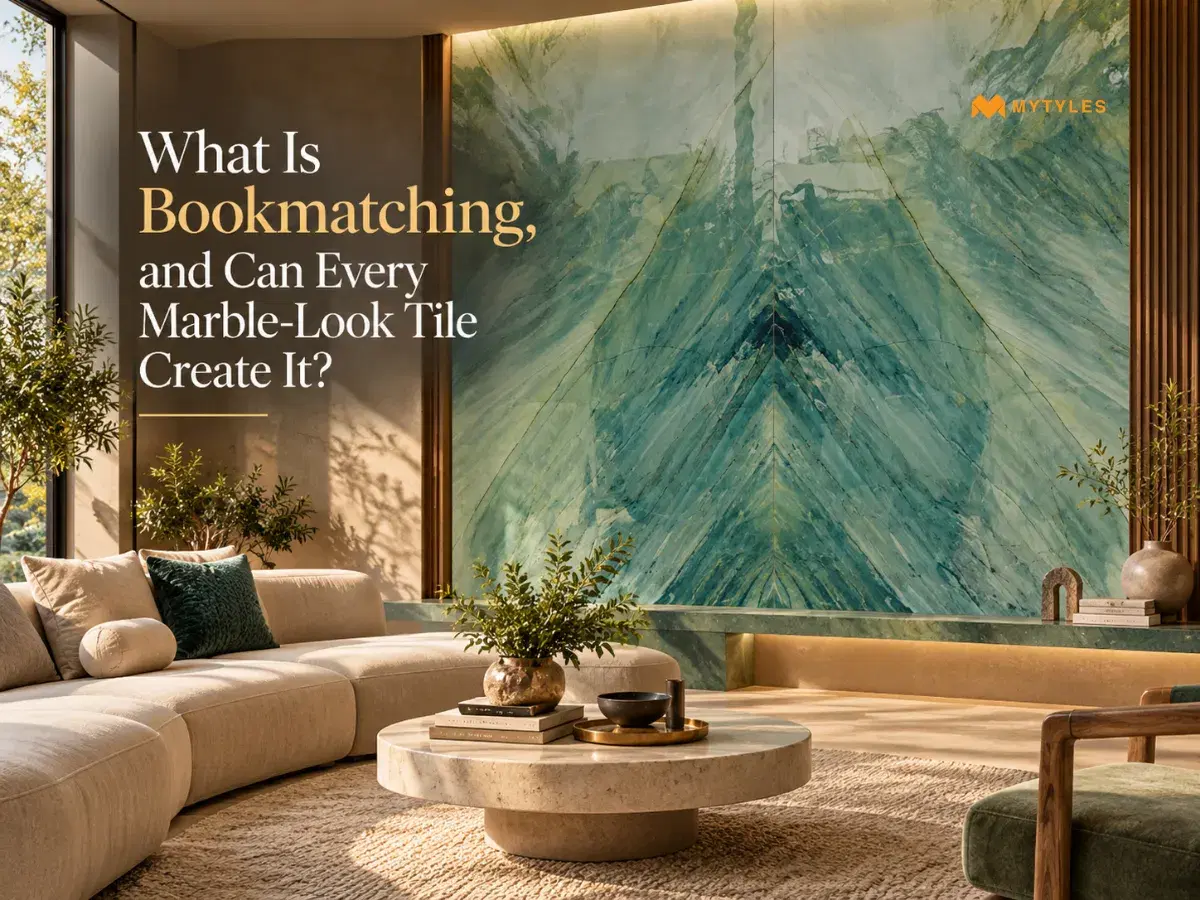
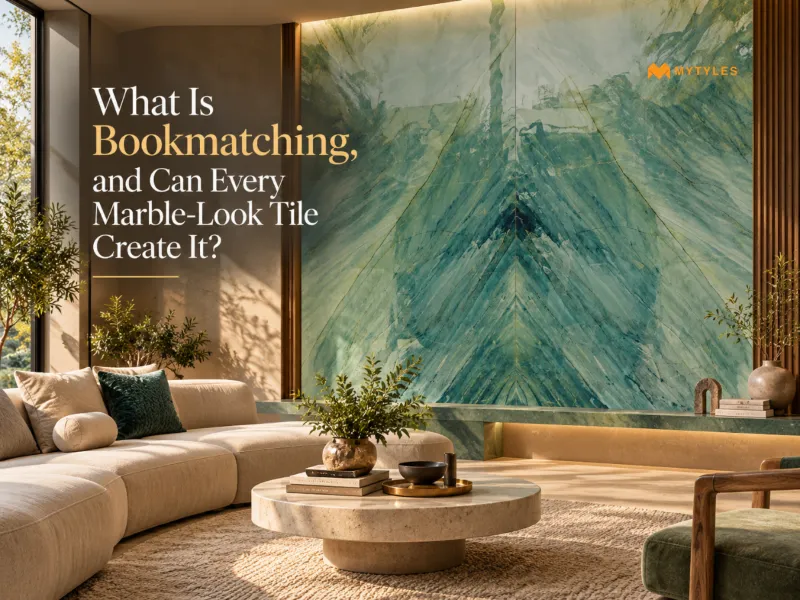
At first glance, two marble-look tiles can seem quite similar. Both may have veins running across the surface, but place them next to each other, and the way those veins meet can be completely different. In some designs, the pattern simply ends at the edge. In others, two designs are made to work together so that the veining appears mirrored across the joint.
This mirrored arrangement is known as bookmatching. Bookmatch tiles are designed so that when the matching pieces are placed next to each other, their designs appear mirrored across the joint. However, having a marble-look pattern does not automatically mean a tile can create this effect.
So, what makes bookmatching possible, and how can you tell whether a marble-look tile is designed for it? Let’s break it down.
What Is Bookmatching?
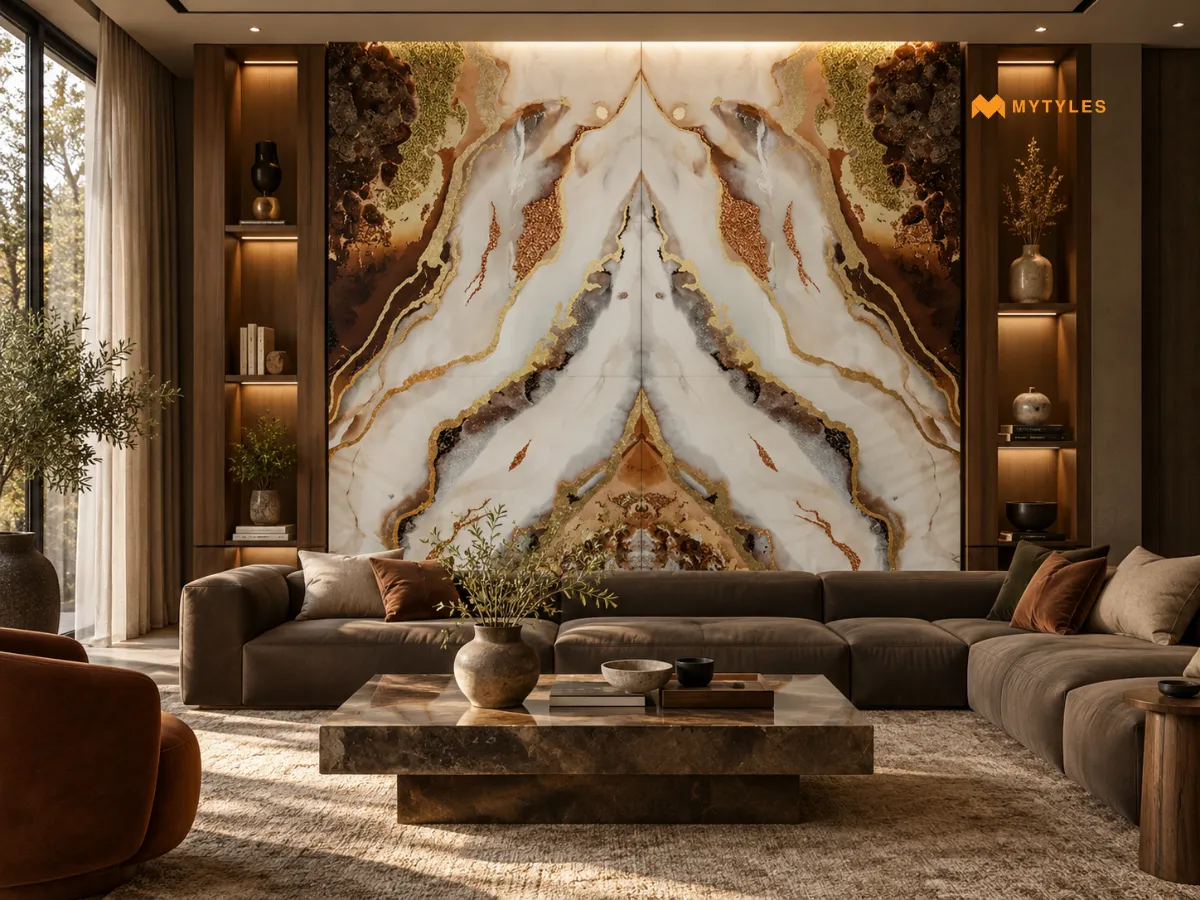
Bookmatching is a layout where matching tiles or slabs are placed together so their designs look mirrored where they meet, much like the pages of an open book. In bookmatching tiles, one piece is designed to work with another so that parts of the pattern reflect across the joint. This can include veins, colours, lines, or other details in the design.
With marble-look tiles, the effect is usually easiest to notice in the veining. One tile carries one side of the pattern, while the matching tile carries its mirror image. Placed together, they create a mirrored marble pattern across the surface. Two marble-look tiles will not automatically create this effect unless their designs are made to match in this way.
How Do Bookmatch Tiles Create the Mirrored Pattern?
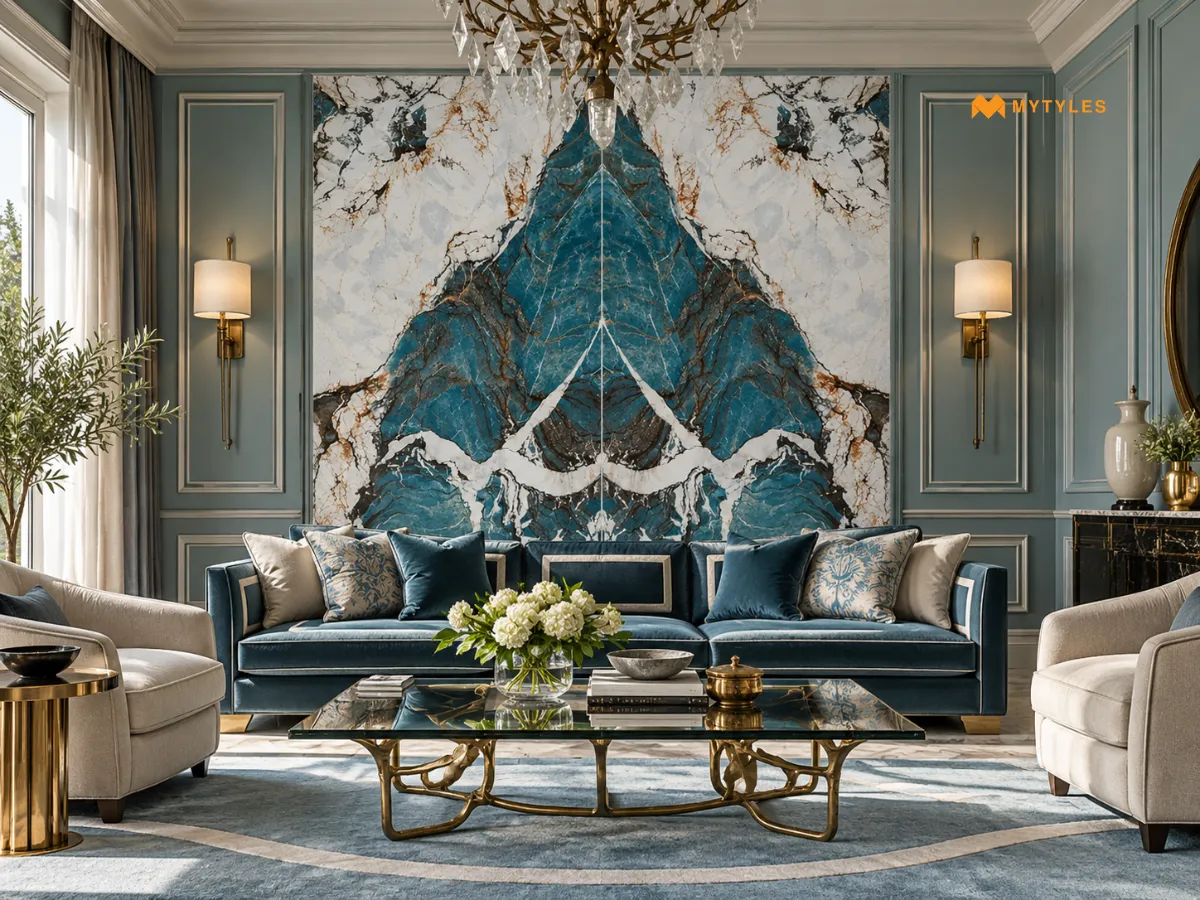
The mirror effect starts with the design of the tiles or slabs themselves. In some bookmatch collections, one piece carries one version of the pattern, while another carries a reflected version. When they are placed in the intended order, the veins, colours, and other design details meet at the joint and mirror across it.
Not every manufacturer labels these pieces in the same way. Some collections use A and B bookmatch slabs, while others use letters, numbers, or another system to show how the pieces are meant to be arranged. This is why simply turning two regular marble-look tiles will not necessarily create the same effect. For mirror vein tiles, the pieces need to be placed according to the layout designed for that particular product.
Can Every Marble-Look Tile Be Bookmatched?
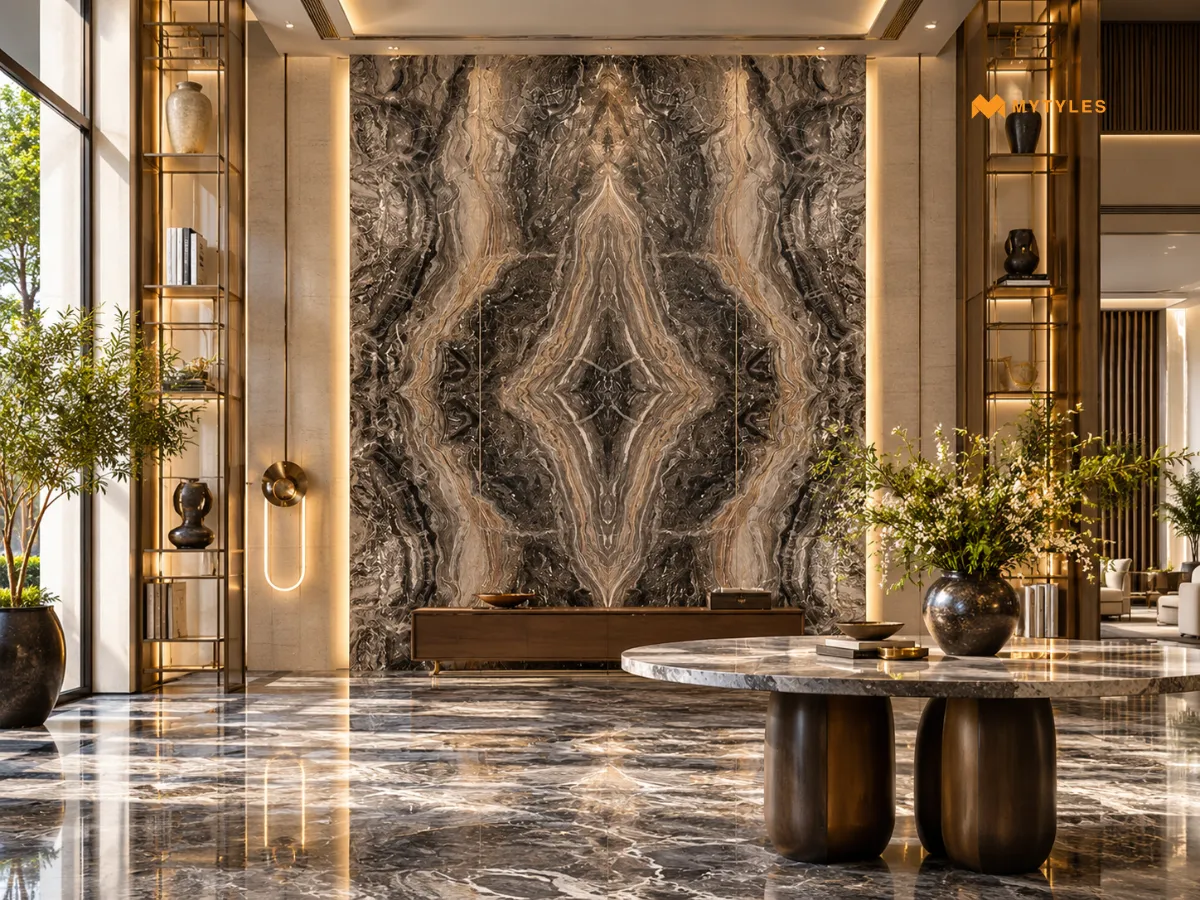
No. A marble-look pattern does not automatically mean the tile is made for bookmatching. Some designs are created as individual patterns, while others are produced as matching pairs that can form a mirror effect when placed together.
This is where the bookmatch marble design needs to be checked before the layout is planned. The product information should show whether matching faces are available and how they are meant to be arranged. Simply turning or rotating regular marble-effect tiles will not necessarily create the same mirrored result. The way the pattern has been designed and supplied is what determines whether a true bookmatch can be formed.
Bookmatch vs Vein Matching: What Is the Difference?
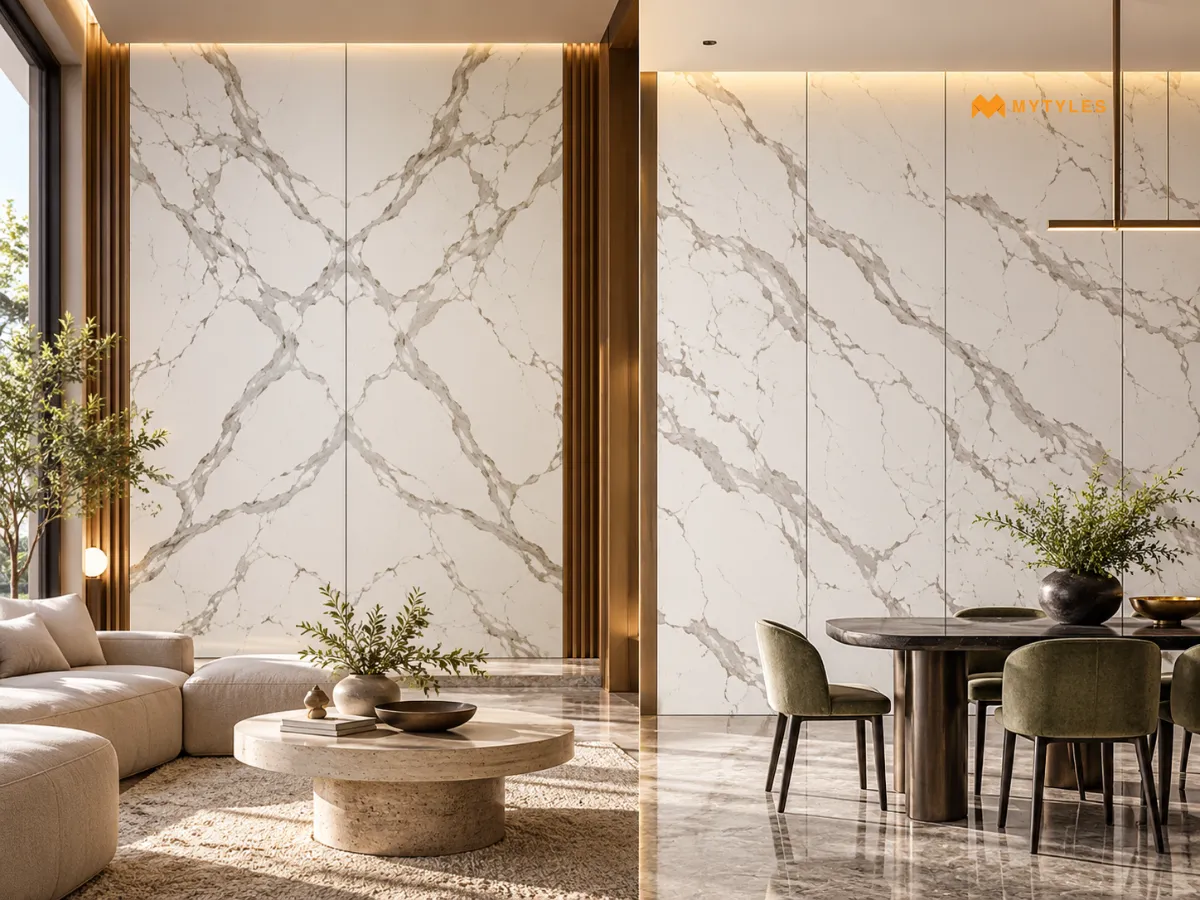
The easiest way to tell them apart is to look at what happens at the joint. In a bookmatch, two matching pieces are designed to sit together so that the pattern appears mirrored across the joint. With marble vein matching, the goal is for the vein to carry on from one piece into another instead.
So, marble vein continuity does not necessarily mean the surface is bookmatched. The pattern may simply continue across the joint without being mirrored. With marble-look tiles, this difference is worth checking before the layout is planned, because a tile made for vein matching may not create the same reflected pattern as a bookmatch design.
What to Check Before Buying Tiles for a Bookmatch Wall
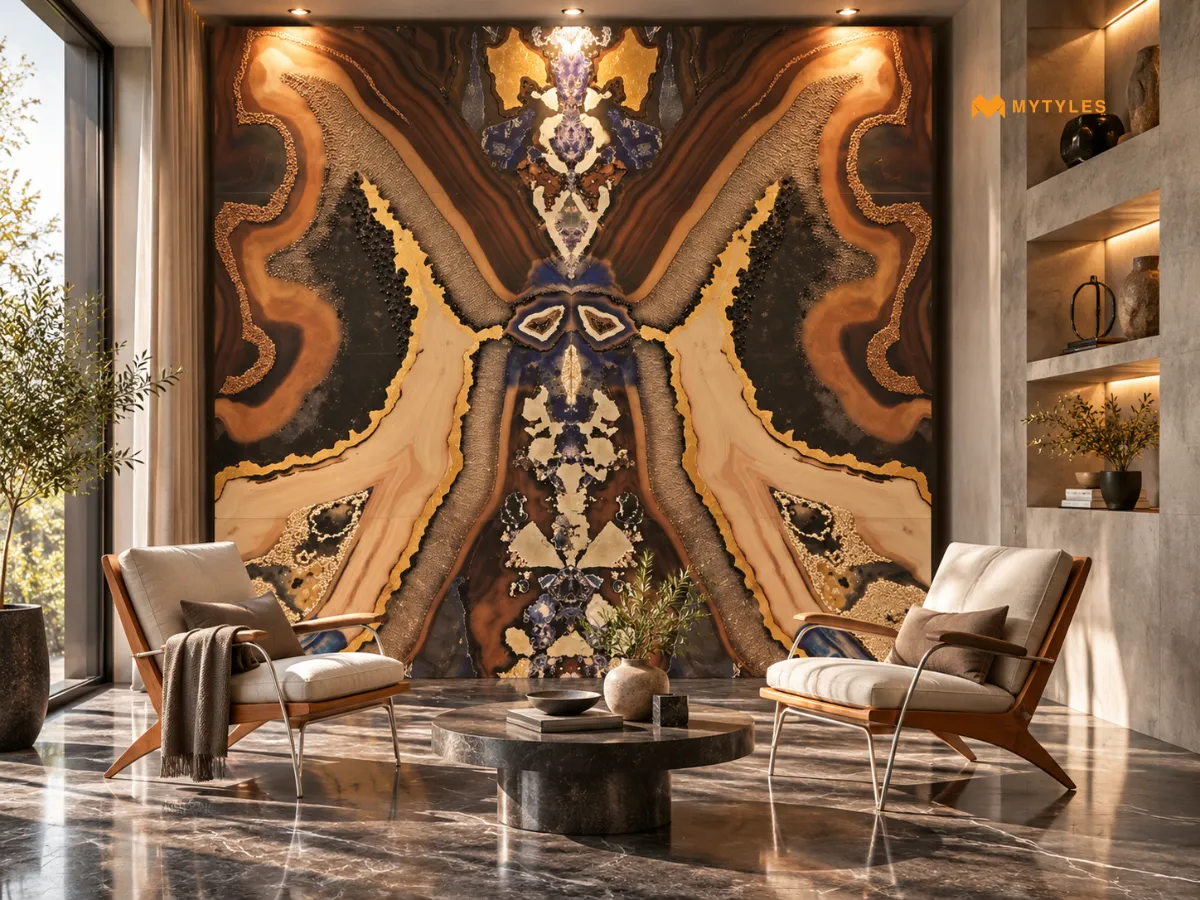
Before ordering tiles for a bookmatched feature wall, it helps to look beyond a single tile. What matters is how the pieces are meant to meet, which versions are available, and whether the manufacturer provides a layout to follow.
What to Check | Why It Matters |
Bookmatch Option | Check whether the product is actually offered as a Bookmatch design. A marble-look pattern alone does not mean matching pieces are available. |
Matching Pieces | Some collections use labels such as A and B, while others use a different system. These labels help show which pieces are meant to be placed together. |
Size and Thickness | The bookmatch option may only be available in certain sizes or thicknesses. Check the exact product details before deciding on the layout. |
Layout Guide | A layout drawing can show how the pieces are meant to be positioned and orientated. This makes marble pattern alignment much easier to plan across the wall. |
Pattern Faces | If you are using a marble feature wall tile, check how many pattern faces are available and how they are supplied. This gives you a clearer idea of what the full wall can look like. |
Where Does a Bookmatch Pattern Work Well?
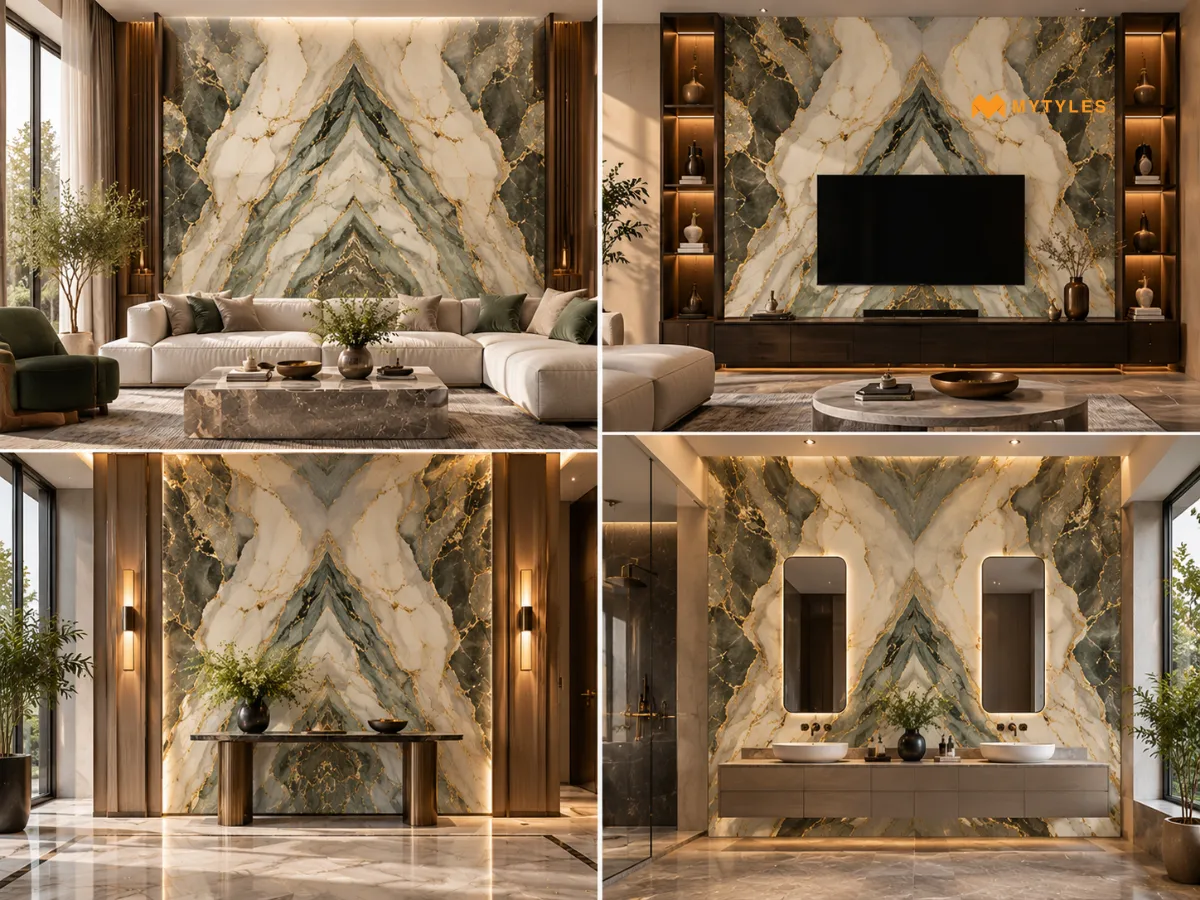
Bookmatching is easiest to appreciate when both sides of the mirrored pattern can be seen together. For that reason, it usually makes more sense on larger, more open surfaces where the design is not broken up too much.
Living Room Feature Walls
A living room feature wall gives the pattern enough room to open out across the surface. This works especially well with large-format marble-look tiles, where fewer joints can interrupt the mirrored layout.
TV Unit Walls
A TV wall can also work well for a bookmatch layout, particularly when there is a broad section of wall around the unit. The pattern can be planned around the screen, shelves, and other fixed elements before the tiles are installed.
Entrance or Foyer Walls
An entrance wall is another place where a bookmatched pattern can be used across one main surface. With marble-look wall slabs, the two matching sides can be positioned together so the reflected design remains easy to see from the front.
Large Wall Panels
Bookmatching can also be used on larger wall panels in residential or commercial interiors. The main point is to keep enough of the surface visible for the mirrored pattern to read properly, rather than breaking it up with too many openings or separate sections.
Find the Right Bookmatch Tiles for Your Space
A good bookmatch wall design starts with choosing tiles that are actually made for the effect. The marble look alone is not enough. Before
ordering, check the product details, available pattern faces, size, and recommended layout so you know how the pieces are meant to work together.
If you are considering bookmatch tiles for a feature wall, it also helps to look at the full pattern rather than one tile on its own. This gives you a better sense of how the mirrored design will read across the surface once installed. You can browse the collection online or visit the MyTyles Experience Centre to compare bookmatch tiles. Explore available designs, and see which options fit the wall you are planning.

Are Bookmatch Tiles Available in Porcelain and Vitrified Materials?

Yes. Bookmatch designs are available in some porcelain and vitrified tile ranges, but availability depends on the product. You may also see terms such as bookmatched marble tiles used when discussing marble-style designs. A natural marble bookmatch, however, refers to natural stone and is different from a manufactured marble-look tile or slab.
Can a Bookmatch Pattern Continue Across More Than Two Tiles or Slabs?
Yes. Some bookmatch layouts use more than two pieces, allowing the design to extend across a wider surface. If you are working with a marble-look slab, check the layout supplied for that particular product. The number of pieces, their order, and the way they are turned can vary from one bookmatch system to another.
Do Grout Joints Affect the Look of a Bookmatch Pattern?
Yes. A bookmatched layout still has joints between the tiles or slabs, and these remain visible in the finished surface. The required joint width depends on the product and installation instructions. When planning marble feature wall tiles, look at the complete layout with the joints included rather than expecting the pattern to meet without a gap.
Can Bookmatch Tiles Be Used on Floors as Well as Walls?
Some can, but this depends on the particular product and its stated applications. A tile or slab being offered in a bookmatch design does not automatically mean it is suitable for every surface. Check whether the selected product is listed for floor use, along with its size, thickness, finish, and installation requirements.
What Happens If One Tile in a Bookmatch Pair Needs to Be Replaced?
Replacing one piece can be more involved because the new tile also needs to fit the planned pattern. Keeping spare material, product details, and the original layout information can be useful. This is particularly important when the design uses specific matching faces, since another piece from the same range may carry a different part of the pattern.
Do Wall Cut-Outs Affect a Bookmatch Pattern?
Yes. Anything that covers or removes part of the tile can change how much of the mirrored design remains visible. For a feature wall, plan the positions of the TV, shelves, switches, sockets, and other openings along with the tile layout. This helps show which parts of the bookmatch pattern will remain visible after installation.
Are Continuous Vein Tiles the Same as Bookmatch Tiles?
No. Continuous vein tiles are arranged so the pattern carries from one piece into the next, while a bookmatch is designed to create a mirror effect. You may also see vein-matched slabs or endless marble-look tiles used for continuous layouts. These describe pattern continuation rather than the mirrored arrangement used in bookmatching.

ABOUT THE AUTHOR
Sragvi Senthil Kumar
With a background in Psychology and Journalism, my interest in writing began with newspapers and magazines, where I developed a passion to turn facts into engaging stories. Along with a keen interest in writing, I've had a creative eye for style, art and design. Over time this interest grew into exploring lifestyle, architecture, interiors and tiles for more than just their aesthetics. Now I bring together research and creativity to create clear, engaging content for homeowners, architects and interior designers.
Latest Blogs By MyTyles