Inspiration Gallery
Blog
Tile Calculator
08065423741



.svg)


How to Match Floor Tiles With Wall Paint Colours: A Room-by-Room Guide
BySragvi Senthil Kumar

Sun , Oct 25 , 2026

Read Time: 5 Min


 Copied!

Choosing floor tiles and wall paint can feel like two separate decisions until you see them together in the same room. A tile that looks balanced on its own may read differently once it sits next to a painted wall, especially as light and nearby colours affect both surfaces.
Knowing how to match floor tiles with wall paint starts with looking beyond colour alone. Undertone, contrast, tile pattern, and the other fixed finishes in the room can all change how the combination comes together. A floor tile and wall colour combination can come together more naturally when both surfaces are considered as part of the same space rather than chosen separately.
So, what should you look at first, and how does the approach change from one room to another? Let’s break it down.
Start With the Floor Tile First
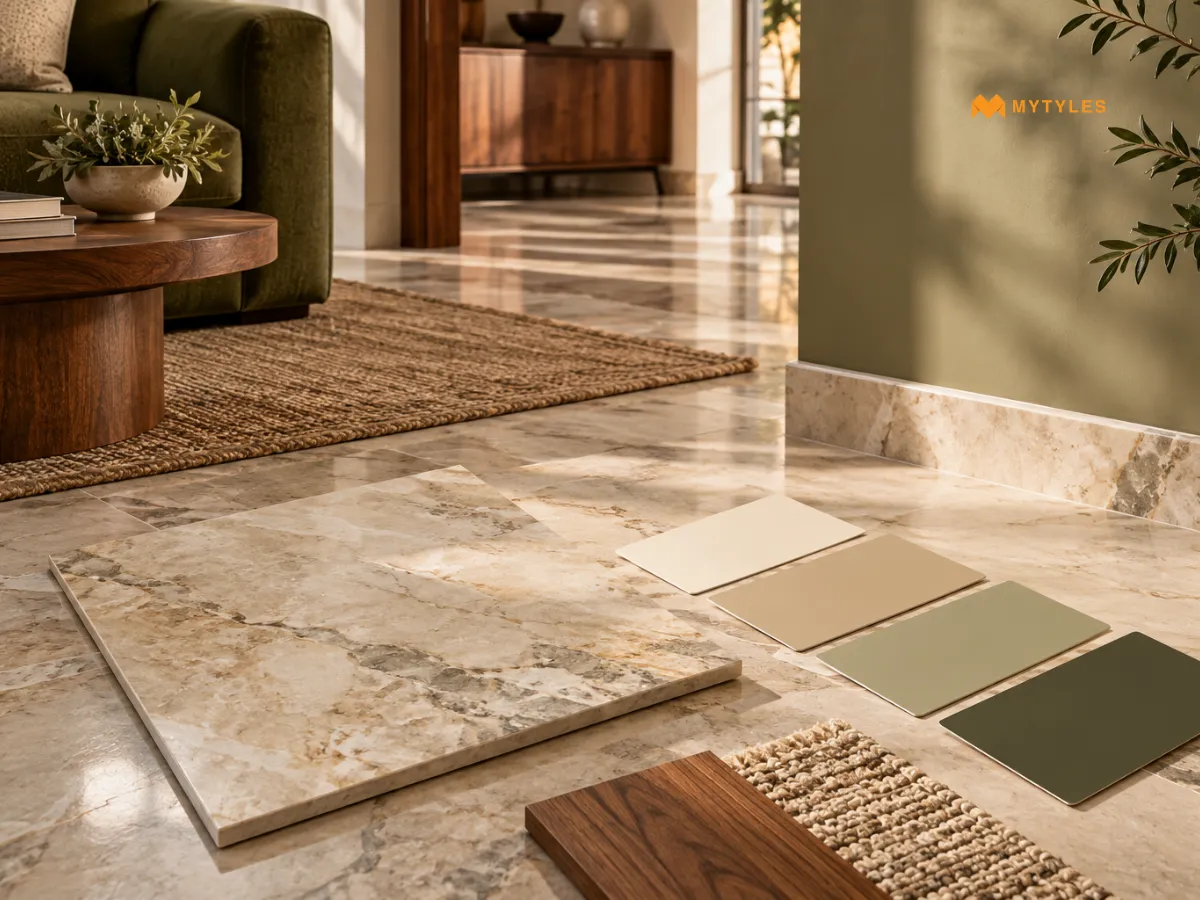
If the floor tile is already selected or installed, use it as the starting point for the rest of the room. Look at the main colour first, then notice any veining, speckles, or secondary shades that are visible across the surface. These details can give you more than one direction for the wall colour.
When choosing a wall paint colour for floor tiles, you do not have to copy the floor exactly. The paint can pick up one of its quieter tones or create some contrast against it. If you are working out how to match flooring with wall colour, keep the tile itself in view while comparing paint options rather than judging the wall colour on its own.
Understand Warm, Cool, and Neutral Undertones
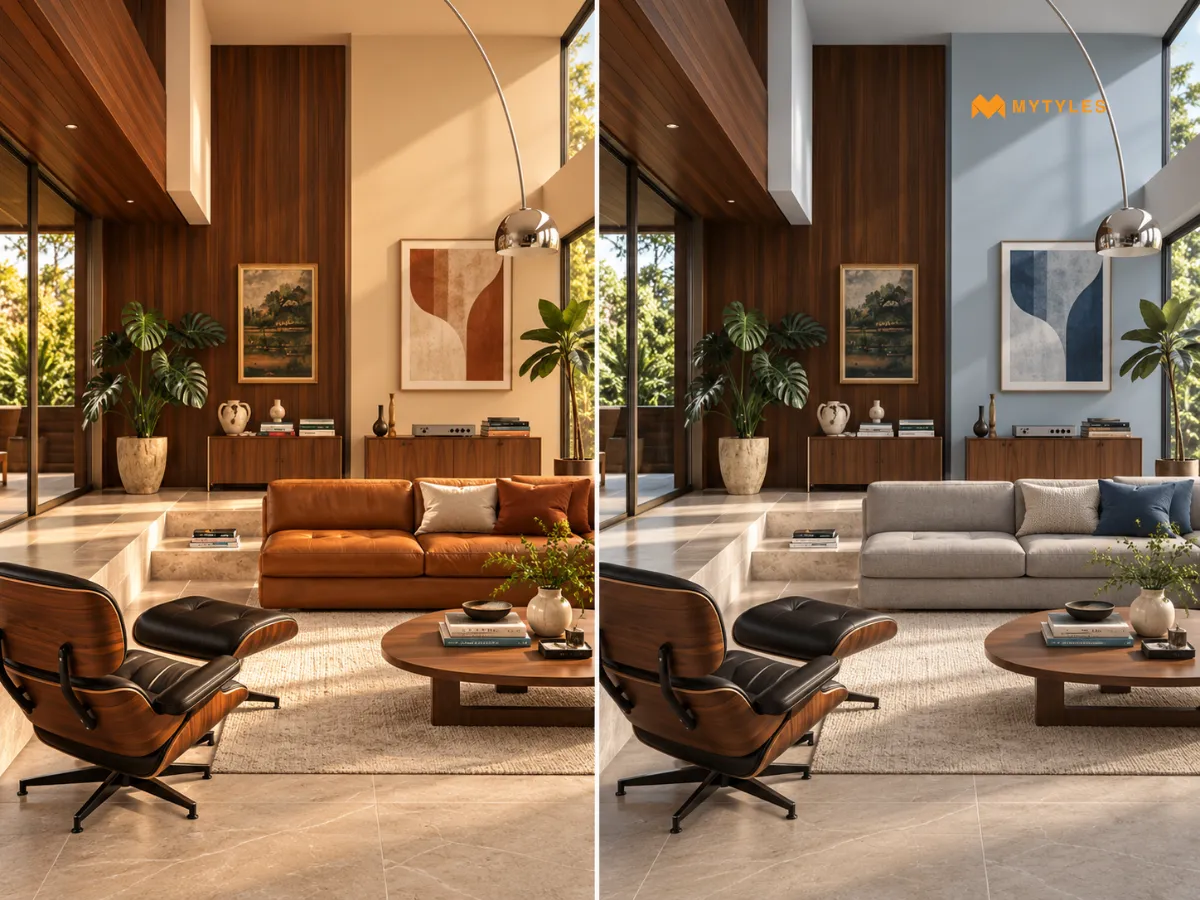
Two colours can look similar at first and still feel different once they are placed together. That usually comes down to undertones. Warm shades tend to lean towards yellow, red, or orange, while cool shades often lean towards blue, green, or violet. Even neutrals such as grey, beige, and white can have a warm or cool cast.
When comparing warm and cool undertones, look at the floor tile and paint side by side rather than judging either one alone. This is especially useful when pairing neutral floor tiles with wall colours, as the undertones may be subtle. Understanding wall paint undertones first can help avoid combinations that feel slightly off once both surfaces are in the same room.
Living Room Colour Flow
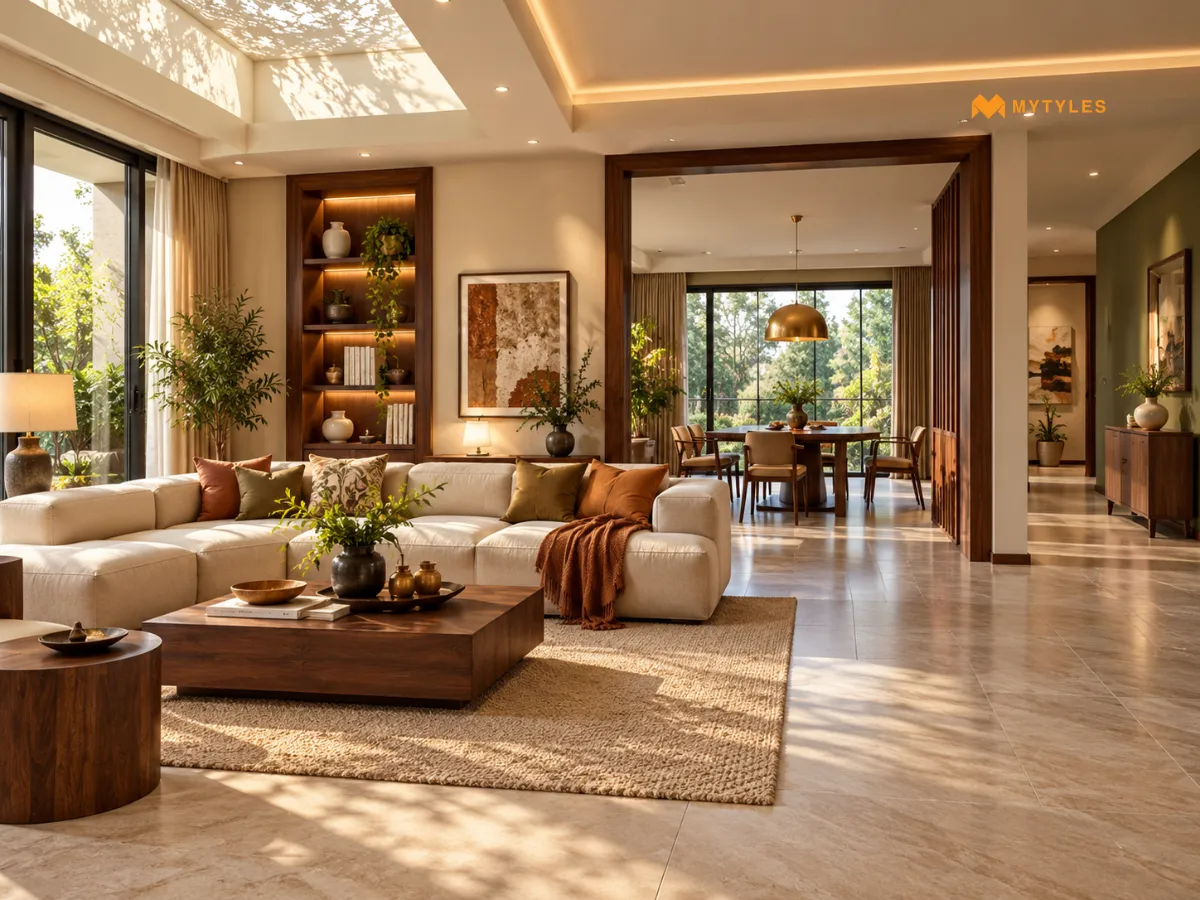
The living room is often visually connected to a dining area, hallway, or kitchen, so the flooring may continue beyond one room. That changes how the wall colour needs to be considered. Instead of judging the living room paint only from inside the room, look at it from the adjoining spaces too.
If the same flooring continues through several areas, the wall colours do not all have to match. Instead, check how they relate when viewed from adjoining spaces. A living room floor and wall colour combination can also change at a natural break, such as a corner, column, or doorway, rather than halfway across one continuous wall.
Bedroom Colours Through the Day
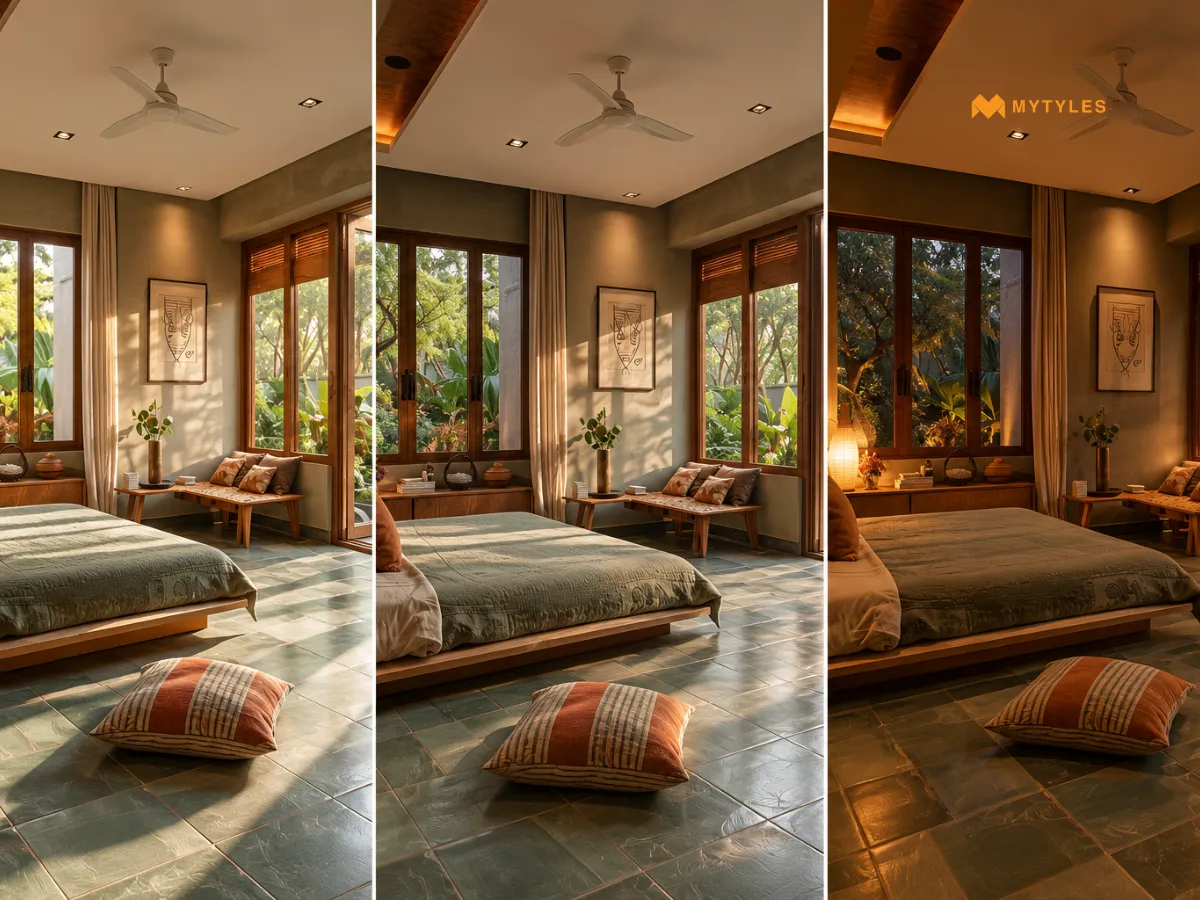
A bedroom can look different in the morning, later in the day, and under artificial light at night. That matters when the floor and walls have subtle undertones. An east-facing bedroom, for example, can receive warmer morning light and look quite different as the day moves on.
When planning a bedroom floor tile colour combination, compare the tile and paint at the times when you use the room most. This can be more useful than judging the pair only in bright daytime light. With light floor tiles and wall paint, even small undertone differences may become more noticeable as the light changes.
Kitchen Colours Around Fixed Surfaces
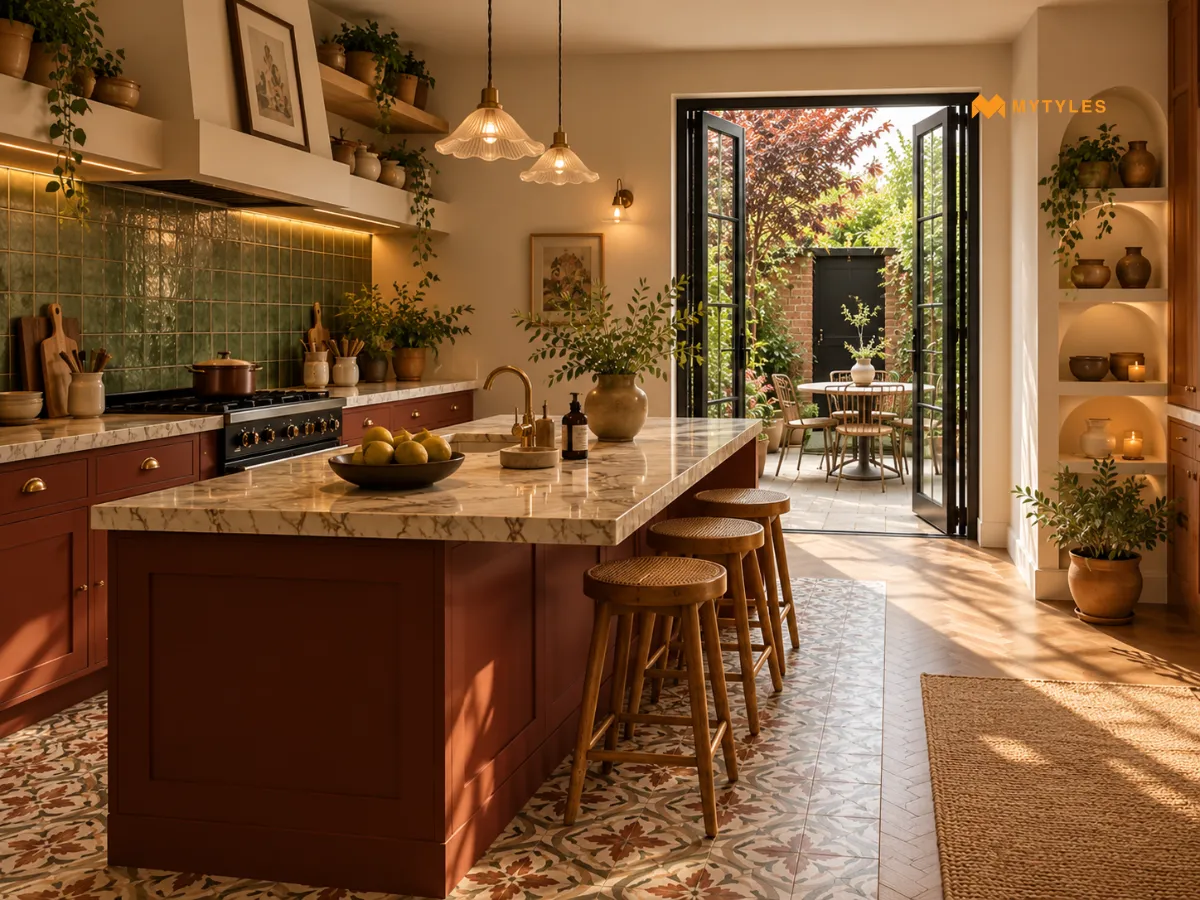
A kitchen usually has more fixed finishes than many other rooms. Flooring, cabinets, countertops, and backsplashes can all bring their own colours and undertones, while painted walls may only appear in smaller sections between them.
For a kitchen floor tile and wall colour combination, check which colours already appear across these fixed surfaces before adding another shade. If brown flooring is part of the scheme, the wall colour for brown floor tiles also needs to work with the cabinet and countertop colours.
This helps prevent the wall paint from working with the floor but clashing with another surface nearby.
Bathroom Colours Across Multiple Surfaces
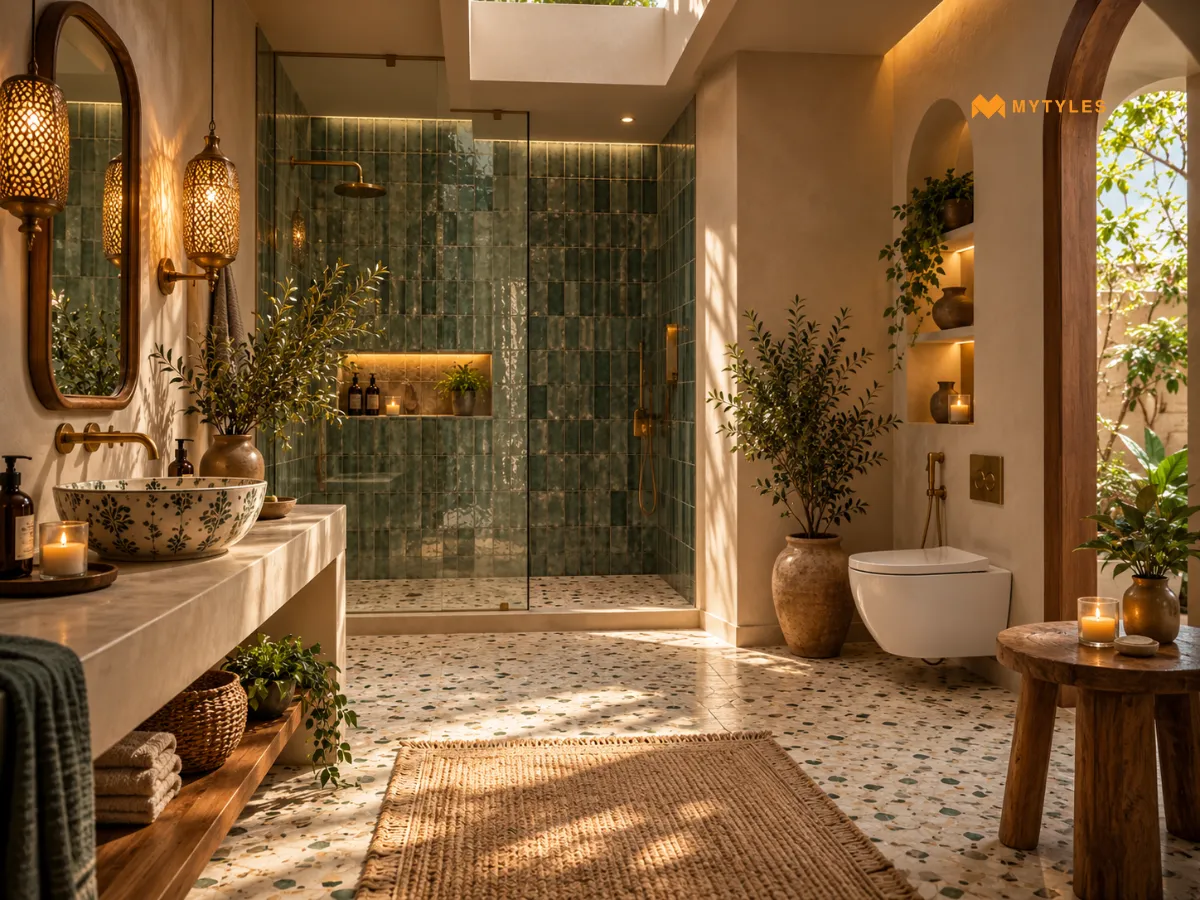
In a bathroom, the floor may not be the only tiled surface. Wall tiles, shower tiles, grout, vanity tops, and sanitaryware can all sit next to painted areas, which means the wall colour has more than one surface to work with.
For a bathroom floor tile and wall colour combination, look at the floor and wall tiles together before choosing the paint. White sanitaryware can sometimes make warm and cool differences easier to notice, although this can vary with the shade of white, lighting, and the colours used around it. Where the walls are partly tiled, check the paint directly beside the wall tile rather than only against the floor.
Check the Colours in Real Light
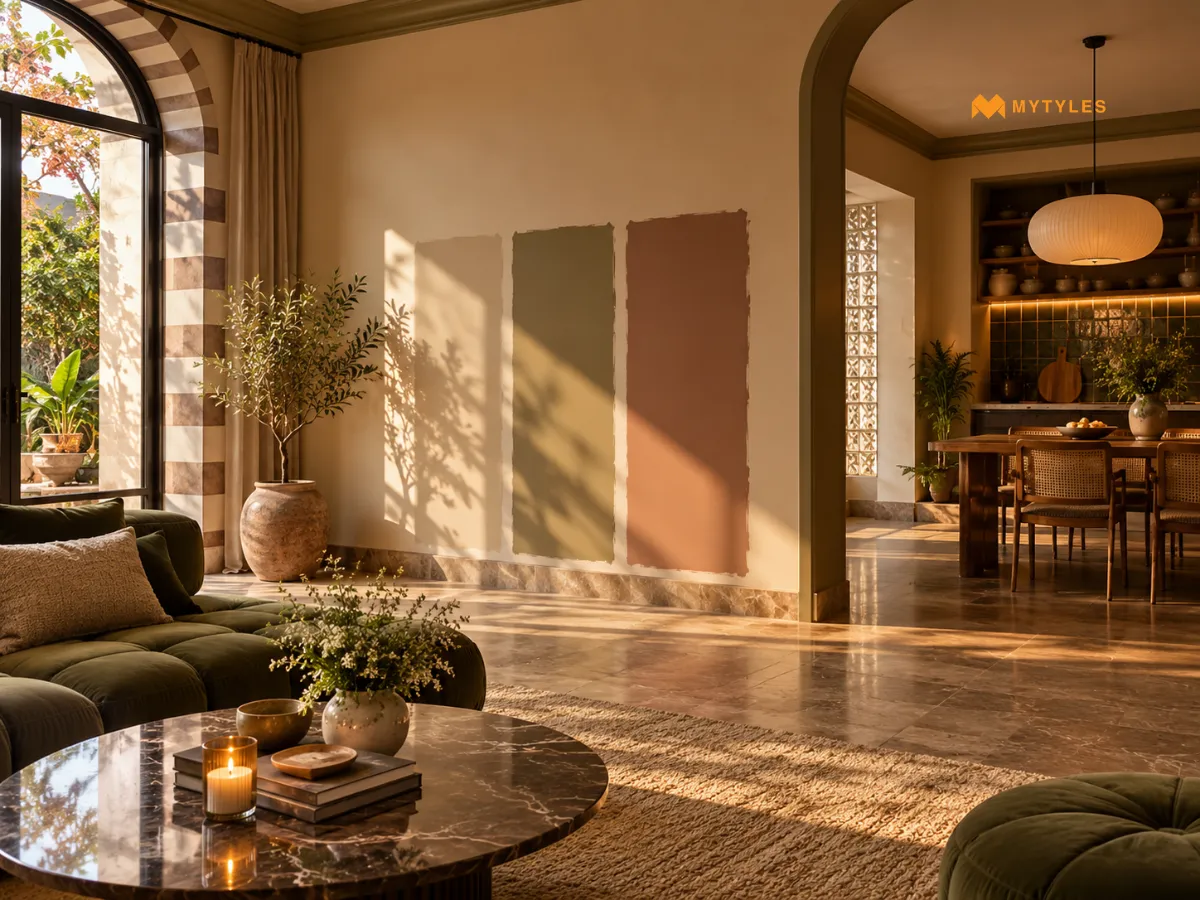
A paint colour can shift once it is on the wall, especially as the light changes through the day. Natural light in the morning may make a shade appear different from how it looks under artificial lighting at night. This is why it helps to test the paint in the actual room before finalising it.
When comparing dark floor tiles with wall colours, place the paint sample close to the flooring and look at the pair at different times of day. A larger sample can make this easier than relying on a small colour chip. Move it around the room too, since one wall may receive more light than another.
Before You Finalise the Combination
Before settling on a tile and paint colour combination, step back and look at the room as a whole. A pairing that works well in one corner may feel different once the flooring, walls, fixed finishes, and adjoining spaces are all visible together.
It also helps to check more than one tile if the floor has visible variation. Veining, speckles, or shade changes can make one piece look slightly different from another. The paint should be compared against the overall variation in the flooring rather than a single tile.
What to Check | What to Look For |
Tile variation | If the floor has veins, speckles, or more than one shade, compare the paint with several tiles. This gives you a better idea of how the colour will sit against the full surface. |
Fixed finishes | Check the paint beside cabinets, countertops, doors, wardrobes, or wall tiles that will remain in the room. These surfaces can bring other undertones into the scheme. |
Adjoining spaces | If another room or hallway is visible from the same area, look at those colours together before finalising the wall shade. |
Paint sample | Test a larger paint sample close to the floor instead of relying only on a small colour chip. Look at it from different parts of the room as well. |
Overall balance | Step back and see which surface draws your eye first. If the floor already has a strong pattern, you may prefer the wall colour to stay quieter, or vice versa. |
Find the Right Floor and Wall Colour Pairing
Matching floor and wall colours is less about finding one perfect shade and more about seeing how the room comes together as a whole. Once you have checked the undertones, lighting, fixed finishes, and adjoining spaces, it becomes easier to narrow down the options with more context than colour alone can give you.
If you are still exploring floor tile colour combinations, you can browse the MyTyles collection online and compare different colours, patterns, sizes, and finishes. You can also visit the MyTyles Experience Centre to see tile options in person before deciding which ones could work with the rest of your room.

Do Grout and Skirting Colours Affect the Floor and Wall Combination?

Yes. Grout colour can change how clearly the joints between tiles are seen, while skirting sits at the junction between the floor and wall. If you are matching floor tiles with wall colours, compare the grout and skirting at the same time so you can see how all three surfaces work together.
What If the Floor Tile Has Several Colours or Strong Veining?
If the floor has several colours, veins, or a strong pattern, start with the shades that repeat across the surface rather than one small detail. When planning wall colour combinations for floor tiles, compare the paint with several tiles or a larger laid-out area so you are judging the overall variation, not one piece.
Can the Same Wall Paint Work With Different Floor Tiles?
It can, but the same paint may appear different beside different floors because the surrounding colours change. A shade used as wall paint with grey floor tiles may not read the same way next to beige or brown flooring. Compare the paint beside each floor separately before using one colour across several rooms.
Can a Rug Help Bring the Floor and Wall Colours Together?
Yes. A rug can bring in colours that also appear in the floor or walls, which may help the palette feel more connected. If you are working with beige tiles and wall colours that feel quite separate, compare a rug alongside both surfaces before deciding whether it helps bring the scheme together.
Should Doors, Trims, and Ceilings Be Considered Too?
They do not have to match the walls, but they are still visible parts of the room. Doors, trims, and ceilings can add another colour besides the floor and paint. When reviewing floor and wall colour combinations, look at these surfaces together so you can judge the full palette rather than only two colours.
Can a Feature Wall Work With Patterned Floor Tiles?
Yes. A feature wall can sit alongside a patterned floor, but it is worth comparing both before deciding how much pattern you want in the room. Look at the scale, colour, and direction of each design together. This helps you see whether the two surfaces feel balanced or whether one should be kept simpler.
Do I Need to Replace the Floor If the Wall Colour Does Not Work?
Not necessarily. If the floor is staying, changing the wall paint gives you another way to adjust the room without replacing the tiles. You can test brown tiles with wall paint before choosing a shade. You can do the same with white floor tiles and wall colours to see which pairing you prefer.

ABOUT THE AUTHOR
Sragvi Senthil Kumar
With a background in Psychology and Journalism, my interest in writing began with newspapers and magazines, where I developed a passion to turn facts into engaging stories. Along with a keen interest in writing, I've had a creative eye for style, art and design. Over time this interest grew into exploring lifestyle, architecture, interiors and tiles for more than just their aesthetics. Now I bring together research and creativity to create clear, engaging content for homeowners, architects and interior designers.
Latest Blogs By MyTyles