Inspiration Gallery
Blog
Tile Calculator
08065423741



.svg)


Tile Beadings: Types, Uses And Design Benefits
ByNabiya Naqvi

Sun , Nov 08 , 2026

Read Time: 5 Min


 Copied!
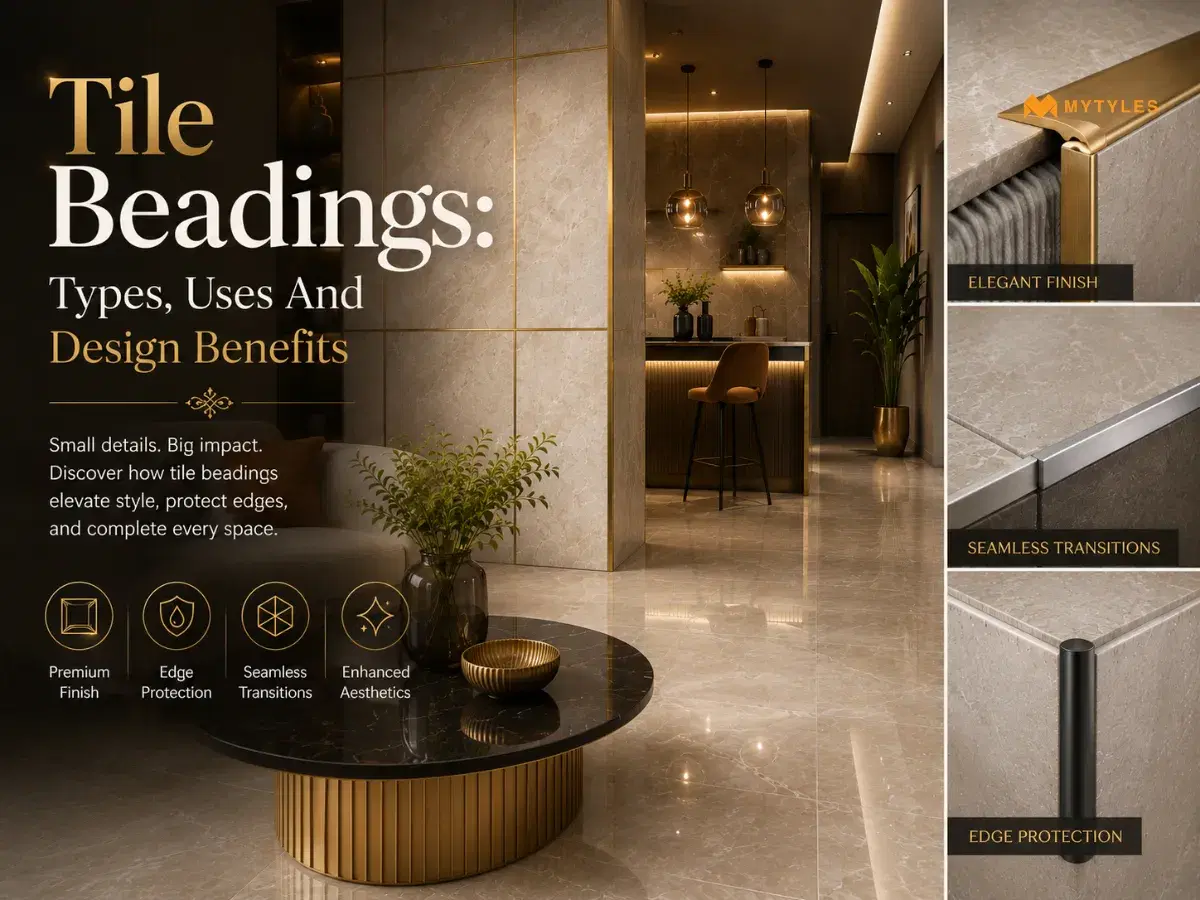
You have selected the perfect tile design, material and finish. But you are thinking of the finishing details that can really give the space a professional look. Tile beadings are designed to give that look while creating smooth transitions to the open edges. These beadings are used on walls, floors and stair edges that protect the tile corners and exposed edges from cracking. There are many material options available in tile beadings, including metal beading and PVC beading, which is mainly made up of plastic.
What Are Tile Beadings, and Why Are They Used?
Tile beadings are narrow lengths of metal or plastic used to soften and cover the tile edges. They finish off tile walls, splashbacks and floors to
make them look neat. Tile trims are available in a variety of finishes, from bronze powder-coated to aluminium to simple white PVC. The purpose of tile beadings is to protect the vulnerable tile edges and to add a decorative element to the space. Interior designers are using them to add a graphic punch to the rooms. These tile edging strips also protect the corners from everyday damage, giving both durability and design detail to the tile work.
Different Types Of Tile Beadings
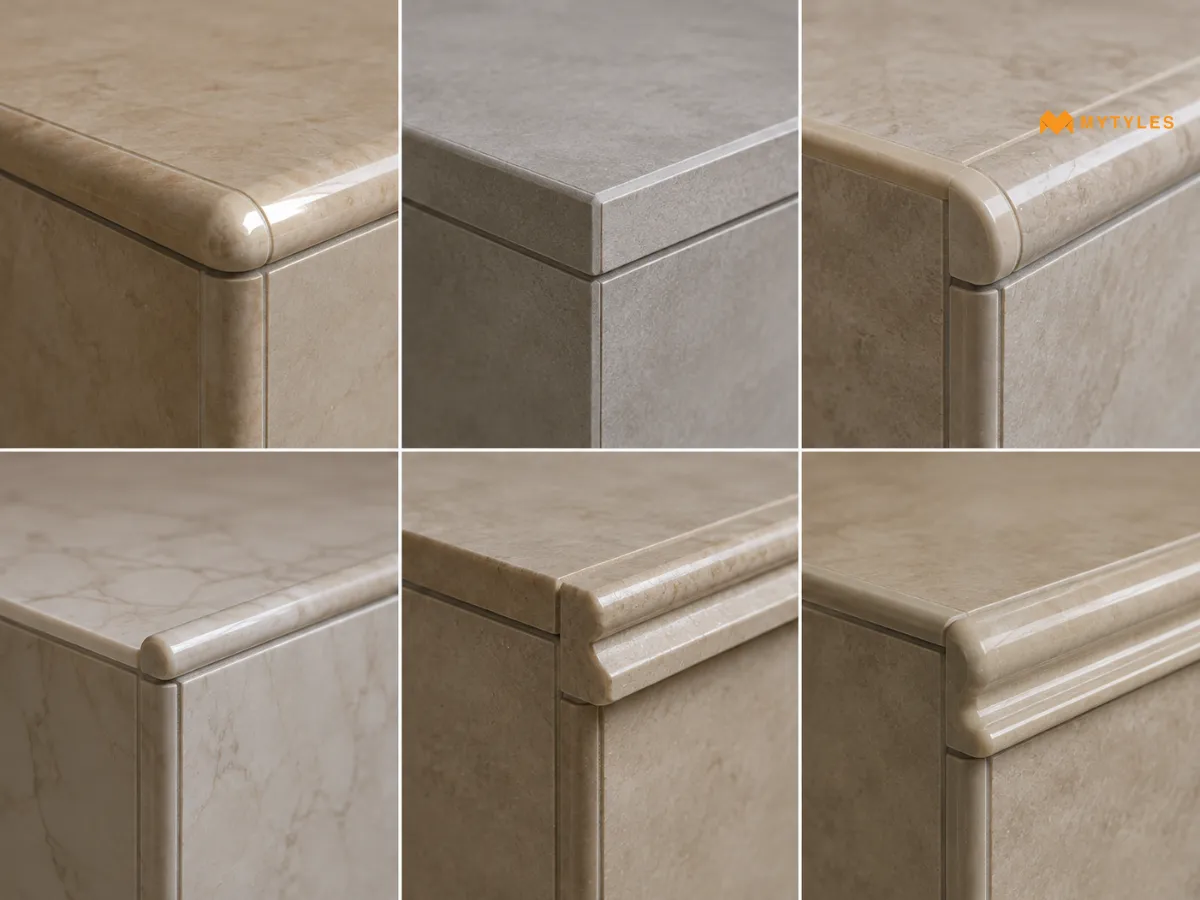
Beading comes in more profile shapes than most people expect, and each one solves a slightly different edge problem.
- Round Bead: A smooth, curved edge that softens the transition between two tile surfaces. It works across almost any tile style without standing out too much.
- Square-Edge Bead: Straight, sharp, with no curve to it. Suits interiors built around clean lines and minimal detail, where the edge needs to look as deliberate as the rest of the design.
- Half Round Bead: A gentler curve than the full round profile. It is useful when some softness is required at the fully rounded edge.
- Pencil Bead: Thin and understated. It finishes the tile edge without drawing attention to itself, which works well when the tile is doing all the visual talking.
- Step Bead: A two-level profile that adds a small amount of dimension to the edge. Fits naturally into spaces where the design already has some layering happening.
- Ogee Bead: A curved, S-shaped profile that has a traditional character. It suits traditional interiors, though it can feel out of place in a minimal setting.
Tile Beading Materials
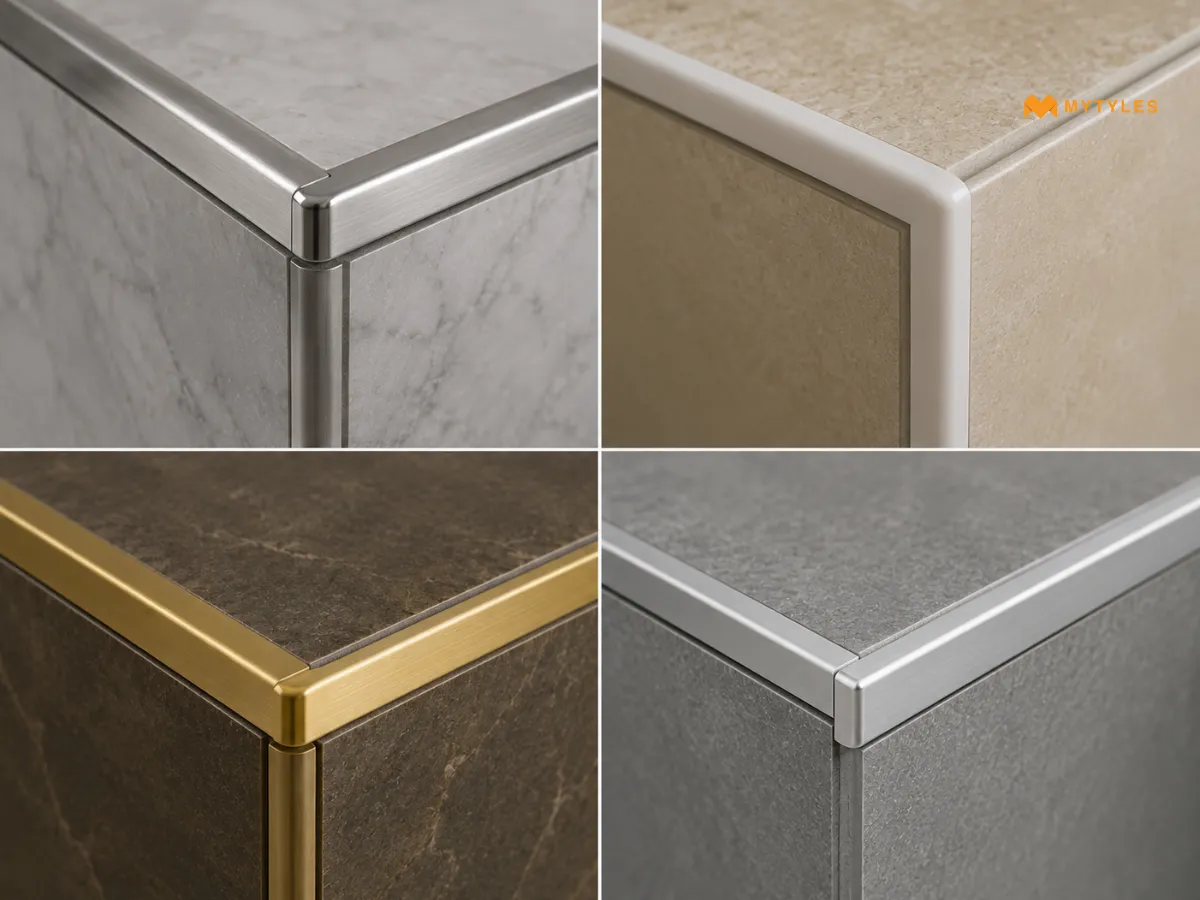
There are different types of tile beadings that come in aluminium, steel, or PVC, among other materials. Every material has its own features. Let’s discuss each type of tile beading material in detail.
- Stainless Steel Tile Beading: Stainless steel tile beadings help finish tile edges cleanly and reduce the chances of chipping over time. The material resists rust well in wet areas, though, like most metals, it can show watermarks or minor staining if not wiped regularly.
- PVC Tile Beadings: PVC tile beadings are simple, cost-effective finishing solutions. They are lightweight and therefore easy to install and come in a broad palette of colours. They are recommended for residential areas.
- Brass Tile Beadings: Brass tile beadings improve tiled surfaces. The premium appearance of brass beadings complements the designer tiles. You can use them on feature walls, in bathrooms, and in luxury interior spaces.
- Aluminium Tile Beadings: Aluminium tile beadings are lightweight. They give finishing touches to the tile installation. Using them near wall tiles, around the edges of the floor, and around the corners of the bathroom is excellent for contemporary interior spaces.
Common Uses of Tile Beadings in Walls, Floors, and Corners
Tile edging strips add a great touch to industrial-inspired spaces and help prevent wall tiles from chipping. They offer a sharp, graphic frame around the edge of the tile's surface. Such beadings can also be used on floors for a dramatic touch.
- Walls: Beaded edges are mainly used for finishing edges. The tiled surfaces of bathroom walls, backsplashes, and feature areas get a nice look when beadings are installed.
- Floors: The aluminium and steel tile beadings protect the tile edges from damage in high-traffic areas. The beadings facilitate the smooth transition between floor ends and stair edges.
- Corners: Beadings are used at tile corners. Over time, sharp corners on the tiles can break or become worn. The beadings for tiles create safe corners with fewer sharp edges.
How Tile Beadings Improve Edge Protection and Finishing
Tile beadings make a greater contribution than improving the aesthetics. They provide a protective barrier around the edges of the tile to help prevent cracks, chips and damage from daily use. The tile corners are more likely to be damaged in busy and wet areas such as bathrooms, kitchens, stairs, and commercial spaces. Tile beadings increase the life of the tiles by covering the open edges. They replace sharp, rough tile edges with smooth ones and ensure a uniform design, providing a polished, finished look. Simple tile beading is a great addition to transform the space into an organised one.
Metal vs PVC Tile Beadings: Which Is Better?
Metal and PVC tile beadings both cover exposed tile edges, but that is where the similarity ends. Material, weight, finish options, and where each one actually belongs in an installation all point in different directions.
Feature | Metal Tile Beading | PVC Tile Beading |
Material | Made from aluminium, stainless steel, or other metals | Made from durable plastic (PVC) |
Weight | Metal tile beadings are heavy | Lightweight with moderate durability |
Water Resistance | Handles wet areas and constant moisture | Manages standard indoor water exposure |
Strength | Takes regular impact on edges, good for heavy use | Better on edges that see lighter daily contact |
Design Options | Metallic, brushed and matt finishes | Multiple colours, simpler profiles |
Installation | Takes more time and precision to fit correctly | Faster to cut and install |
Best For | Staircases, wet zones, high traffic areas | Indoor walls, lighter residential applications |
Design Benefits Of Using Tile Beadings
The different types of tile beadings have transformed these useful strips into design stars. They protect the tile surfaces from chipping and give a sense of design to the space. Here, we have summarised a few design benefits of tile beadings:
- Tile beadings give a neat and cleaner appearance to the tile edges.
- They help in smooth tile transitions between different surfaces and define corners.
- Tile edge trims are available in different colours, finishes and profiles to match the tile designs.
- Decorative tile trims improve the appearance of tile designs in feature walls, kitchen backsplashes and bedrooms.
- These tile trim beadings help in maintaining a neat and professional tile installation.
- Trims can be matched with the tile colour, or you can choose contrasting trim colours depending on the overall tile design.
Best Places To Use Tile Beadings In Kitchens And Bathrooms
Tile beadings can be used in various areas. But kitchens and bathrooms are the most common places where tile edge trims are installed because of the moist environment. So, tile beadings are preferred for such places only.
Kitchens
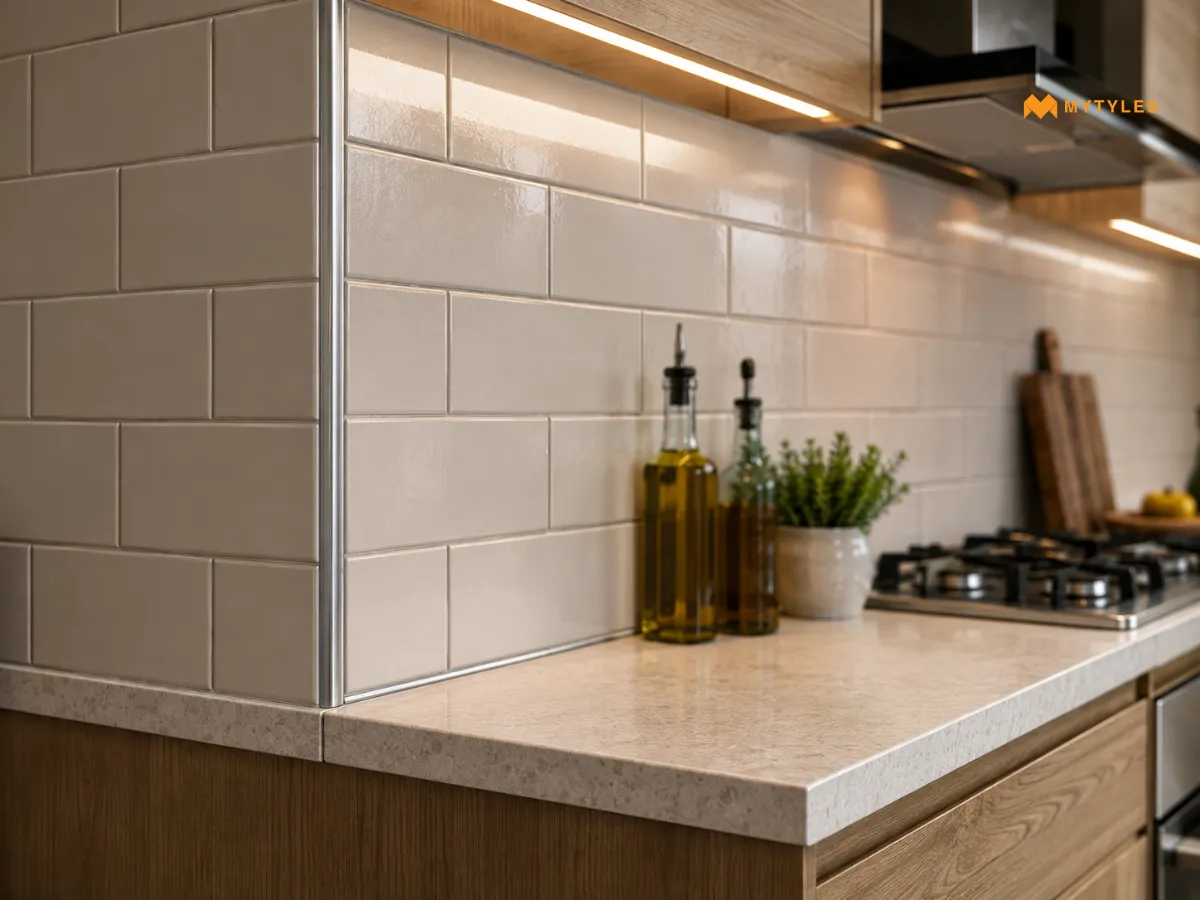
Tile trim beadings are an important part of kitchen backsplashes. They usually do not cover the full walls but are surrounded by cabinets, countertops, or appliances. This means that they have exposed edges that need trim pieces to cover them. PVC, aluminium, and stainless steel are the main materials for tile beading. Stainless steel is preferred for moist and busy spaces.
Bathrooms
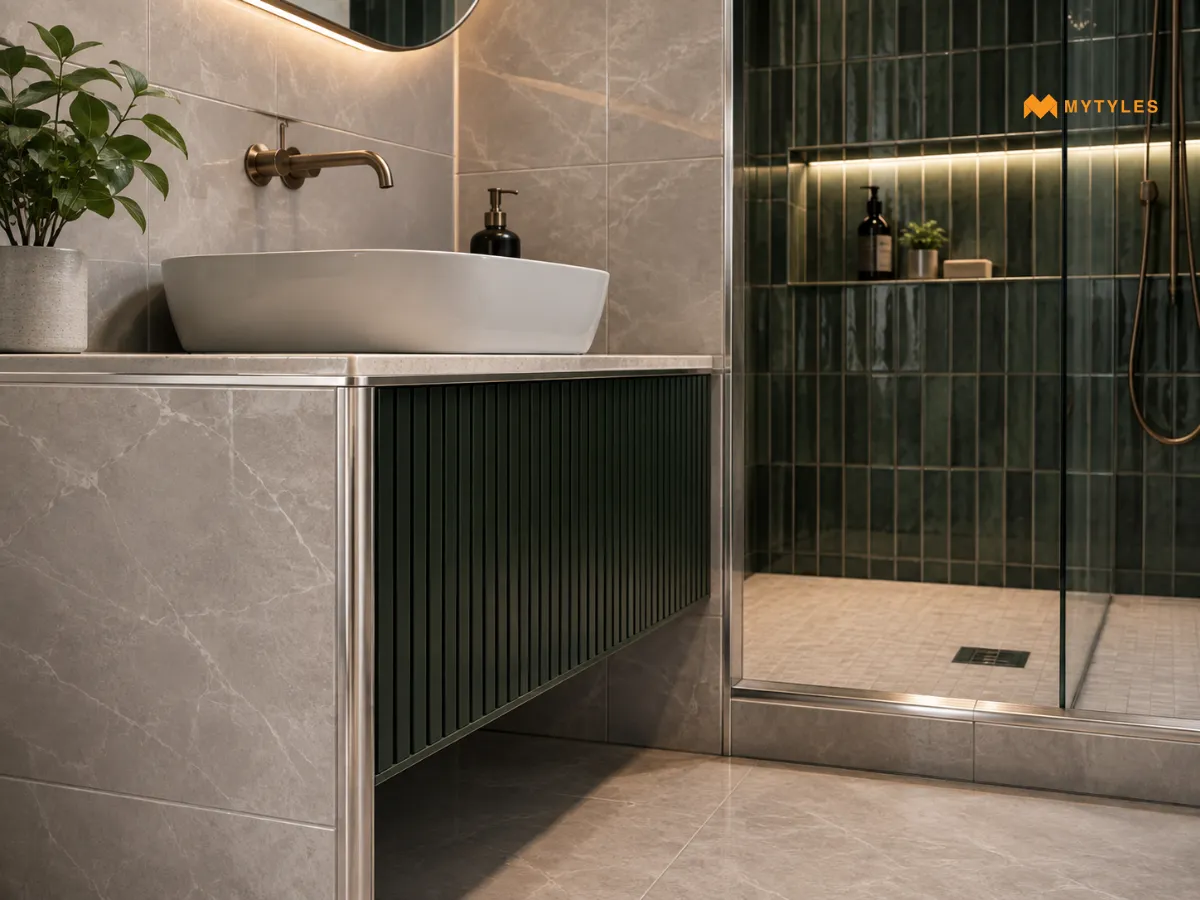
Tile trims are generally used for bathroom walls and floors to protect the edges and corners from moisture. It is also a great way to create stunning bathroom interiors. Bathroom tile edge trim is like adding tiny details to create a five-star bathroom niche design that reflects craftsmanship.
How To Choose The Right Tile Beading For Your Space
The choice of tile beading depends on factors such as durability and appearance. So, while making a selection, you need to consider some significant factors, such as a smooth installation of tile beading into the tiles.
- Match the Beading With Tile Thickness: Beadings on the tile should be the correct size to produce smooth and clean tile edges. Ensuring that the beading size matches the tile thickness will help ensure a better fit and look.
- Moisture and Durability Requirements: Tile beadings help in handling water exposure in bathrooms, kitchens and balconies. Stainless steel tile beadings give a seamless finish and are corrosion-resistant.
- Coordinate the Finish With Interior Style: The tile beading finish affects the design of the space. Matching beadwork complements improve the ambience of the space.
- Prioritise Edge Protection In High-Traffic Areas: Staircases, busy walkways, and commercial spaces put tile edges under pressure that most other areas do not. The constant movement there is what causes exposed edges to chip and crack faster. A beading profile on those edges reduces that exposure directly.
Tile Beadings For A Refined And Long-Lasting Finish
Tile beading brings together the final look of a tiled space. The tiles take the spotlight, and these finishing profiles are for neatness and edge protection. Tile beadings are becoming common in Indian homes for exposed tile edges and corners and are used in kitchens, bathrooms, and detailed feature walls. The different kinds of materials and finishes complement interiors and give a structured finish. The selection of tile beadings from a reliable source, such as MyTyles, will improve the look of the space. You can match the tile beadings with your tile design and create premium interiors.

What Are Tile Beadings Used For?

Tile beadings are used to protect exposed tile edges, corners, and transitions from damage such as chipping, cracking, and daily wear. Along with improving durability, they also create a cleaner and more polished finish for tiled surfaces. Tile beadings help achieve neat tile installations in bathrooms, kitchens, staircases, feature walls, and other tiled spaces while enhancing both safety and overall aesthetics.
What Are The Different Types Of Tile Beadings?
There are several types of tile beadings designed for different tile installation requirements. The tile beading types include edge trims, corner beadings, L-angle trims, square-edge profiles, round-edge trims, transition profiles, and decorative metal beadings. Each type serves a specific purpose, such as protecting corners, finishing exposed tile edges, or creating smooth transitions between surfaces while improving the appearance of tiled interiors.
Which Materials Are Commonly Used For Tile Beadings?
Tile edging strip are commonly manufactured using stainless steel, aluminium, brass, PVC, and powder-coated metals. Stainless steel is preferred for durability and moisture resistance, while aluminium offers lightweight and modern finishing options. Brass beadings add a premium decorative touch to interiors. These materials are selected based on installation area, exposure to moisture, durability requirements, and the desired design style of the tiled space.
Are Tile Beadings Necessary For Bathrooms And Kitchens?
Yes, tile beadings uses in bathrooms and kitchens mostly because these areas experience frequent moisture exposure, daily usage, and accidental impact. Tile beadings help protect vulnerable tile edges from cracks, water damage, and chipping while improving safety by covering sharp exposed edges. They also contribute to a cleaner and more organised finish, making tiled surfaces easier to maintain in high-usage spaces.
Can Tile Beadings Improve Bathroom And Kitchen Aesthetics?
Tile beadings significantly improve the appearance of tiled interiors by creating cleaner lines, sharper edges, and smoother transitions between surfaces. In modern bathrooms and kitchens, decorative tile trims complement contemporary tile designs and enhance the overall visual finish. Available in different colors, finishes, and profiles, they help create a more organised, premium, and professionally finished appearance without overwhelming the tile design itself.
How Do I Choose The Right Tile Beading?
Choosing the right tile beading depends on factors such as tile thickness, installation area, edge exposure, material preference, and interior design style. Bathrooms and kitchens generally require moisture-resistant beadings like stainless steel or aluminium. The trim profile should also match the tile layout and aesthetic theme. Selecting the correct finish and shape helps create a balanced, durable, and visually cohesive tile installation.
Are Metal Tile Beadings Durable?
Yes, metal tile beadings are highly durable and designed to withstand moisture, impact, scratches, and regular wear over time. Materials like stainless steel and aluminium are especially suitable for bathrooms, kitchens, and outdoor tiled areas because they resist corrosion and maintain their appearance for years. Apart from protecting tile edges, metal beadings also help preserve the overall finish and structural integrity of tiled installations.

ABOUT THE AUTHOR
Nabiya Naqvi
Nabiya Naqvi is a content writer with a postgraduate background in chemical sciences and a strong passion for creative expression. Her journey into writing began with a love for storytelling and gradually grew into a professional path focused on interiors, home decor, and design-led content. With a keen interest in beautiful living spaces, Nabiya enjoys simplifying design ideas and making them relatable for everyday readers. Through her writing, she blends creativity, research, and an eye for detail to help homeowners understand how tiles, textures, and thoughtful material choices can transform a space.
Latest Blogs By MyTyles