Inspiration Gallery
Blog
Tile Calculator
08065423741



.svg)


Seville Tiles: What They Are, Where to Use Them & How to Style Them
ByHeena Dhiman

Sun , Oct 04 , 2026

Read Time: 5 Min


 Copied!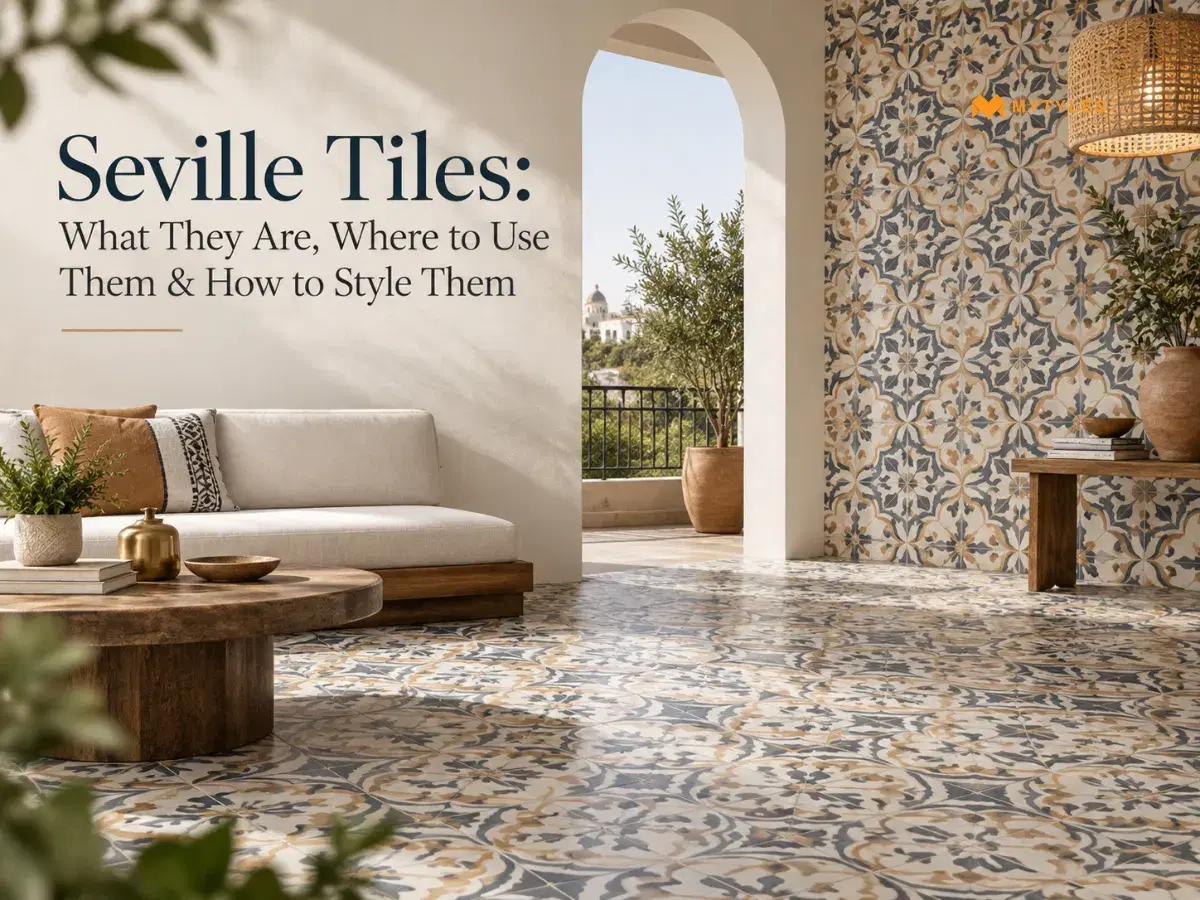
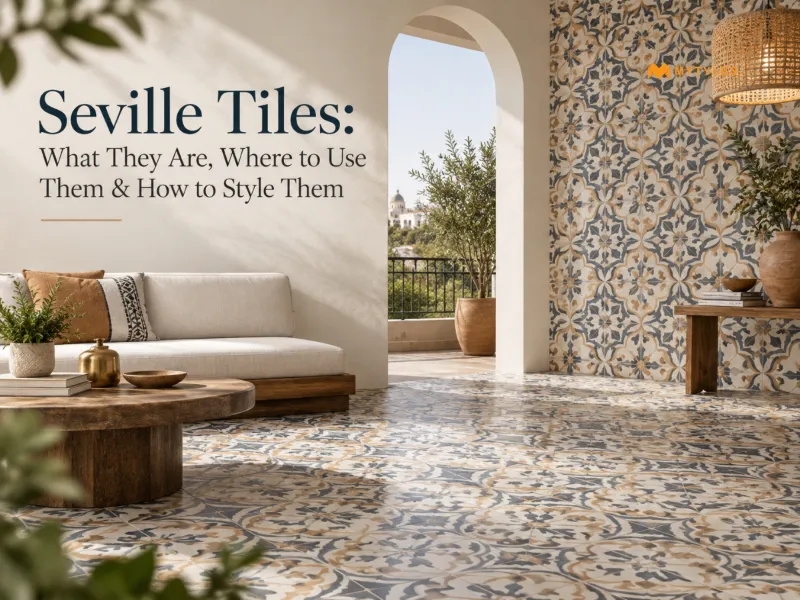
Patterned tiles can change the look of a wall even when they are used in a small area. This is one reason Seville Tiles are often used as decorative features. Their look draws from the ceramic tradition of Seville, especially the Triana neighbourhood, where colourful tilework has long appeared across buildings, patios and public spaces.
Today, the same visual language can inspire kitchens, bathrooms, entry areas and feature walls far beyond Spain. But using it well is not about covering every surface in pattern. It is about knowing what these tiles refer to, which motifs suit your room, and where a smaller dose may look better than a full wall.
What Are Seville Tiles?
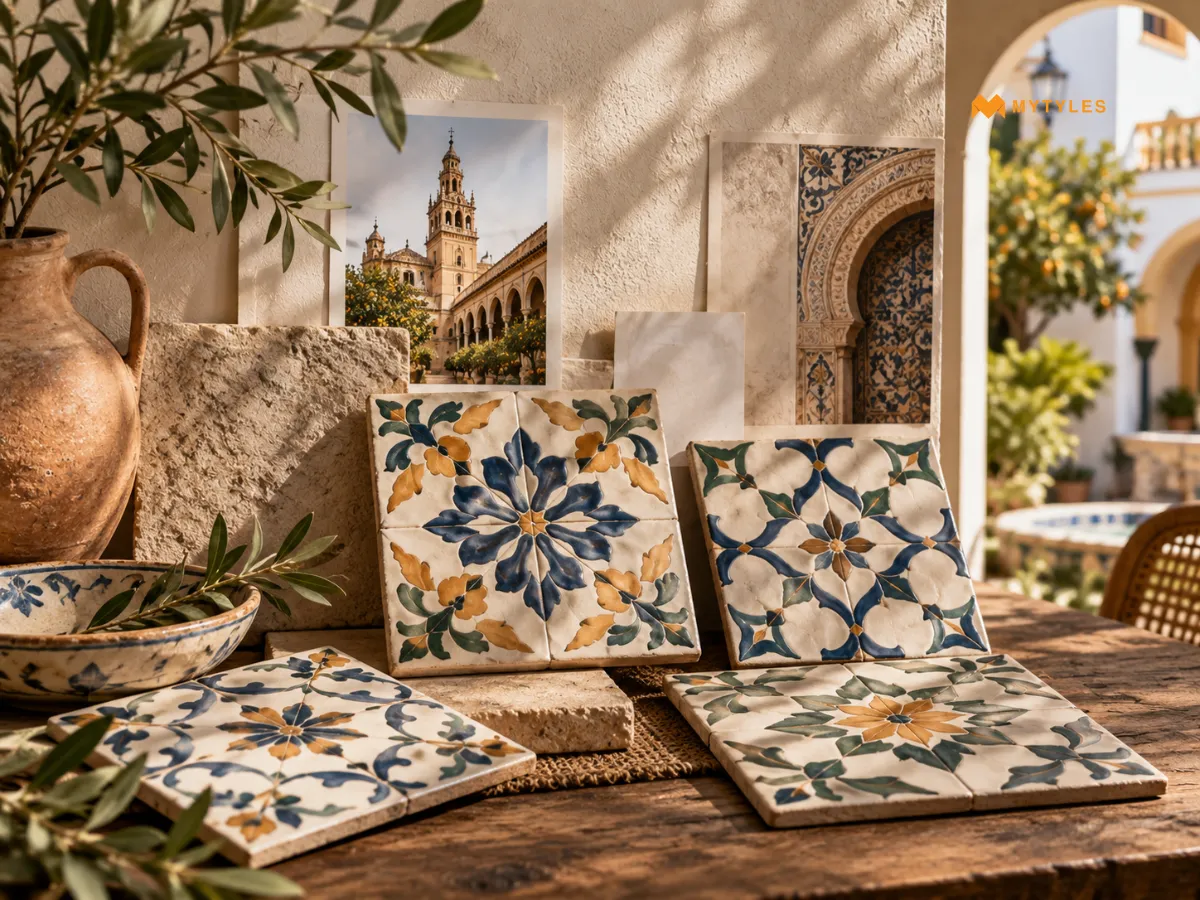
The name usually points to tiles or tile designs inspired by the decorative ceramics associated with Seville in southern Spain. It is better understood as a design reference than as one fixed material or manufacturing method. A modern Seville tile design may be factory printed, glazed, hand-painted, or made using another process, depending on the product.
The history behind the look matters. Seville developed a strong ceramic tradition over centuries, and Triana became one of its best-known centres. The city's official tourism material links local tilework with Hispano-Muslim and Mudejar influences and describes colourful floral and geometric decoration as a feature of Triana ceramics. The Spanish word azulejos is commonly used for decorative tiles in this tradition. That background is why Sevillian tiles can include anything from repeating geometry to detailed plant forms and pictorial work.
Understanding the Seville Tile Look
There is no single pattern that defines the whole style. Instead, several visual ideas appear again and again. Andalusian tile patterns often rely on repetition, symmetry and strong colour boundaries. Moorish tile patterns may use interlocking geometry, while floral tile patterns can feel softer and more decorative. Some geometric patterned tiles repeat one small motif across a larger surface, so the full design only becomes clear after several pieces are installed.
Colour is another clue. Blue and white tiles are strongly associated with many Iberian ceramic traditions, but Seville-inspired designs are not limited to that palette. Yellow, green, rust, cobalt and warm neutrals can appear together. If you prefer a quieter version, blue and white patterned tiles give you the decorative effect with fewer competing colours.
Where Can You Use Seville Inspired Tiles at Home?
The easiest place to begin is a wall area that already has a clear boundary. A kitchen backsplash, the wall behind a basin, a niche or a section behind open shelves gives the pattern somewhere to start and stop. Patterned wall tiles can then act as a defined feature instead of spreading across every surface.
In a kitchen, Spanish patterned tiles can sit between the countertop and upper cabinets. Keep the cabinet fronts and counter relatively simple if the tile has several colours. In a bathroom, decorative wall tiles may work behind a vanity or on one selected wall, but check the individual tile's listed suitability before using it inside a shower or another wet area.
Entry areas and dining spaces can also take a small patterned section. For floors, do not assume a decorative product is suitable simply because its design looks traditional. Check whether the specific tile is rated for floor use and for the conditions in that room. The same applies to balconies and outdoor spaces.
Use Seville Tiles on a Small Backsplash Area
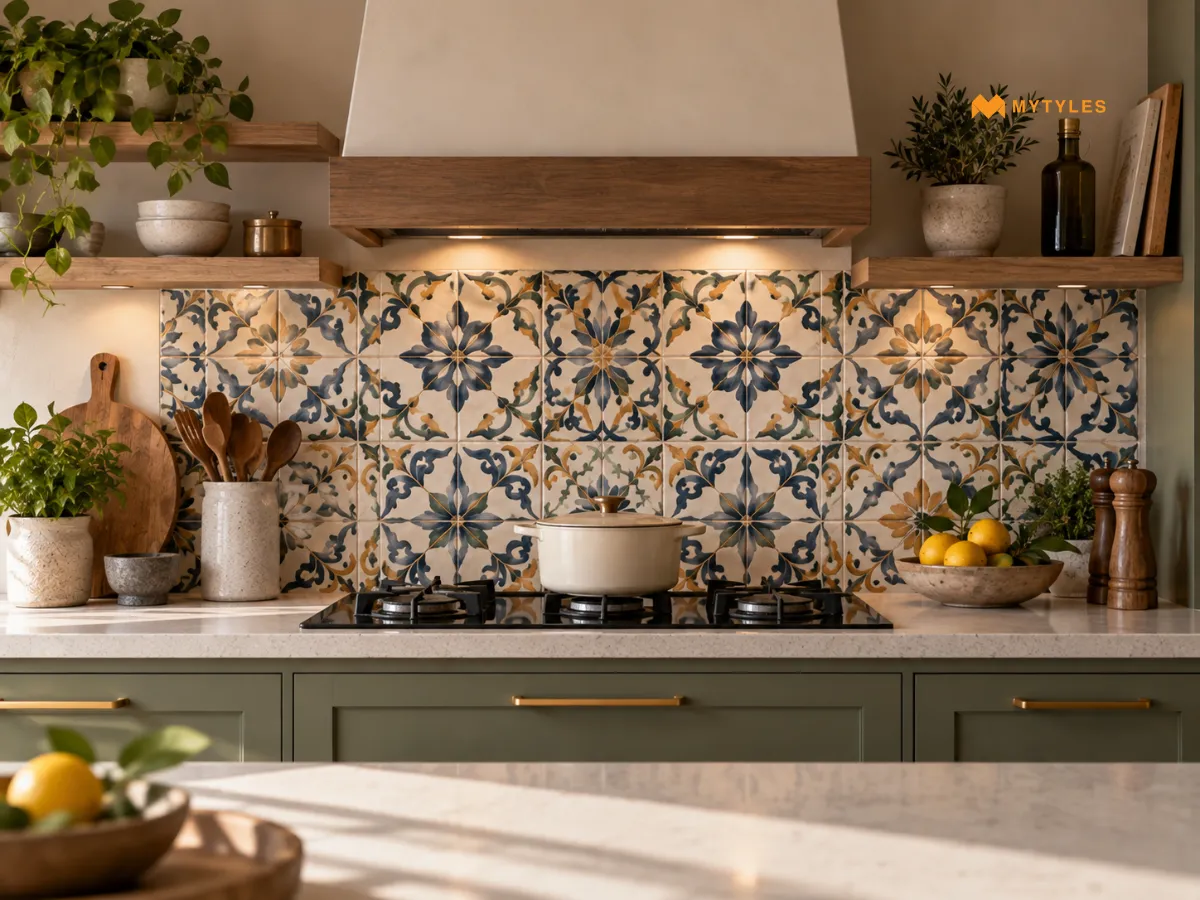
If you like the style but worry that it may feel too busy, start with a backsplash. It gives painted tiles or decorative ceramic tiles enough space to be noticed without asking the rest of the room to compete. A compact run behind the hob or sink can be enough.
Look at the repeat before buying. One tile may show only part of a motif. Four or more pieces together can create a completely different shape. Lay several pieces side by side first, especially when working with Spanish tile patterns that connect across the joints.
Let One Wall Carry the Pattern
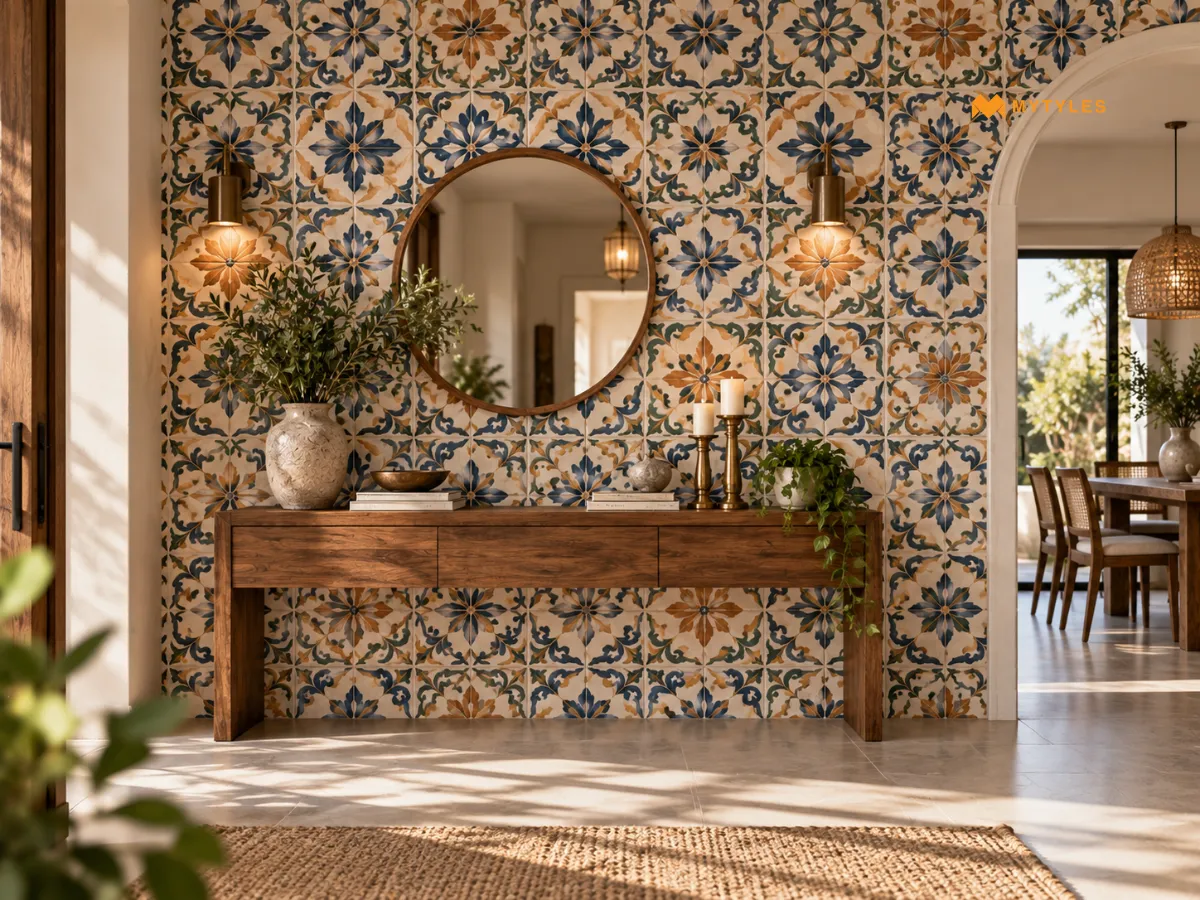
A full feature wall suits rooms where furniture will not hide most of the design. Behind a freestanding console, a dining bench or a simple vanity, the pattern remains visible. Mosaic wall tiles can also be used for a smaller panel if a full wall feels too strong.
Keep nearby surfaces quieter. Plain plaster, wood, stone-look counters or simple solid tiles give the eye somewhere to rest. This is particularly useful with detailed hand-painted ceramic tiles, where small differences and brushwork are part of the appeal. If a product is only made to look hand-painted, describe it as hand-painted style rather than assuming the production method.
Try a Blue and White Scheme for an Easier Match
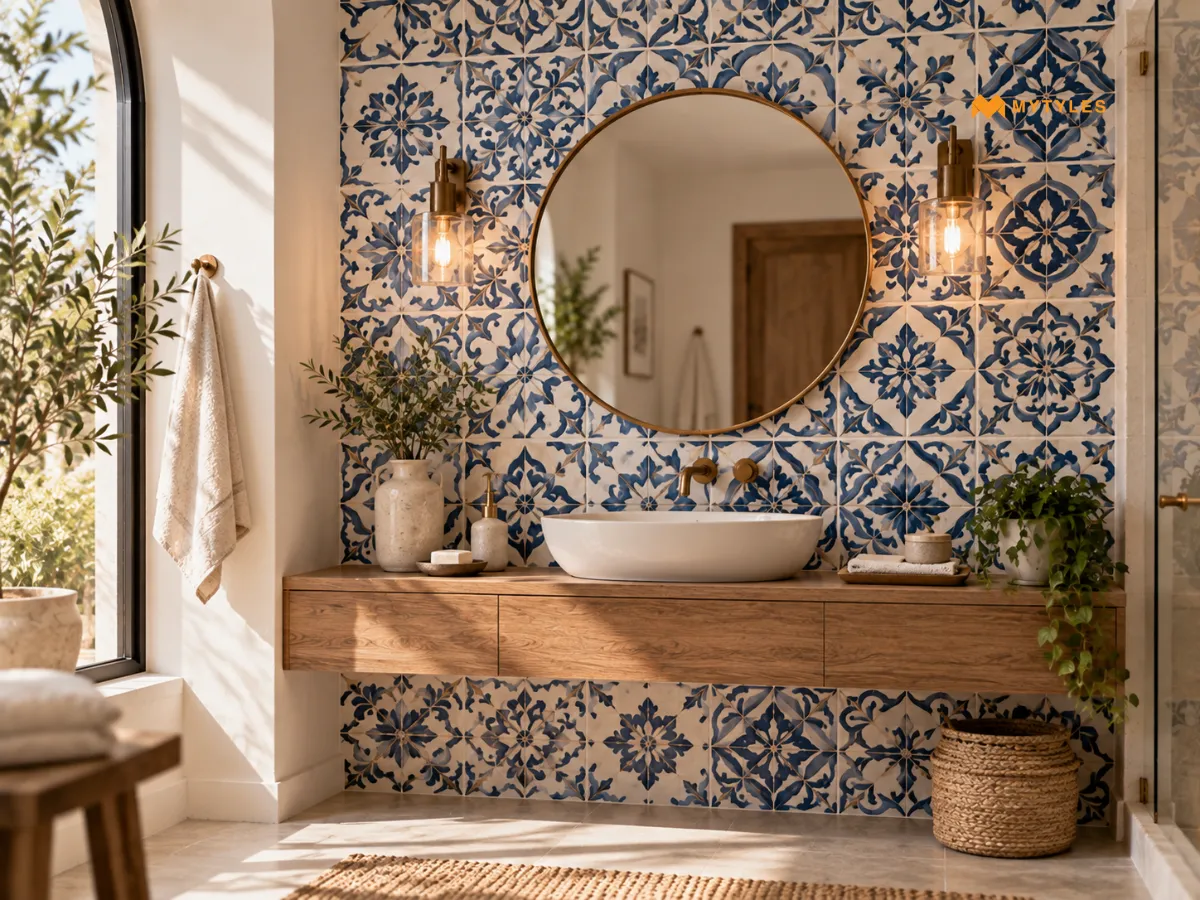
A limited palette is one of the simplest ways to use a busy pattern. Blue and white tiles can sit beside white, cream, pale grey or natural wood without needing many extra colours in the room. Brass, black or chrome fittings can all work, but pick one main metal finish rather than mixing several around a small patterned area.
This approach also makes it easier to change furniture later. The tile still has detail, while the surrounding palette stays flexible. It is a useful way to bring a Mediterranean tile style into a modern room without making every element feel themed.
Mix Old Style Patterns With Simple Modern Surfaces
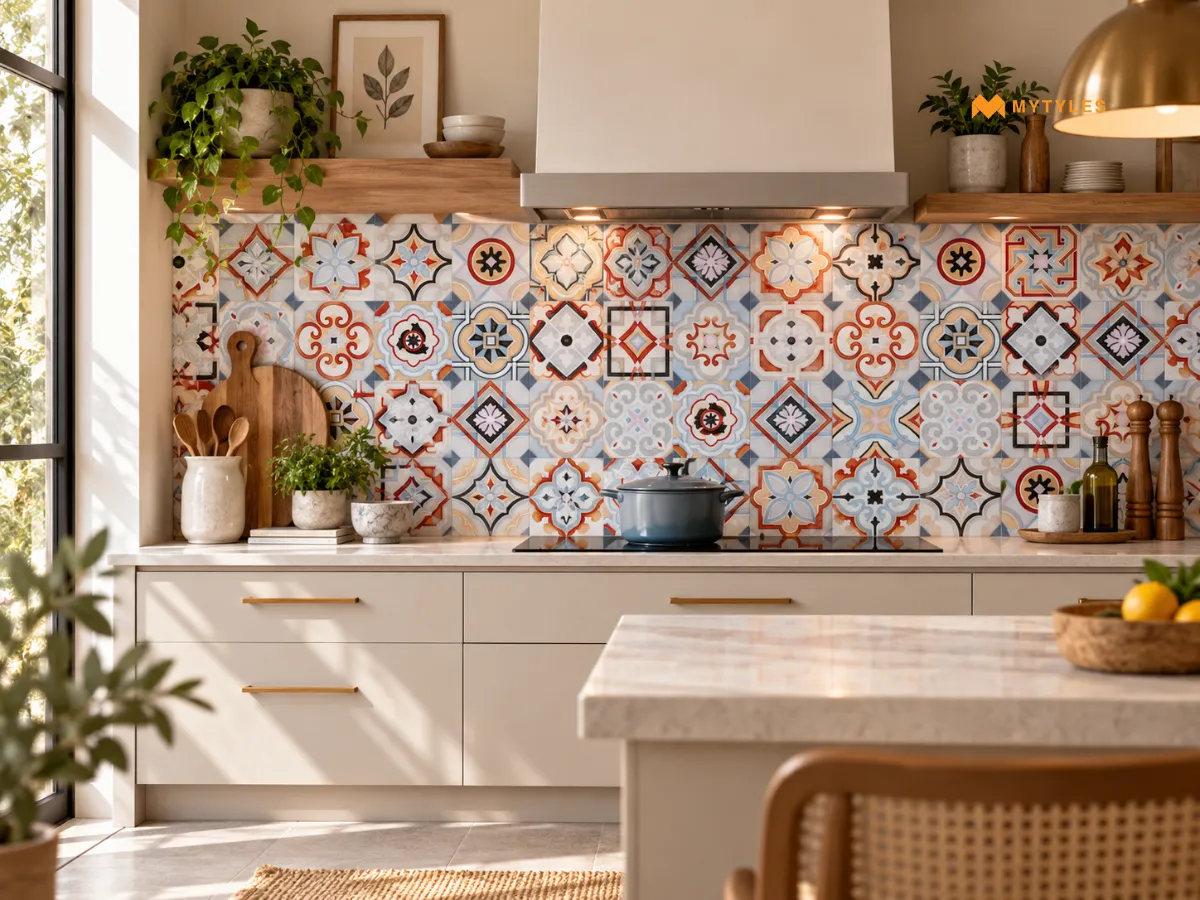
Vintage tiles do not require a vintage room. In fact, an older-looking motif often stands out more clearly beside flat cabinet doors, simple shelves, and plain walls. The contrast keeps the room from looking like a period set.
The same idea works with vintage-style patterned tiles in a new kitchen or powder room. Pick one surface for the pattern, then repeat one colour from the tile elsewhere in a smaller way, perhaps in a painted cabinet, towel or chair. There is no need to match every colour in the motif.
How to Choose a Pattern Without Regretting It Later
Start by viewing more than one tile. Patterned tiles are designed to repeat, so a single sample rarely shows the finished effect. Place several pieces together and look from the distance you would normally see the wall or floor. A tiny motif may become much stronger once it covers two square metres.
Afterwards, think about where the pattern will actually sit. A socket or tap cutting through the middle of a motif can change how the design looks. Mirrors, cabinets and corners may affect the repeat too, so a simpler pattern can sometimes be easier to place. The individual product listing is worth checking as well.
Sevillian ceramic tiles, glazed ceramic tiles, and other products sold under Spanish-inspired names do not necessarily have the same specifications. Their finish, dimensions and recommended use can vary. The design name alone does not tell you where the tile can safely be installed. Spanish ceramic tiles can also vary widely, so check the product specification rather than relying on the regional label.
Patterns You’ll See in Seville Tilework
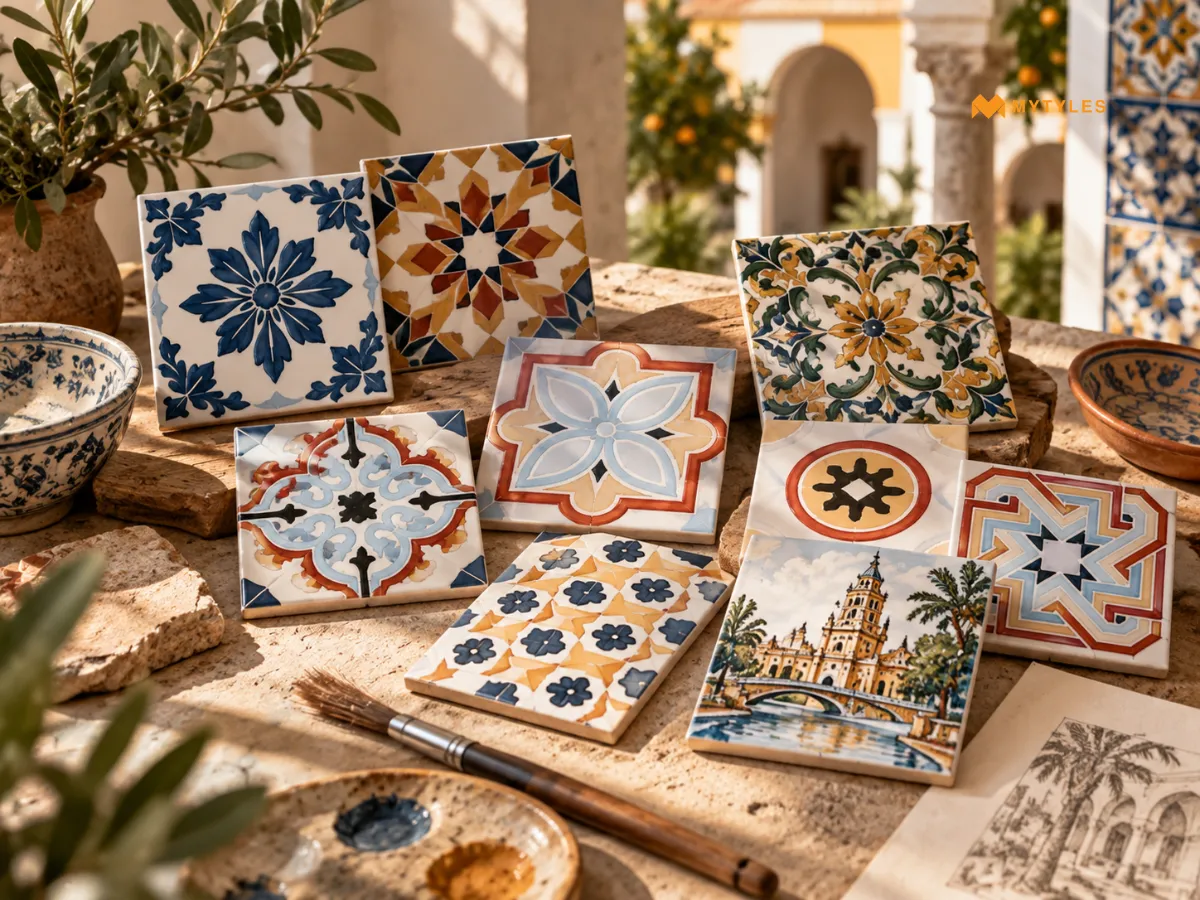
Triana tiles include blue motifs, but that is only one part of the designs found in Seville. Seville's ceramic heritage includes geometric, floral, religious and pictorial decoration, and the city still presents ceramic work across historic buildings and public spaces. That range gives homeowners room to choose a pattern that fits their own interior rather than copying a complete Spanish room.
For a calm home, use the pattern in one contained area. For a bolder interior, allow a larger repeat to become part of the architecture. Either way, the strongest result usually comes from giving the pattern enough clear space to be seen.
Add Seville-Inspired Character to Your Space
Seville-inspired tilework can be colourful, detailed and full of history, but it does not need to take over the room. Start with the surface you actually want people to notice, then decide how much pattern that area can carry. Check the tile's intended application, view several pieces together, and let the surrounding finishes stay simpler. If you want to see patterned options for your own space, visit MyTyles and compare designs by colour, scale and application before you shortlist one.

Are Seville Tiles the Same as Spanish Tiles?

Not exactly. Seville tiles usually refer to designs connected with Seville's ceramic tradition or inspired by its visual style. Spanish tiles is a much broader term that can include products and traditions from regions of Spain. Always check the individual product description rather than relying only on the style name.
What Does Azulejo Mean?
Azulejo is a Spanish and Portuguese term used for decorative tilework, especially glazed tiles used on architectural surfaces. In Seville, azulejo traditions are closely connected with the city's ceramic history. The word does not confirm a modern product's material, size or suitable application.
Why Is Triana Known for Ceramic Tiles?
Triana has been a major centre of ceramic production in Seville for centuries. The city's tourism authority links its artistic ceramic tradition to the Islamic period and later Mudejar techniques. Historic workshops and the Triana Ceramics Centre help preserve and explain this part of the neighbourhood's craft history today.
Can Seville Style Tiles Be Used on Floors?
Some can, but not every decorative tile is made for flooring. A pattern or Spanish inspired appearance does not confirm floor suitability. Check the individual product specifications, intended application and any relevant performance information before using it on a floor, particularly in wet, outdoor or high traffic areas.
Which Colours Work Well With Seville Style Tiles?
Start with colours already present in the tile. White, cream, beige, pale grey and natural wood can give a colourful pattern a quieter background. If the design is mainly blue and white, you can keep the rest of the room simple and repeat blue in one or two smaller details.
Can I Use Different Seville Patterns in One Room?
Yes, but compare them together before fixing anything. Two detailed patterns can compete if their colours, scale and repeat are very different. A simpler approach is to make one pattern dominant and keep the second smaller or quieter. Looking at several tiles together helps you judge the combined effect.
Are All Seville Style Tiles Hand Painted?
No. Historic and artisan tilework may be hand painted, but modern Seville inspired products can be made in different ways, including printed or other factory processes. Do not assume a tile is handmade from its appearance. Check the manufacturer's or seller's product information if the production method matters to you.

ABOUT THE AUTHOR
Heena Dhiman
With a background in fashion design and over 5 years of writing experience, I bring a creative and detail-oriented eye to home and design content. My journey began with aesthetics, colours, and visual storytelling, which gradually led me to writing across lifestyle, finance, home improvement, and resource management. Over time, I discovered a strong interest in tiles and interiors, where my design background helps me understand how small choices can shape the feeling of a home. Through my content, I aim to make home design decisions easier, clearer, and more enjoyable for readers, helping them feel confident while creating spaces that reflect their style and everyday needs.