Inspiration Gallery
Blog
Tile Calculator
08065423741



.svg)


Can You Install Tile on Tile? A Complete Guide
ByHeena Dhiman

Sun , Sep 27 , 2026

Read Time: 5 Min


 Copied!
Replacing an old tiled floor sounds simple until the breaking starts. Dust spreads, debris piles up, and the room may stay out of use while the old finish is removed. That is why tile on tile has become a useful renovation option. Instead of taking out every old tile, a new tile layer is fixed over the existing tiled surface when that surface is suitable.
The idea is simple, but the decision needs more thought than choosing a new design. The old tiles must be stable, the new floor or wall will become thicker, and the bonding system has to suit the job. Before deciding, it helps to understand what is actually happening beneath the new tile.
What Does Tile on Tile Actually Mean?
Tile on tile is a method of fixing new tiles directly over an existing tiled surface. It may be used on a tile-on-tile floor or a tile-on-tile wall when the existing installation is sound enough to act as a base. The old layer stays in place, so full demolition may not be needed.
During tile-on-tile installation, the old tile becomes part of the base supporting the new finish. If it is loose, moving, badly cracked, or affected by an unresolved problem, covering it does not remove that problem.
Can You Install New Tiles Over Existing Tiles?
Yes, new tiles over old tiles can be considered when the existing tiled surface is firmly bonded, reasonably flat, clean, and suitable for the selected installation system. Laying tiles over existing tiles should therefore begin with an assessment, not with adhesive.
An installer may check for loose tiles, cracks, movement, hollow-sounding areas, contamination, and uneven sections. A tile bond test can be part of that assessment, but a tap alone is not a complete diagnosis. Warning signs may need investigation before anyone decides to retile over existing tiles.
Five Things to Check Before Choosing Tile on Tile
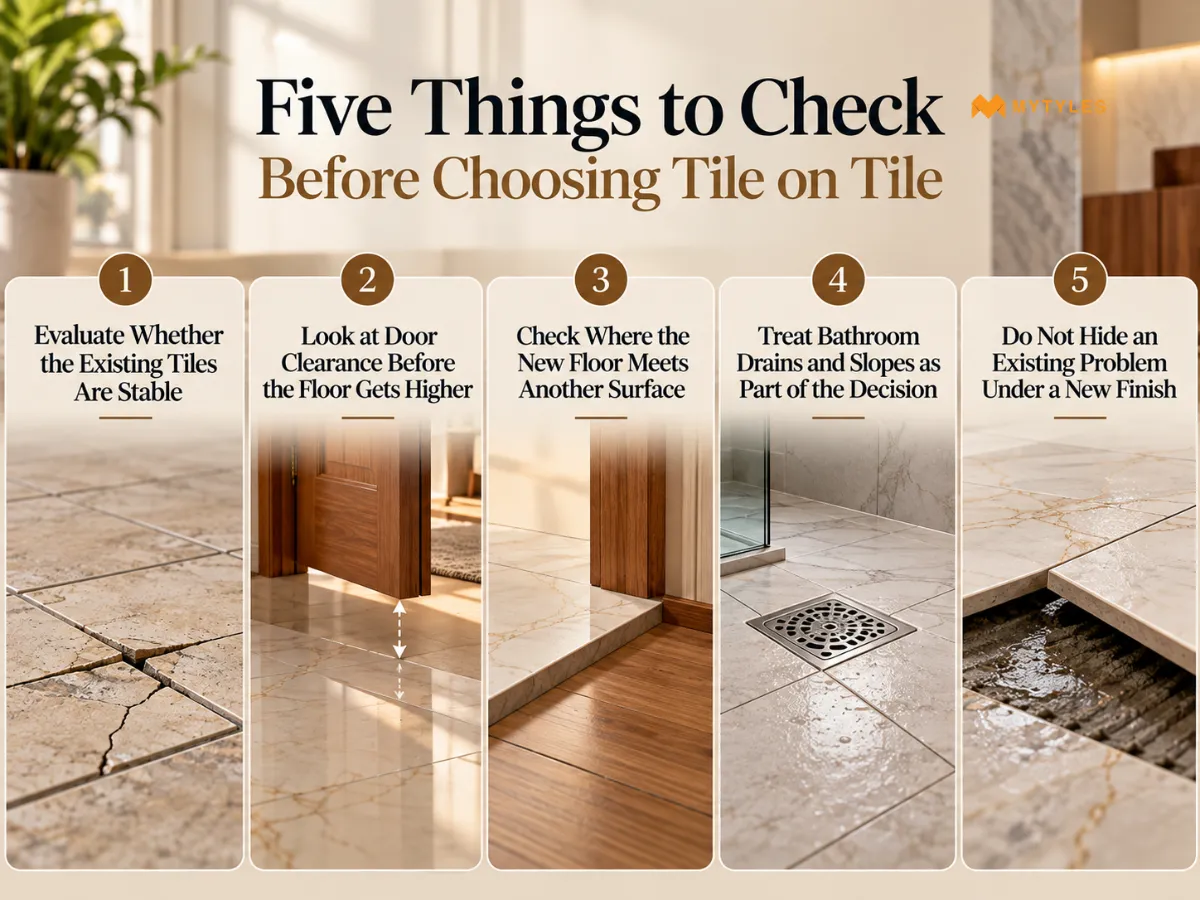
Before going ahead with tile on tile, take a closer look at the existing tiled area and the parts of the room it connects with. The condition of the old tiles matters, but so do practical details such as door clearance, adjoining floor levels, and bathroom drainage. Some of these can become harder to address once the new layer is in place.
1. Evaluate Whether the Existing Tiles Are Stable
Old tile preparation is not only about cleaning. Loose tiles, widespread cracking, movement, or lost bond can make the old layer a poor base. Local repairs may be possible, but the response depends on how much is affected and why.
2. Look at Door Clearance Before the Floor Gets Higher
Putting tile on tile adds the thickness of the new tile and its bonding layer. That makes floor height after retiling a practical design issue. A door that currently clears the floor may rub after the work. The new level can also sit higher than flooring in the next room. Check doors, thresholds, steps, skirting, and nearby fixed elements before ordering tiles.
3. Check Where the New Floor Meets Another Surface
The new floor may meet wood, stone, another tile, or an unchanged floor at a doorway. Extra build-up can leave a level difference, so plan that junction before the new floor is fixed.
4. Treat Bathroom Drains and Slopes as Part of the Decision
A tile-on-tile bathroom needs more than a surface check. Adding another layer can affect the relationship between the finished floor, drain, threshold, and existing slope. It also does not repair failed waterproofing or unexplained seepage below the old tiles. If dampness or leakage is already present, the cause should be assessed before the old finish is covered.
5. Do Not Hide an Existing Problem Under a New Finish
Cracks, persistent moisture, movement, and loose tiles should not be treated as cosmetic defects. Tile over existing tile needs a suitable base, so an uncertain substrate may need further assessment first.
Which Tiles Can Be Considered for Tile-on-Tile?
Ceramic, porcelain, and vitrified tiles are among the tile types used in tile over tile systems. Some manufacturer systems also allow selected natural stone. That does not mean every tile in these groups is automatically suitable for every old floor or wall.
Tile size, application area, existing surface, and adhesive limits still matter. A product may allow one size on a floor and set different limits for a wall, so check its instructions before deciding.
What Adhesive Is Used for Tile on Tile?
A tile-on-tile adhesive is designed or specified to bond to an existing tiled surface. Many products sold for this purpose are polymer-modified, cement-based adhesives. Existing glazed or low absorption tiles can behave differently from a fresh cementitious base, so an adhesive for existing tiles should be selected according to the adhesive maker's stated substrates, tile types, sizes, and application areas.
Terms can be confusing while shopping. Tile-on-tile cement may be used casually to describe a cement-based adhesive, but ordinary cement mortar and a purpose-made tile-on-tile adhesive should not be treated as the same product. Likewise, tile-on-tile mortar and tile-on-tile thinset may describe setting materials in different markets. The product data sheet is more useful than the label alone.
Tile-on-tile adhesive price varies by brand, pack size, adhesive class, and use. Compare price only after confirming that the product suits the existing surface and new tile.
Does Every Existing Tile Need a Primer?
Not always. A primer for existing tiles may be part of one manufacturer's system, while another system may require a different form of surface preparation. Smooth, glossy, or low-absorption surfaces can need special attention because they do not behave like a porous cement base.
Follow a compatible preparation and adhesive system. Existing tile surface preparation may include cleaning, repairs, mechanical preparation, or a bonding primer. A non-porous tile substrate should not be assumed to accept any standard adhesive without checking the product instructions.
How Is Tile on Tile Installation Usually Done?
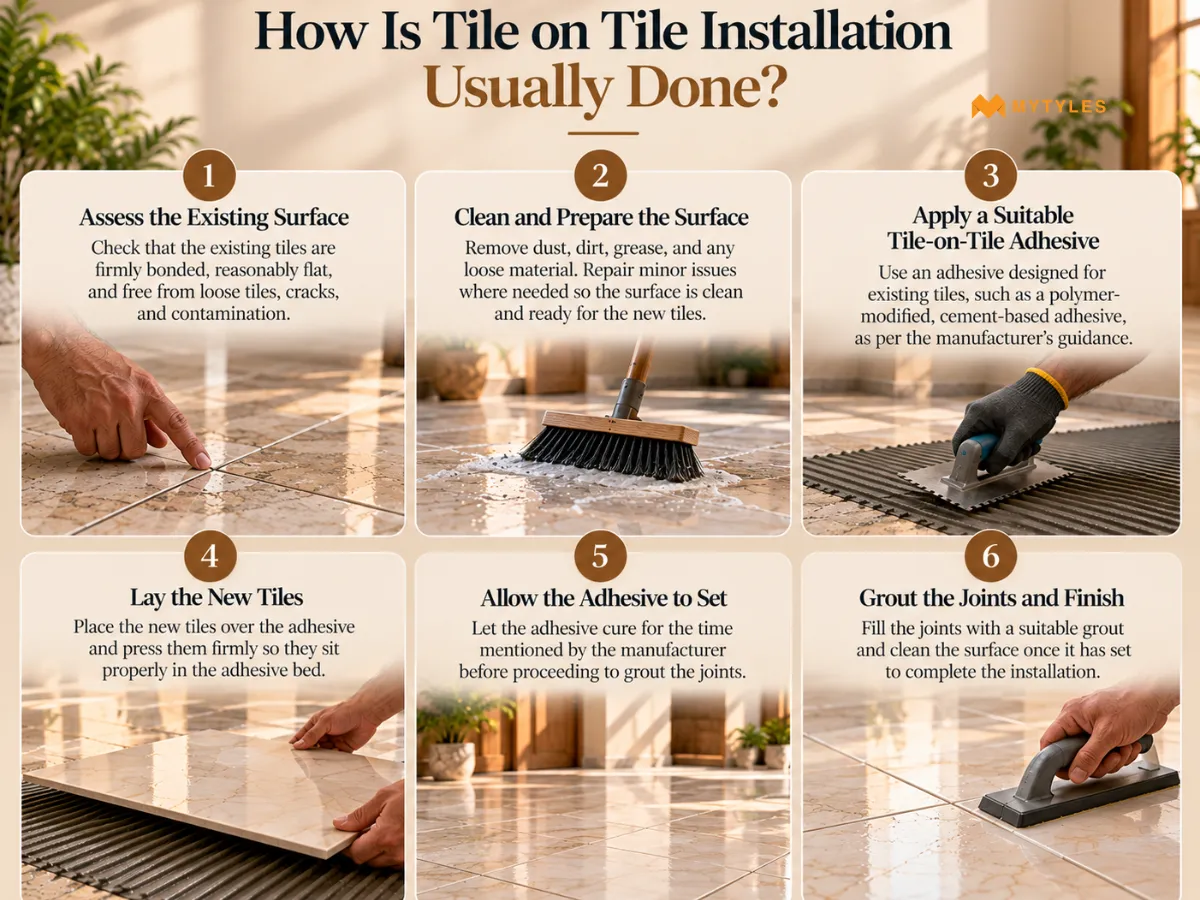
There is some work to do before a new tile goes over an old one. For tile on tile installation, the first step is to look at what is already there. Loose tiles, cracks, uneven areas, movement, or signs of moisture can point to areas that need attention before laying tiles over existing tiles.
Cleaning is part of old tile preparation too. Dust, grease, soap residue, wax, and other deposits are removed from the surface. Smooth or glazed tiles may form a non-porous tile substrate, so further preparation can be needed. Depending on the system, this may include surface abrasion, a primer for existing tiles, or another method given by the manufacturer.
Once the surface is ready, the specified tile-on-tile adhesive is applied, and the new tiles are laid according to the planned layout. The adhesive for existing tiles should match the particular tile and surface involved. After installation, the adhesive is given the required setting time before grouting and other finishing work. Any required movement joints in tile installation also need to be considered.
What Are the Practical Benefits of Tile on Tile?

If the old tiled surface is suitable, keeping it in place can avoid some of the work involved in taking up the complete tile layer. For a renovation, that can make a difference in a few practical ways.
Less Old Tile to Remove and Dispose Of
Full tile removal can leave a considerable amount of broken material behind. With tile on tile, a suitable existing layer remains where it is, so there may be less old tile to remove from the site.
Less Breaking Can Mean Less Dust and Debris
Removing an old tiled surface usually involves breaking and scraping. Leaving a sound layer in place can reduce some of that work and the debris that comes with it. Some preparation and repair work may still be required.
The Removal Stage May Take Less Time
If full removal is not required, that part of the renovation may take less time. This does not mean the complete installation will necessarily be faster. Surface checks, preparation, adhesive setting time, and grouting still need to be accounted for.
When Is Removing the Old Tile the Better Route?
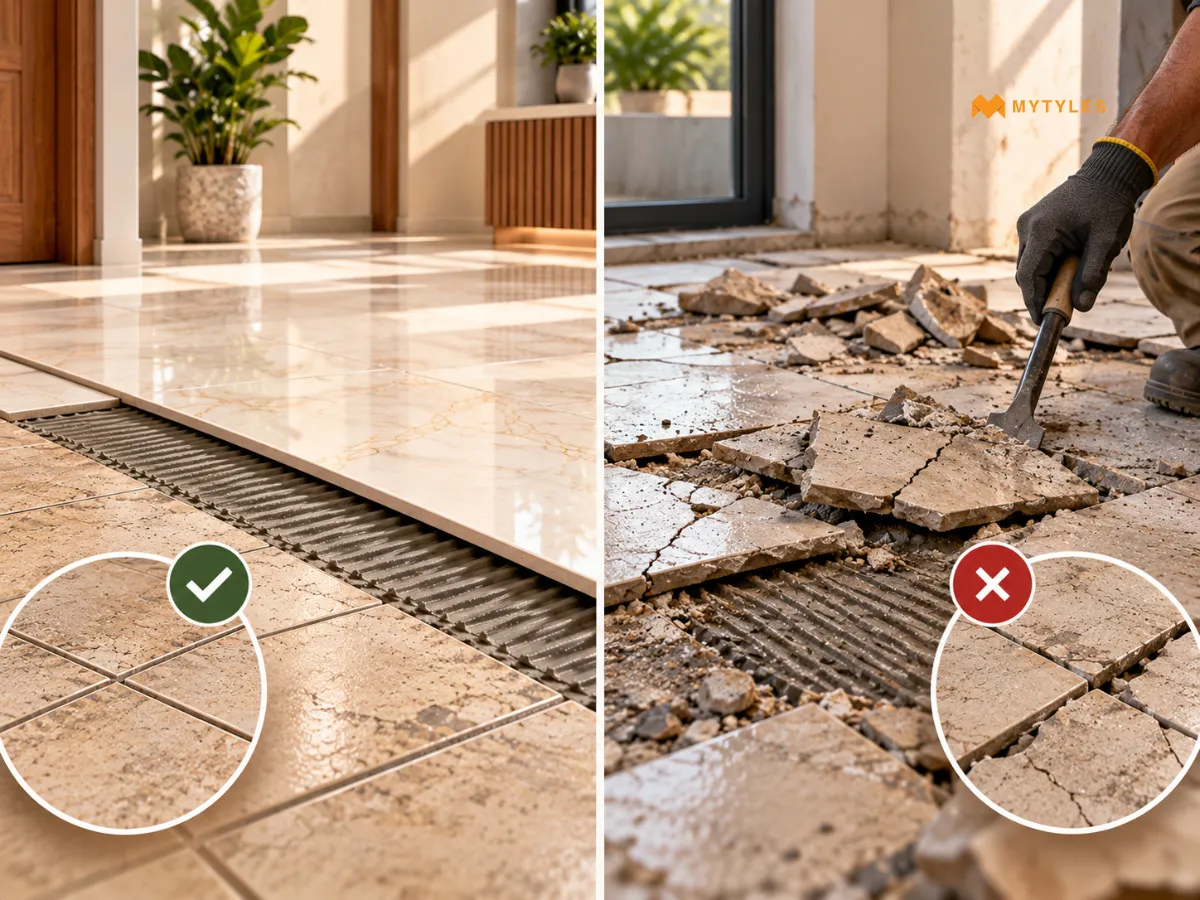
Tile on tile is not the answer for every renovation. Removal may need to be considered when the existing tiled layer is widely loose or unstable, significant cracking suggests movement below, unresolved dampness or leakage is present, the surface cannot be prepared as required, or the added thickness creates an unacceptable level change.
Removal can expose the base underneath when the problem is not limited to the tile face. That allows the affected area to be assessed before a new finish is installed.
Do Not Forget Movement Joints
Movement joints in tile installation allow parts of the tiled assembly to accommodate expected movement. When an existing installation already contains movement or structural joints, they should not simply be hidden because a new tile layer is being added.
How those joints continue through the new layer depends on the project and installation guidance. Discuss this before finalising the new tile layout.
Six Questions to Ask Before the Installer Starts
- Have the existing tiles been checked for loose, cracked, hollow-sounding, or moving areas?
- Is the chosen adhesive specifically suitable for this existing tiled surface and the new tile?
- Does this system require a primer, abrasion, or another preparation step?
- How much will the finished floor or wall build out, and will that affect doors, drains, thresholds, or adjoining finishes?
- How will existing movement joints be handled in the new layout?
- If moisture, cracks, or failed tiles are found, will the cause be checked before the area is covered?
Having these questions answered before work begins can clarify what needs to be prepared, which products will be used, and whether any existing issues need attention first.
Planning a Retile? The Old Tiles Could Stay
Tile on tile can be a practical way to retile a suitable floor or wall without automatically removing every old tile first. The decision starts with the new design, the condition of the existing surface, the extra build-up, and the installation system that will connect the two layers.
If you are planning a renovation, see the tile designs and installation accessories available at MyTyles, then confirm the selected tile and bonding system with the product specifications and your installer before work begins.

Can You Put New Tiles Directly Over Old Tiles?

Yes, in some projects. The existing tiled surface should first be checked for loose or damaged areas, movement, unevenness, moisture concerns, and anything that may interfere with bonding. The selected adhesive system must also allow installation over existing tiles. If the old tiled surface has unresolved problems, these should be addressed before another tile layer is installed over it.
Can Tile On Tile Be Used On Both Floors And Walls?
It can be used on some floors and walls when the existing surface, new tile, and adhesive system are suitable for the intended application. Product requirements can vary with factors such as tile format, substrate, location, and installation conditions. Check the relevant product specifications and adhesive instructions before installation.
Does Tile On Tile Make The Floor Higher?
Yes. The new tile and bonding layer add to the height of the existing floor. This can affect door clearance, adjoining floor levels, thresholds, and other nearby details. The actual increase will depend on the tile and installation system used, so the finished floor level should be considered before installation.
Can You Tile Over Cracked Existing Tiles?
A cracked tiled surface should be checked before another layer is installed. A crack may be limited to an individual tile, or it may be associated with movement or another issue beneath the tiled finish. What caused the cracking and how much of the area is affected should be understood before deciding whether tile on tile is suitable.
Do Existing Tiles Need To Be Roughened Before Retiling?
Not in every system. Surface preparation depends on the products being used and the condition of the existing tiles. Some systems may specify mechanical preparation, a compatible primer, or another treatment before adhesive is applied. Follow the preparation instructions provided for the selected installation system rather than assuming every existing tiled surface requires the same method.
Can Tile On Tile Fix A Leaking Bathroom Floor?
Installing another tile layer should not be treated as a repair for an existing leak. If seepage, dampness, or another moisture problem is already present, its source should be identified before the old tiled surface is covered. The required repair will depend on what is causing the problem.
Is Tile On Tile Always Faster Than Removing Old Tiles?
Not always. Keeping a suitable existing tiled surface can remove or reduce the demolition stage, but preparation, repairs, installation, setting time, and grouting still take time. If the existing surface needs additional work before it can be tiled over, that work will also affect the overall installation time.

ABOUT THE AUTHOR
Heena Dhiman
With a background in fashion design and over 5 years of writing experience, I bring a creative and detail-oriented eye to home and design content. My journey began with aesthetics, colours, and visual storytelling, which gradually led me to writing across lifestyle, finance, home improvement, and resource management. Over time, I discovered a strong interest in tiles and interiors, where my design background helps me understand how small choices can shape the feeling of a home. Through my content, I aim to make home design decisions easier, clearer, and more enjoyable for readers, helping them feel confident while creating spaces that reflect their style and everyday needs.
Latest Blogs By MyTyles