Inspiration Gallery
Blog
Tile Calculator
08065423741



.svg)


How to Clean and Maintain Natural Stone Murals Without Damaging Them
ByAditi Bardhan

Tue , Oct 13 , 2026

Read Time: 5 Min


 Copied!
A natural stone mural can make a wall look artistic and different from regular wall tiles. But it also needs a little more care. Stone is not like a printed wall panel that can be cleaned roughly. The surface may react badly to harsh cleaners, acidic liquids, hard brushes or careless scrubbing.
Good natural stone mural care starts with simple habits. Wipe dust regularly, clean spills early, use the right cleaner and avoid anything too strong. The aim is not to scrub the stone until it looks new every time. The aim is to keep the surface clean without damaging its finish, colour, or texture.
Not sure how to clean natural stone murals? Start gently, and try the method on a small hidden spot before cleaning the rest. Natural stone can vary from one product to another, so always check the product care instructions before using any cleaner.
Step-by-Step Guide to Cleaning Natural Stone Murals
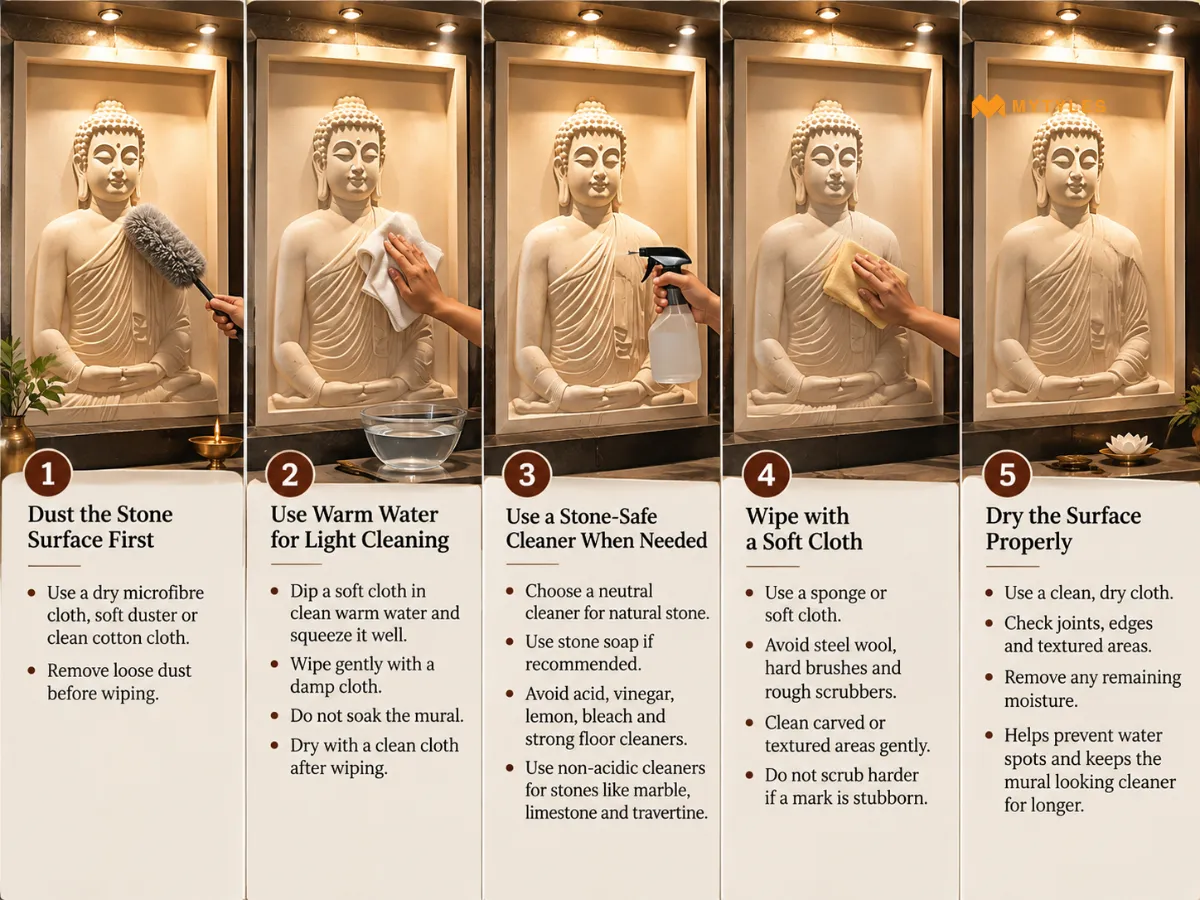
Natural stone mural cleaning should be done in a calm and controlled way. Do not spray random cleaners directly on the mural. Start with the gentlest method and move to stronger care only if needed.
Step 1: Dust the Stone Surface First
Before you start wiping the mural, get rid of the loose dust first. A dry microfibre cloth, soft duster or clean cotton cloth will do. If dust is still sitting on the stone, a wet cloth can drag that grit across the surface.
Step 2: Use Warm Water for Light Cleaning
For light marks or daily dust, start with warm water. Dip a soft cloth in clean warm water, squeeze it well and wipe the stone gently. Cleaning natural stone with warm water works well when there is no oil, stain or heavy dirt. Do not soak the mural. The cloth should be damp, not dripping. After you wipe, use a dry cloth to get rid of any remaining moisture.
Step 3: Use a Stone-Safe Cleaner When Needed
If warm water does not work, please use a neutral cleaner for natural stone. This type of cleaner is safer because it is not acidic or too alkaline. You can also use stone soap for natural stone if the product care guide allows it. Do not use bathroom acid, vinegar, lemon, bleach or strong floor cleaner on the mural. A non-acidic cleaner for natural stone is especially important for marble, limestone, travertine and other stones that may react to acidic products.
Step 4: Wipe with a Soft Cloth
Use a sponge or soft cloth for natural stone cleaning. Leave the steel wool, hard brushes and rough scrubbers aside. Around carved or textured areas, go slowly because dirt can settle into the grooves. If a mark is stubborn, don’t keep rubbing harder. With natural stone wall murals, gentle cleaning is safer than too much pressure.
Step 5: Dry the Surface Properly
After cleaning, dry the mural with a clean cloth instead of leaving water on the stone. Check the joints, edges and textured areas too, since water can sit there longer. Drying helps reduce water spots and mineral marks, keeps the surface looking cleaner between deep cleans, and is a simple way to protect natural stone from damage during regular care.
What Not to Use on Natural Stone Murals
Knowing what to avoid is as important as knowing what to use. Many common home cleaners are too harsh for natural stone.
Avoid these on stone murals:
- Vinegar
- Lemon juice
- Bathroom acid
- Bleach
- Harsh tile cleaner
- Abrasive powder
- Steel wool
- Hard scrub pads
- Coloured cleaning liquids that may stain
- Very oily polish unless recommended
These products can cause dull patches, surface marks or natural stone etching. Etching is not the same as a stain. It happens when the surface reacts and loses its finish in that spot. If you are unsure, test the cleaner on a small hidden area first.
Sealing Natural Stone Murals
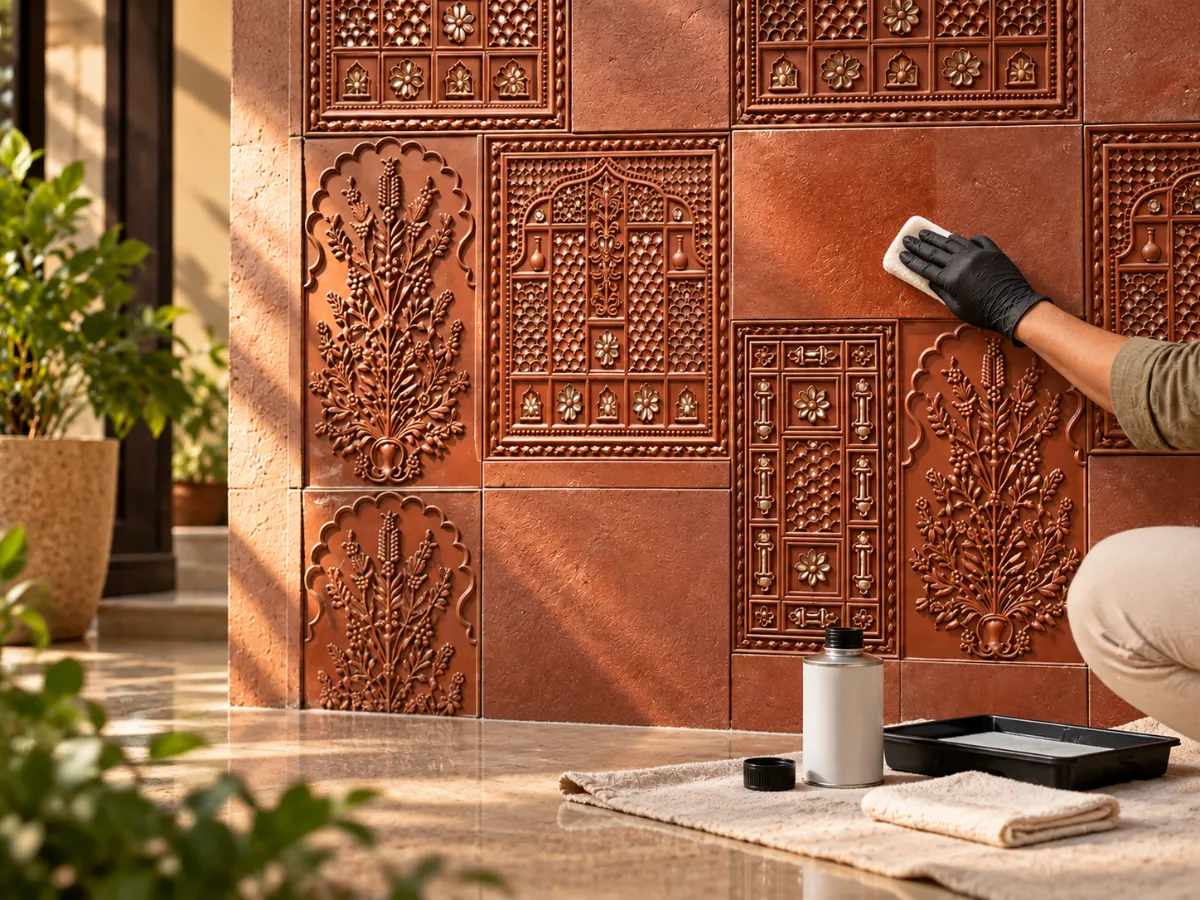
Not every natural stone mural needs sealing. Whether a sealer is required depends on the stone type, finish, porosity, product guidance and expected exposure. Moisture, oil, food splashes, incense smoke, dust or frequent touching can be considered when assessing how the mural will be used.
Where sealing is recommended for the specific product, choose a natural stone sealer that is compatible with the stone and finish. A suitable sealer may reduce absorption, but it does not make the surface stain-proof. The wrong product may also affect the appearance or leave an uneven finish.
Before sealing:
- Clean the stone properly.
- Let it dry fully.
- Use a sealer meant for natural stone.
- Test on a small hidden area.
- Follow the product instructions.
If the mural is already sealed, check when resealing is needed. This may depend on usage, cleaning routine and exposure.
Maintenance Routine for Natural Stone Murals
Good natural stone mural maintenance does not need a rigid schedule. How often the mural needs attention will depend on where it is installed, how much dust or moisture reaches it, the stone type and how frequently the surface is touched.
For Regular Dusting
Remove visible dust with a soft, dry cloth or a clean, soft-bristled brush. If the surface needs more than dusting, use a slightly damp cloth and dry the area afterwards.
When Marks or Dirt Appear
Pay more attention to edges, joints, textured sections and areas that are touched often. If warm water is not enough, use a cleaner that is suitable for the specific natural stone and finish.
Check the Surface Periodically
Look for stains, moisture marks, scratches, loose sections or changes in the finish from time to time. If the mural has been sealed, follow the sealer or stone supplier’s guidance on whether and when resealing may be needed.
Common Cleaning Mistakes to Avoid
Many stone mural problems start with good intentions but wrong cleaning methods.
Avoid these mistakes:
- Using vinegar because it feels “natural”
- Scrubbing hard to remove a stain
- Leaving cleaner on the wall for too long
- Using random bathroom cleaner on stone
- Spraying water directly into joints
- Ignoring stains until they settle
- Using oil polish without checking suitability
- Cleaning sealed and unsealed stone the same way
If you want to know how to clean natural stone without damage, the answer is to use mild products, soft tools and less force.
A Gentle Care Routine Goes a Long Way
Natural stone murals can vary in colour, veining, markings and texture from one piece to another. That variation is part of the material, so cleaning should be kept gentle and suited to the stone and finish.
For regular natural stone cleaning and maintenance, there is no need to overdo it. A soft cloth or duster is often enough for day-to-day dust. If the mural needs a proper wipe, use warm water where suitable or a cleaner made for natural stone. Spills are best dealt with early, and rough brushes are better left out.
It also helps to check the mural from time to time for marks, stains or changes in the surface. If you are planning a feature wall, browse natural stone murals at MyTyles and compare the available designs, sizes and materials.

How Often Should Natural Stone Murals Be Cleaned?

Natural stone murals can be dusted weekly with a soft, dry cloth. Damp cleaning can be done when the wall looks dull or marked. Areas near pooja rooms, balconies, kitchens or dining spaces may need more frequent care. Always dry the surface after wiping so water does not sit on the stone.
What Cleaner Is Safe for Natural Stone Murals?
A neutral cleaner made for natural stone is usually the safest choice. You can also use warm water for light cleaning. Avoid vinegar, lemon, bleach, bathroom acid and abrasive cleaners because they may dull or mark the surface. Always test any cleaner on a small hidden area before using it widely.
Can I Use Vinegar to Clean Natural Stone Murals?
No, vinegar should not be used on natural stone murals. It is acidic and may cause etching, dullness or surface marks on stones like marble, limestone and travertine. Even if the stain looks small, use a non-acidic cleaner instead. When unsure, follow the stone supplier’s care instructions.
How Do I Remove Stains from a Natural Stone Mural?
Start by blotting the stain, then clean gently with warm water or a stone-safe cleaner. Do not scrub hard. For deeper stains, a poultice may be needed, depending on the stone and stain type. If the mark is old, oily or chemical-based, get professional advice before trying stronger treatment.
Do Natural Stone Murals Need Sealing?
Some natural stone murals may need sealing, especially in areas exposed to moisture, smoke, oil or frequent touching. Sealing can reduce absorption, but it does not make stone stain-proof. Use only a sealer made for natural stone, and test first because some sealers can change the surface appearance.
How Can I Prevent Scratches on Natural Stone Murals?
Use soft cloths for cleaning and avoid hard brushes, steel wool or abrasive scrub pads. Keep furniture, metal decor, ladders and pooja trays from scraping against the mural. Do not rub dust into the surface while cleaning. Dry dusting first helps remove grit before you use any damp cloth.
How Do I Maintain Natural Stone Murals for Long-Term Use?
Maintain natural stone murals by dusting often, wiping spills quickly and using only stone-safe cleaners. Keep acidic products away from the surface. Check textured areas, joints and high-touch spots regularly. If the mural is sealed, ask when resealing may be needed based on the stone type and location.

ABOUT THE AUTHOR
Aditi Bardhan
Aditi Bardhan is a professional content writer with over five years of experience creating SEO-focused, research-backed content across diverse industries. She specialises in the tile and surface materials space, writing for homeowners, architects, interior designers, and trade professionals. Her work combines technical research, design awareness, and a strong understanding of customer needs, helping readers make clearer and more confident choices. Through her content, Aditi simplifies complex material concepts, highlights practical design benefits, and helps brands build trust and authority in the tile and construction industry.
Latest Blogs By MyTyles