Inspiration Gallery
Blog
Tile Calculator
08065423741



.svg)


Wooden Tile Colours, Patterns, Sizes and Finishes Explained
BySragvi Senthil Kumar

Mon , Oct 05 , 2026

Read Time: 5 Min


 Copied!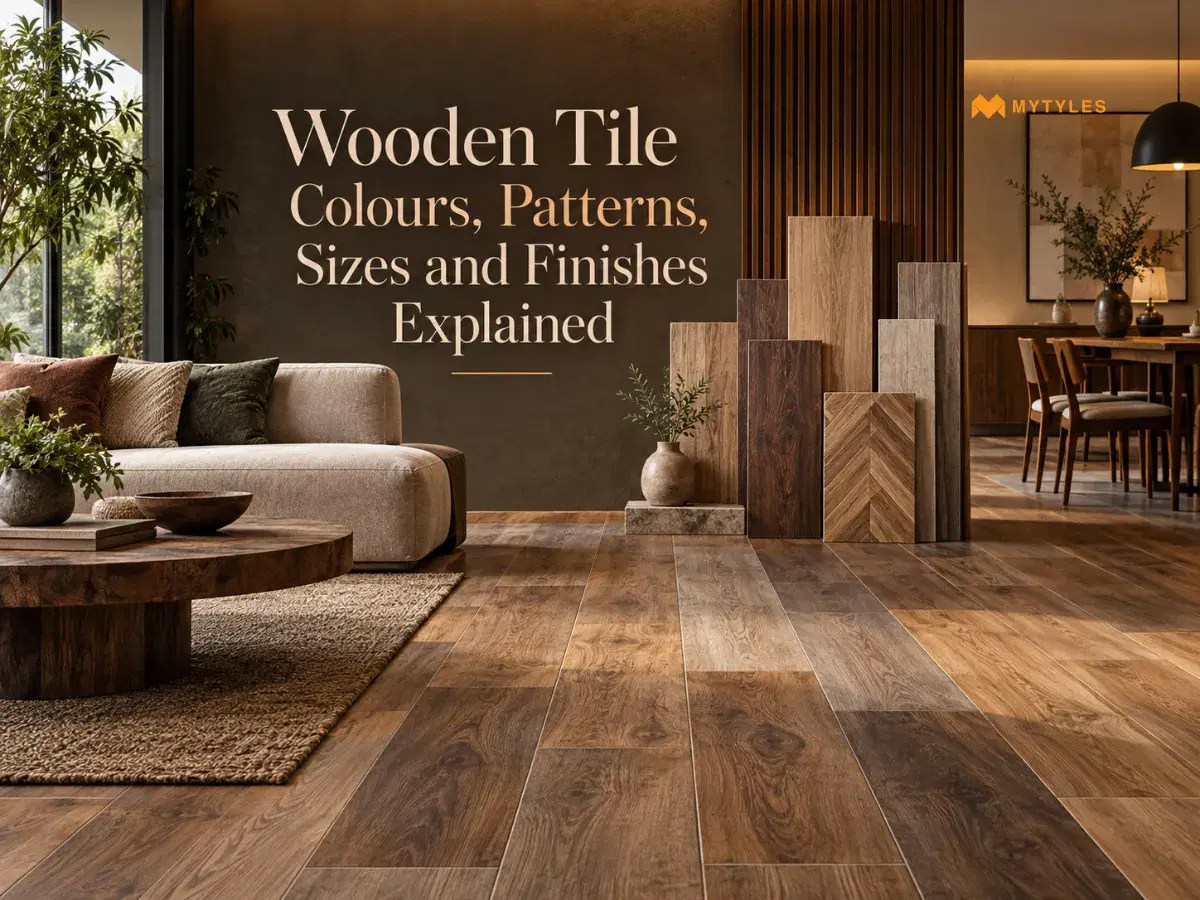
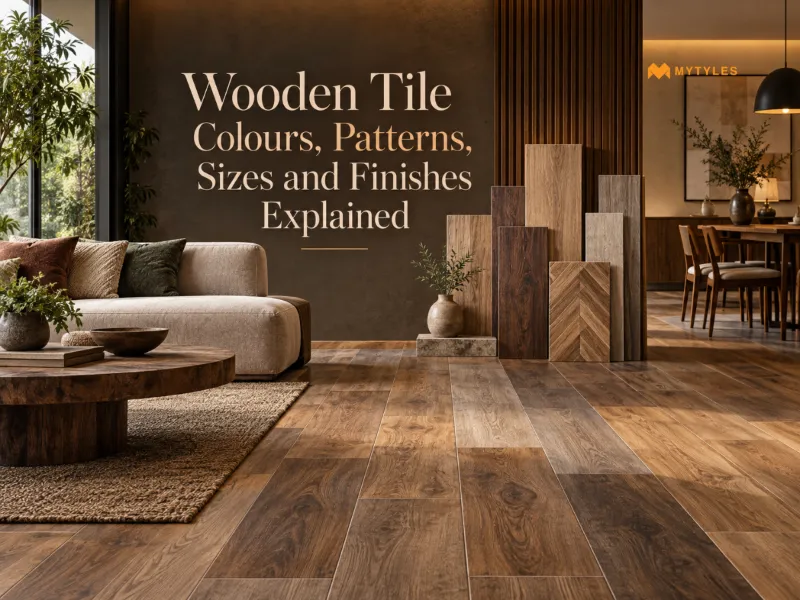
Wood has a way of shaping how a room feels, not just how it looks. The grain and plank texture along with natural tones give it a warmth that works across different interiors. That’s one reason wooden tile design is often chosen to bring a wood-inspired look to floors and walls. Lighter wood-look tiles can give a space a softer feel, while dark wood-look tiles bring in deeper tones and a more grounded look. The choice comes down to the kind of feel you want the room to have.
What makes wood-look tiles versatile is the range of choices across different spaces. A wooden plank tile can look quite different depending on how it's laid and styled. Wooden tile colours, patterns, sizes and finishes all affect the final look. Together, these details can turn a simple wooden tile into a design that feels suited to the space.
Here’s a closer look at the different colours and patterns along with the sizes and finishes that shape wooden tile designs and the looks they can create.
Wooden Tile Colours and Their Shades
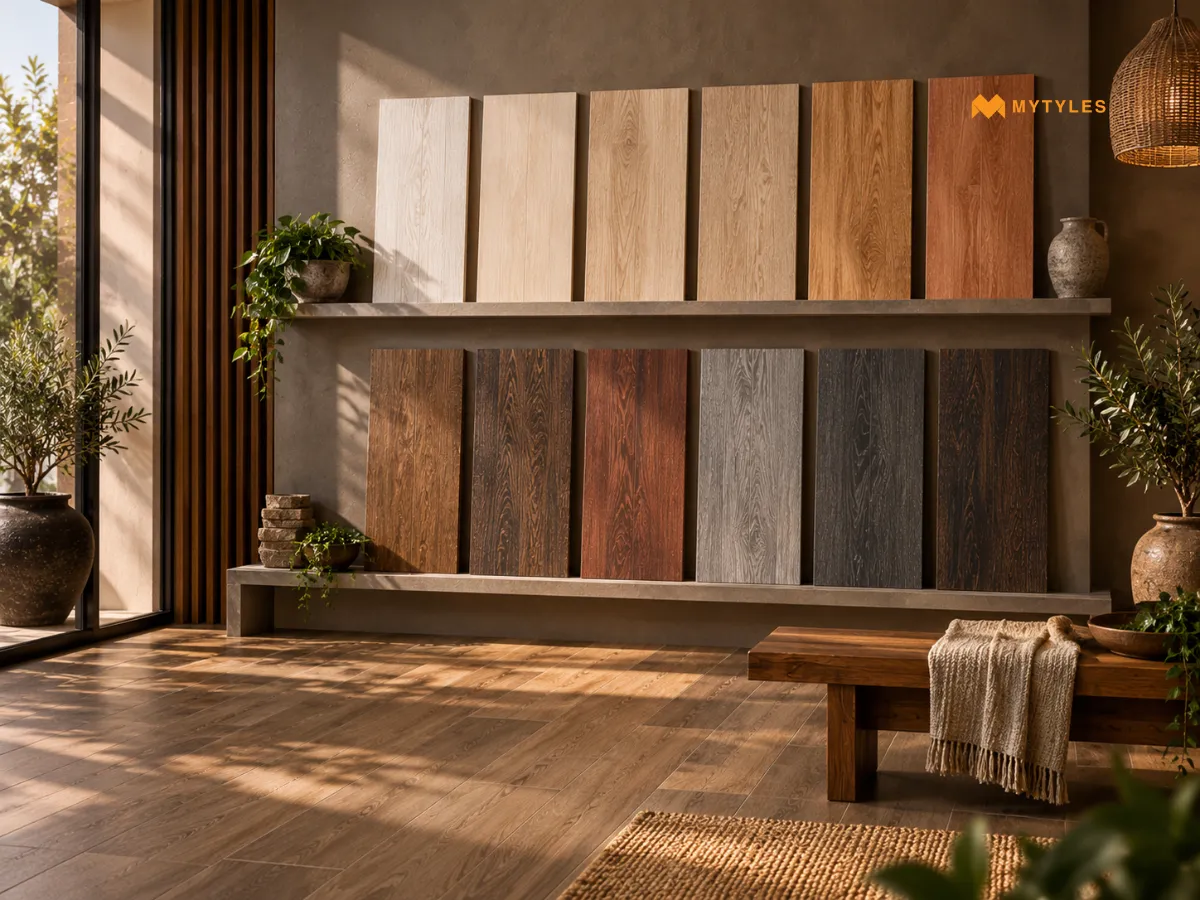
Wooden tile colours cover a range of shades you would usually see in timber. On the lighter end, shades like ivory, cream, and white are available in wood-look designs. Beige is another neutral option, while terracotta brings in a warmer tone with an earthy, reddish-brown character.
On the darker side, brown wood tiles and deeper shades give the tile a more traditional wood-like appearance, while sanguine brown adds a richer reddish-brown tone. These fall closer to dark wood look tiles and range from medium brown to deeper shades. Grey and black sit a little outside the usual wood palette, giving the wood effect a more contemporary colour direction.
The shade you choose can also relate to the colours already present in the space. Lighter shades, deeper browns, greys, and blacks each give the wood effect a different colour variation.
Wooden Tile Patterns and Layouts
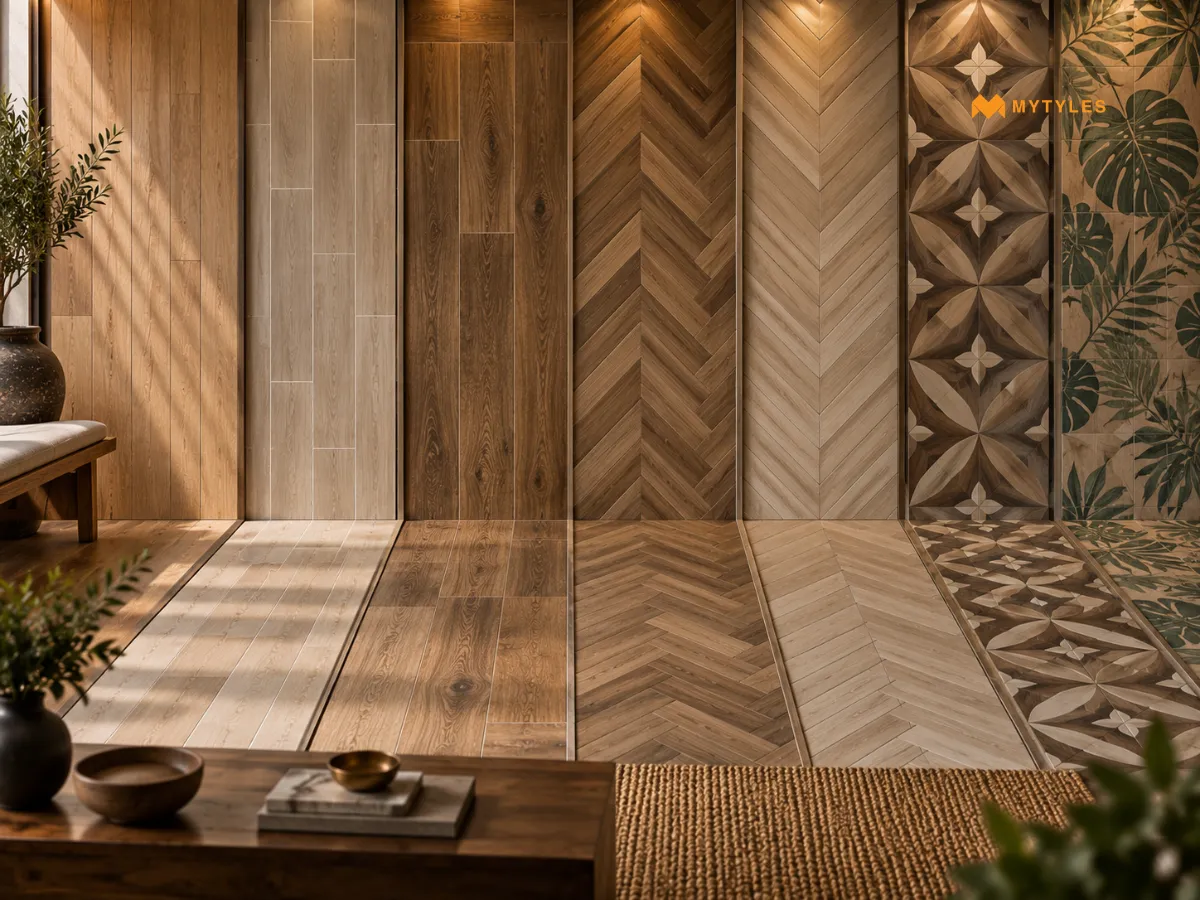
Wooden tile patterns go beyond the plain plank, even though a simple straight run is still where many designs start. Subway tiles offer another look, with their rectangular shape and simple linear layout keeping things clean and understated. An End Match tile takes this a step further, with plank ends cut to align, giving the pattern a longer, continuous look.
For something with more movement, herringbone wood-look tiles use rectangular pieces placed at angles to form a repeating pattern, while chevron wood-look tiles have angled ends that meet to create continuous V shapes. On the more decorative side, Moroccan and tropical tiles bring in bolder, motif-driven patterns that can suit accent areas where more pattern is wanted.
Each layout brings its own character, shaping the space almost as much as the colour does.
Wooden Tile Sizes to Fit Every Space
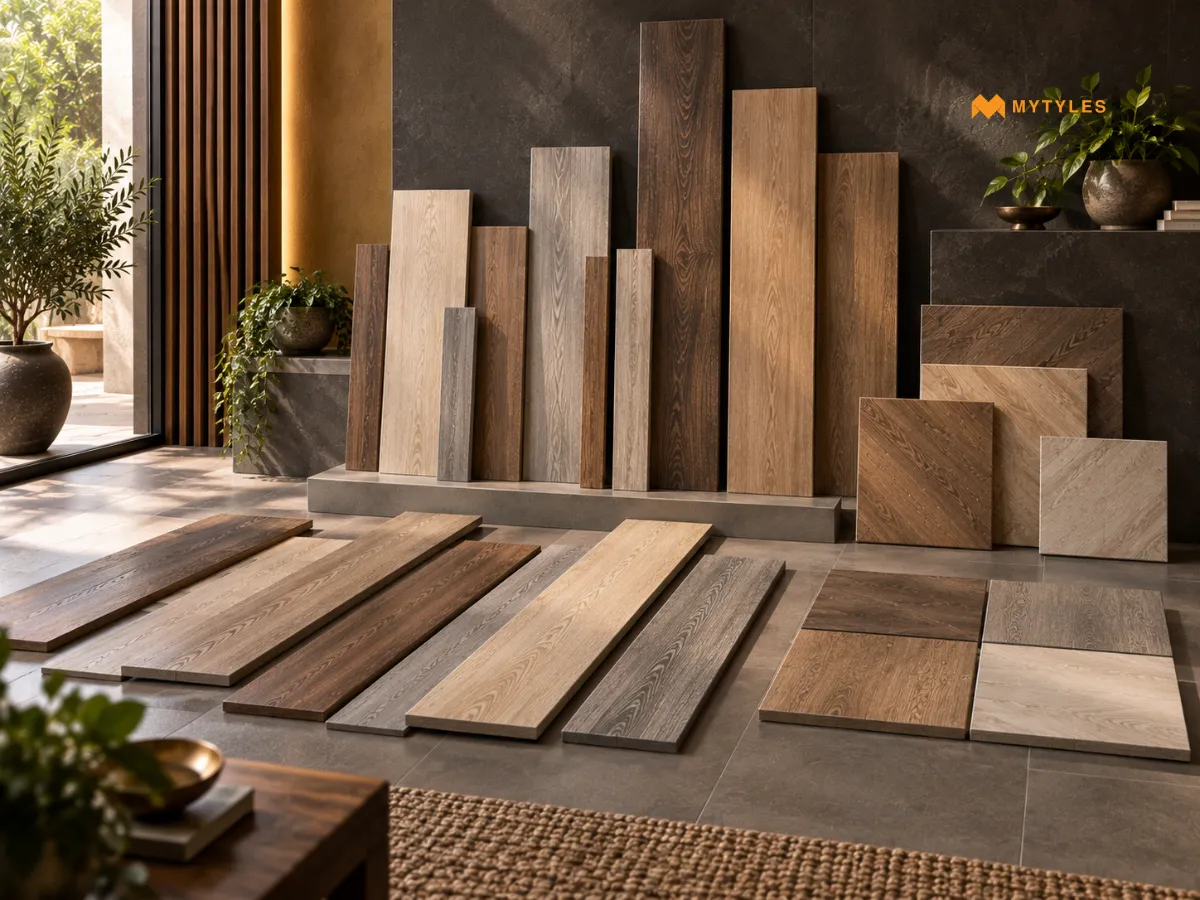
Wooden tile sizes are usually built around two broad shapes, planks and squares, each suited to a different kind of look. Plank formats cover a wide range on their own, from smaller, narrower pieces that work well for subway-style patterns to longer, wider planks made for larger, more open floors. Larger planks leave fewer joints across the surface, giving the floor a more continuous look. Smaller planks create more joints and give you more scope for detailed patterns, which can work well in narrow areas or on decorative wall sections.
Square tiles create a more even, grid-like pattern rather than the longer lines you get with planks. They can work well in smaller spaces or wherever you want a neater, more structured look. Whether they work on walls or floors depends on the individual product and its intended application.
Wooden Tile Finishes to Consider
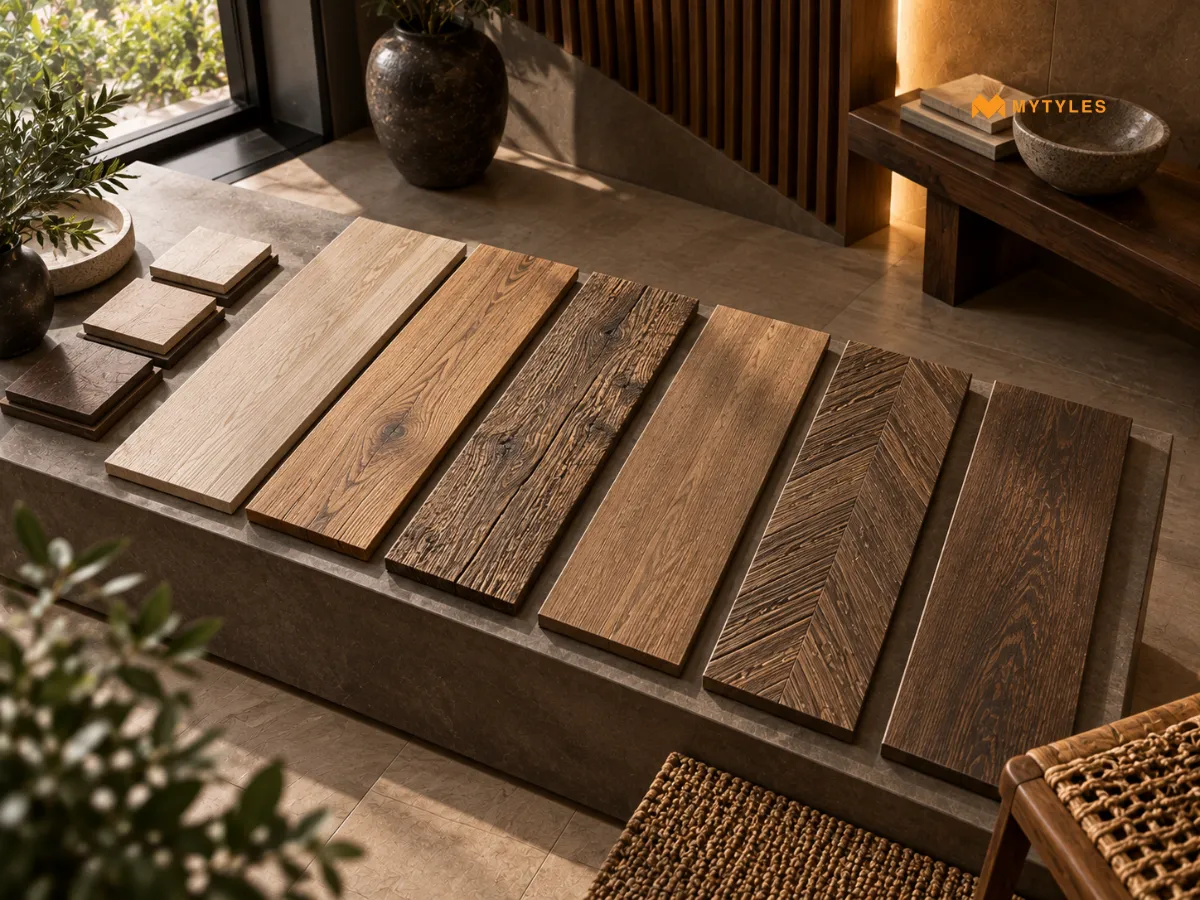
Wooden tile finishes can change the way the wood effect comes across on the surface. Carving tiles add a raised texture to wood-look tiles, giving the tile more depth and a slightly rustic look. Textured wood-look tiles with a carved surface can make the grain more noticeable on both floors and walls. The carved surface can vary from one tile to another, so the grain may appear more subtle or more defined depending on the product.
A matt finish has very little shine and a low-sheen appearance. Matt wood-look tiles have less surface reflection, while the texture can vary depending on the product. The same tile can look quite different when the finish changes, even if the colour and pattern remain the same. A change in finish can therefore make a difference to how the tile looks once it is laid, especially under different lighting.
Where These Tiles Tend to Work Well
Wood-look floor tiles and their wall counterparts can be used across different rooms, depending on the product and how it is intended to be used.
Living Rooms
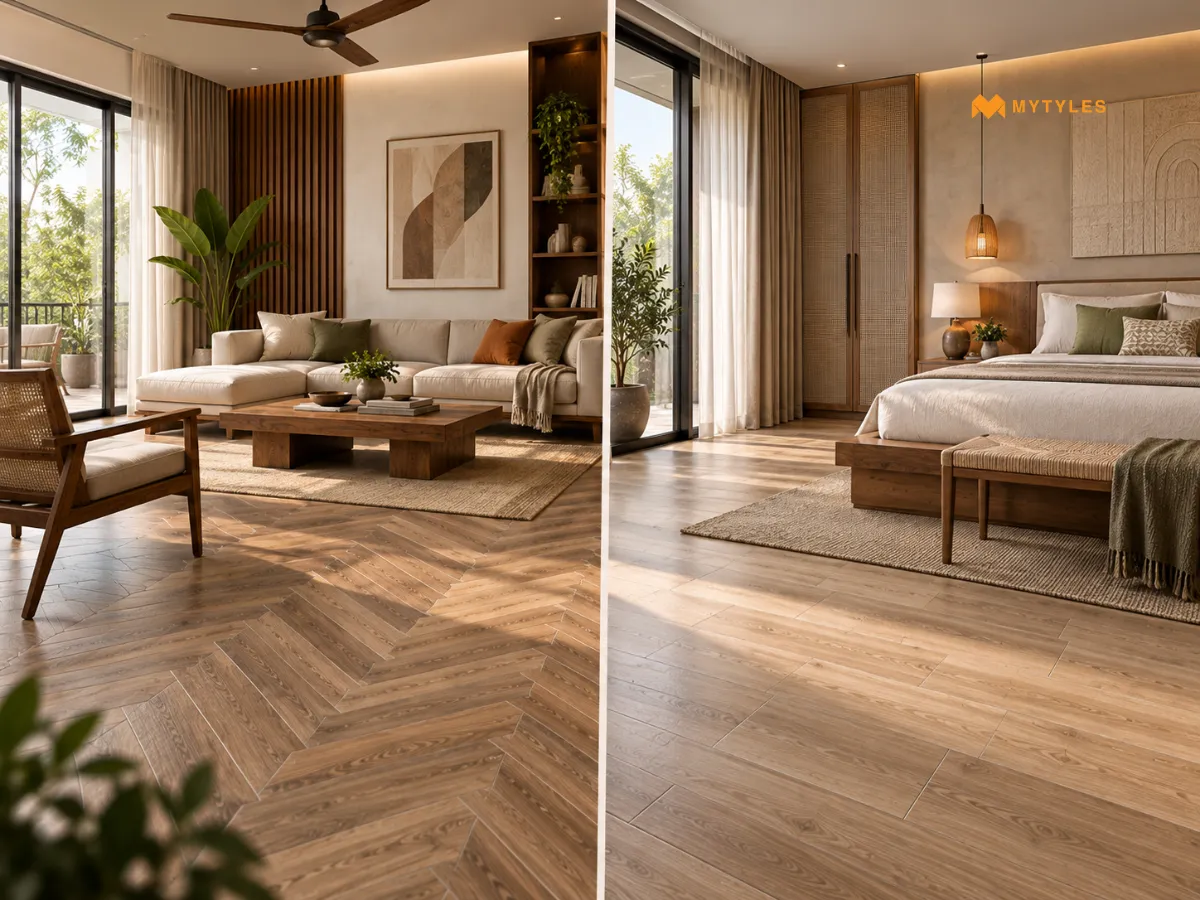
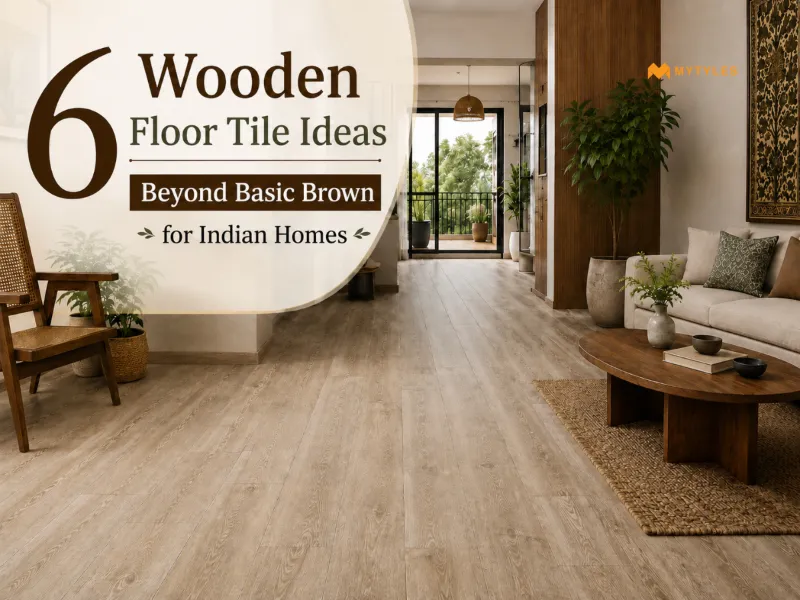
A living room is usually where wood tile floor designs get to stretch out a bit, especially with larger plank formats that result in fewer joints across the same area. Grout joints are still required based on the tile and installation specification. A herringbone or chevron layout can also add a bit of movement to an otherwise open space, without needing much else around it to stand out.
Bedrooms
Wood-look floor tiles can be used in different shades in a bedroom, from lighter wood tones to deeper browns. Lighter shades can create a softer contrast with the furniture, while darker wood tones can add more depth to the room. Wood style tile flooring in warmer, muted tones can also work with simple furniture when you want the floor to remain part of the overall look.
Balconies and Sit-Outs
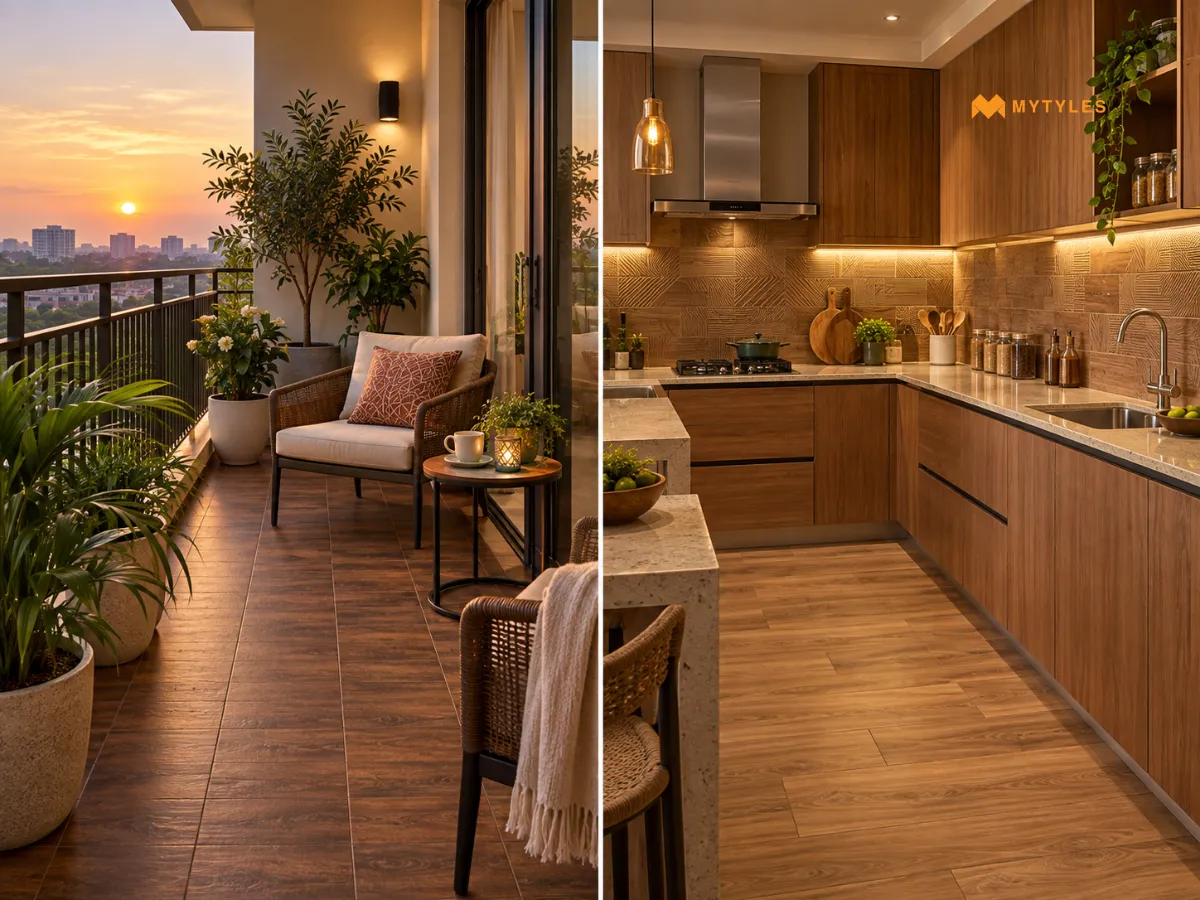
Dark wood-look tiles can give balconies and other small outdoor spaces a grounded, natural feel. A smaller plank or square format can be used with plants or simple furniture, depending on the size and layout of the space.
Kitchens
In kitchens, wood-finish floor tiles can be considered for the floor, depending on the product and its intended application. Wood-look tiles can also be used as a backsplash detail when the selected product is suitable for wall use. A textured or carved finish can also add more surface detail to the kitchen, depending on the product.
Bringing the Wood Look Together
Wood-look tiles can look quite different depending on the details you choose. Lighter shades can keep a room feeling open, while deeper tones add more warmth. Wooden tile patterns and sizes can change how the wood effect comes across on a floor or wall, while a carving finish can add visible surface detail when verified. A matt finish is different, giving the tile a low-sheen look with less surface reflection. From living rooms and bedrooms to kitchens, balconies and sit-outs, these choices can give the same wood effect a different feel in each space.
At MyTyles, you can explore wooden tile colours, patterns, sizes and finishes to compare different options for your space. Browse the collection online or visit a MyTyles Experience Centre to see the actual colour, design and surface before you decide.

What Are Wooden-Look Tiles?

Wooden-look tiles are ceramic, porcelain or vitrified tiles designed to resemble natural wood. Their appearance can include grain patterns, knots, plank shapes and timber-inspired colours. Unlike actual wood flooring, they are made from a tile body rather than timber. The exact material, surface and other specifications can vary between products.
How Are Wooden-Look Tiles Laid?
Wood-look tiles can be laid in different patterns depending on their shape and size. Plank formats can be arranged in straight, herringbone or chevron layouts, while square formats can create a more regular grid. The installation method also depends on the tile and surface. Following the manufacturer's installation instructions is important for the finished result.
How Do You Maintain Wooden-Look Tiles?
Wood-look tile flooring can be cleaned regularly to remove dust and surface dirt. The cleaning method should match the tile and its finish, as different surfaces may have specific care requirements. Use cleaning products recommended for the tile and follow the manufacturer's instructions. Regular cleaning can also help prevent dirt from building up along the grout joints.
How Do You Choose The Right Wooden Tiles?
Choosing the right wooden tiles starts with the space where they will be installed. Look at the tile's size, colour, pattern and finish, then check whether the product is intended for the required floor or wall application. Installation requirements, surface conditions and the overall layout should also be considered before making a final choice.
How Much Do Wooden-Look Tiles Cost?
The price of wooden-look tiles can vary based on factors such as material, size, design and finish. The cost of installation, adhesive, grout and other materials may also add to the overall project expense. Since prices differ between products, it is useful to compare the tile price with the quantity required for the space.
Can Wooden-Look Tiles Be Used In Commercial Spaces?
Wood-look tiles for commercial spaces can be considered for areas such as offices, retail interiors, restaurants or hospitality spaces, provided the selected product is suitable for the intended application. Factors such as foot traffic, tile specifications, installation conditions and maintenance requirements should be checked before selecting a product for a commercial project.
Can Wooden-Look Tiles Be Used Outdoors?
Outdoor wood-look tiles should be selected based on the conditions of the area rather than appearance alone. For balconies, sit-outs or other exposed spaces, check the product specifications for outdoor use and the relevant surface requirements. Wet conditions, drainage, installation method and exposure to the elements should all be considered before installation.

ABOUT THE AUTHOR
Sragvi Senthil Kumar
With a background in Psychology and Journalism, my interest in writing began with newspapers and magazines, where I developed a passion to turn facts into engaging stories. Along with a keen interest in writing, I've had a creative eye for style, art and design. Over time this interest grew into exploring lifestyle, architecture, interiors and tiles for more than just their aesthetics. Now I bring together research and creativity to create clear, engaging content for homeowners, architects and interior designers.
Latest Blogs By MyTyles